Two Weeks In Sri Lanka
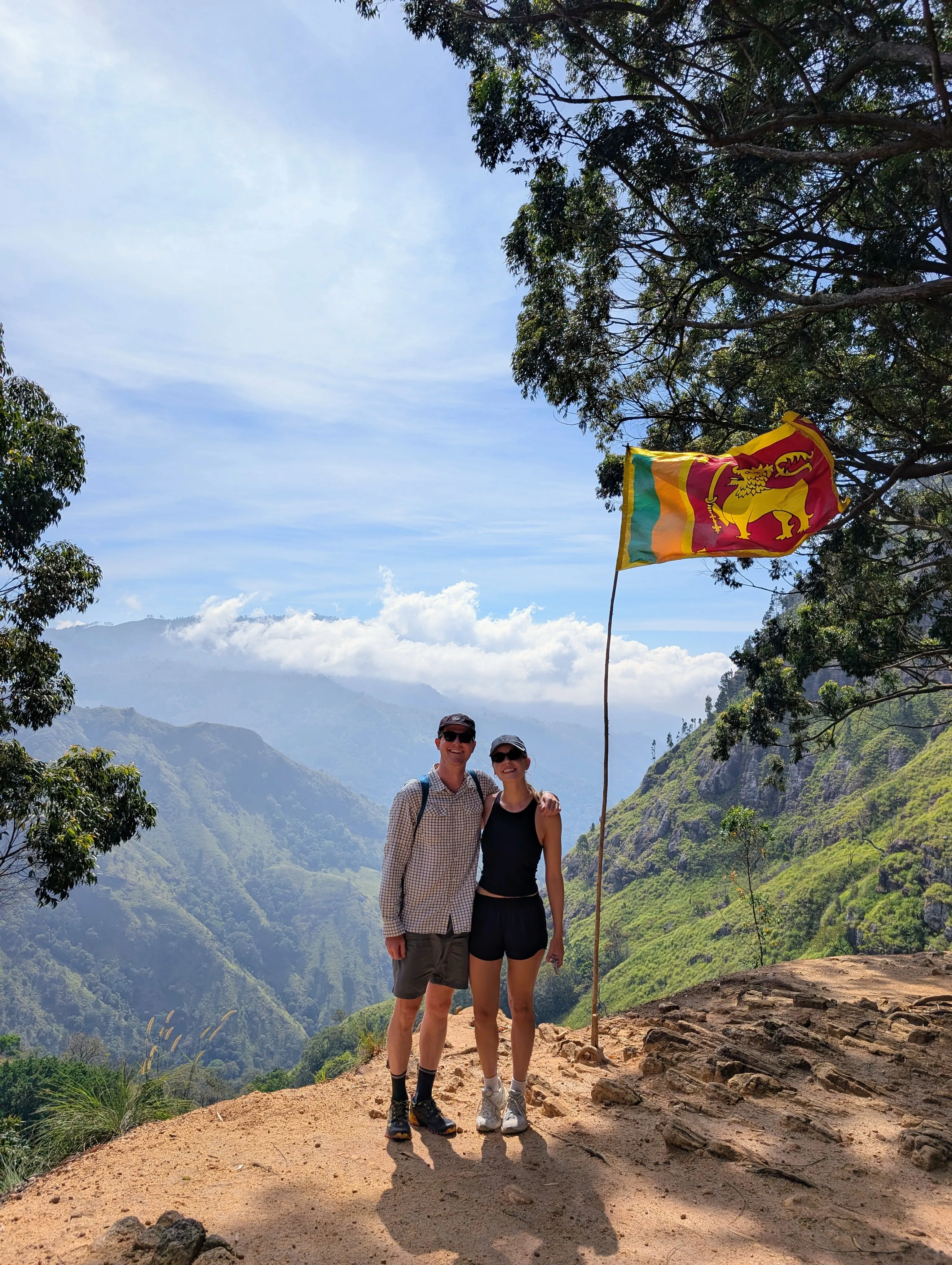 Overlooking the Ella Gap in Sri Lanka.
Makeda and I decided to go to Sri Lanka just a few days before we touched down in Colombo. We were visiting friends in Singapore and had been planning to fly to Bali and explore Indonesia until my cousin Sean was back in Beijing. Sri Lanka had been high on our list of places to visit from the start of our trip, largely due to glowing testimony from my two sisters and their husbands, but we had mentally shelved it in favor of Indonesia. Somehow we thought we could get to it later. However, our Singaporean friend Maya, whose family is Indian, made a spirited pitch for us to go to India instead of Bali. When sketching out this trip, we felt as though India was simply too big to tackle, especially when we knew we were going to spend quite some time in China. We felt it was one or the other, but not both. Maya and her family were persuasive, though, and their enthusiasm was infectious. Maybe we should go to India…
So now we had three countries in the mix: Indonesia, Sri Lanka, and India. In a perfect world we would visit all three, but one glance at a map and you can understand that Singapore to Indonesia to Sri Lanka to India is not exactly a natural progression - Bali sticks out like a sore thumb. The Indian subcontinent was starting to make a lot more sense, and we also realized that April was more or less our last chance to go to India this year before it became simply too hot. In the end, the decision was obvious: Sri Lanka, then India, and finally China.
Indonesia would undoubtedly have been amazing, but reflecting as I write this - we made the right choice.
Sri Lanka
With just a few days to plan our trip, we relied heavily on advice from my sisters, who each spent nearly a month in Sri Lanka. In our limited experience, there are two major loops that tourists take: the central and northern hill country, and the south coast and central hill country. The two make a figure eight, so to speak. One major goal we had was to learn how to surf, which meant we opted for the latter. In Singapore we booked a place in Weligama on the south coast and left the rest of the trip up to our future selves.
Colombo to Weligama
Sri Lanka is famous for its scenic train network. Much of the island is accessible by rail, and the west and south coasts are all connected by a single line. Given our short planning period before arriving, though, Makeda and I found the train system to be almost as confusing to navigate as it is beautiful. It is surprisingly difficult to find consistent timetables online, the national railway website barely functions, and trains are frequently delayed. The train journey from the airport to Weligama involved a 20 minute taxi or 40 minute bus to the train station, followed by a five hour train without AC in the Sri Lankan heat. Despite our love of train travel, we opted to hire a driver instead. In contrast to the ethos of our Thailand to Vietnam journey, here we traded money for time and energy. We were comforted by our future plans for train travel in Sri Lanka, as well. After three relaxing hours in the car, we arrived at Weligama.
Weligama
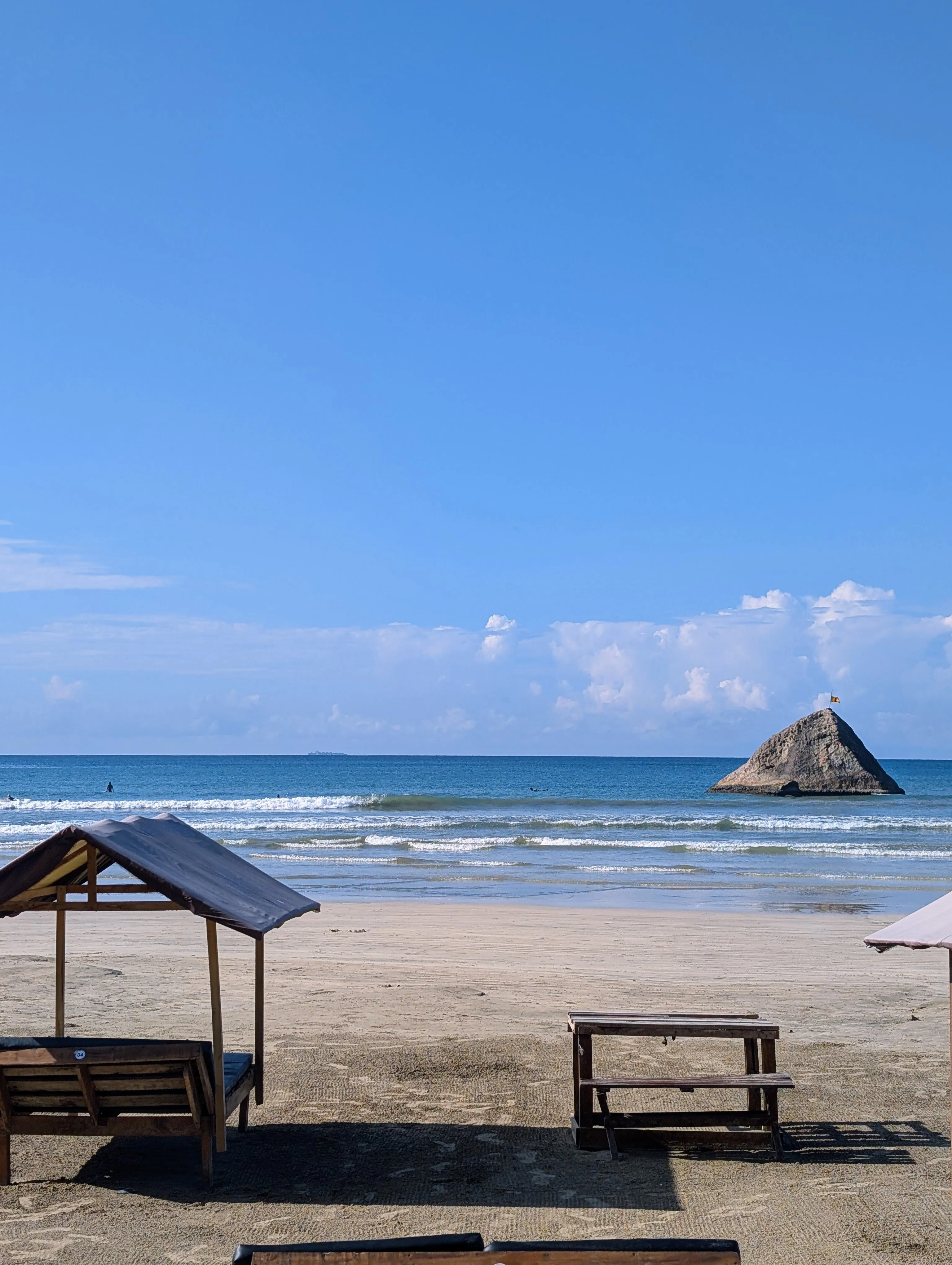
Weligama sits in a protected bay on the south coast of Sri Lanka, which means it still gets the same famous swells as the rest of the coastline, but the waves are slightly dampened. The consistent and manageable waves combined with the soft sandy bay make it a perfect location to learn to surf, which is exactly why we chose Weligama for the beach portion of our trip.
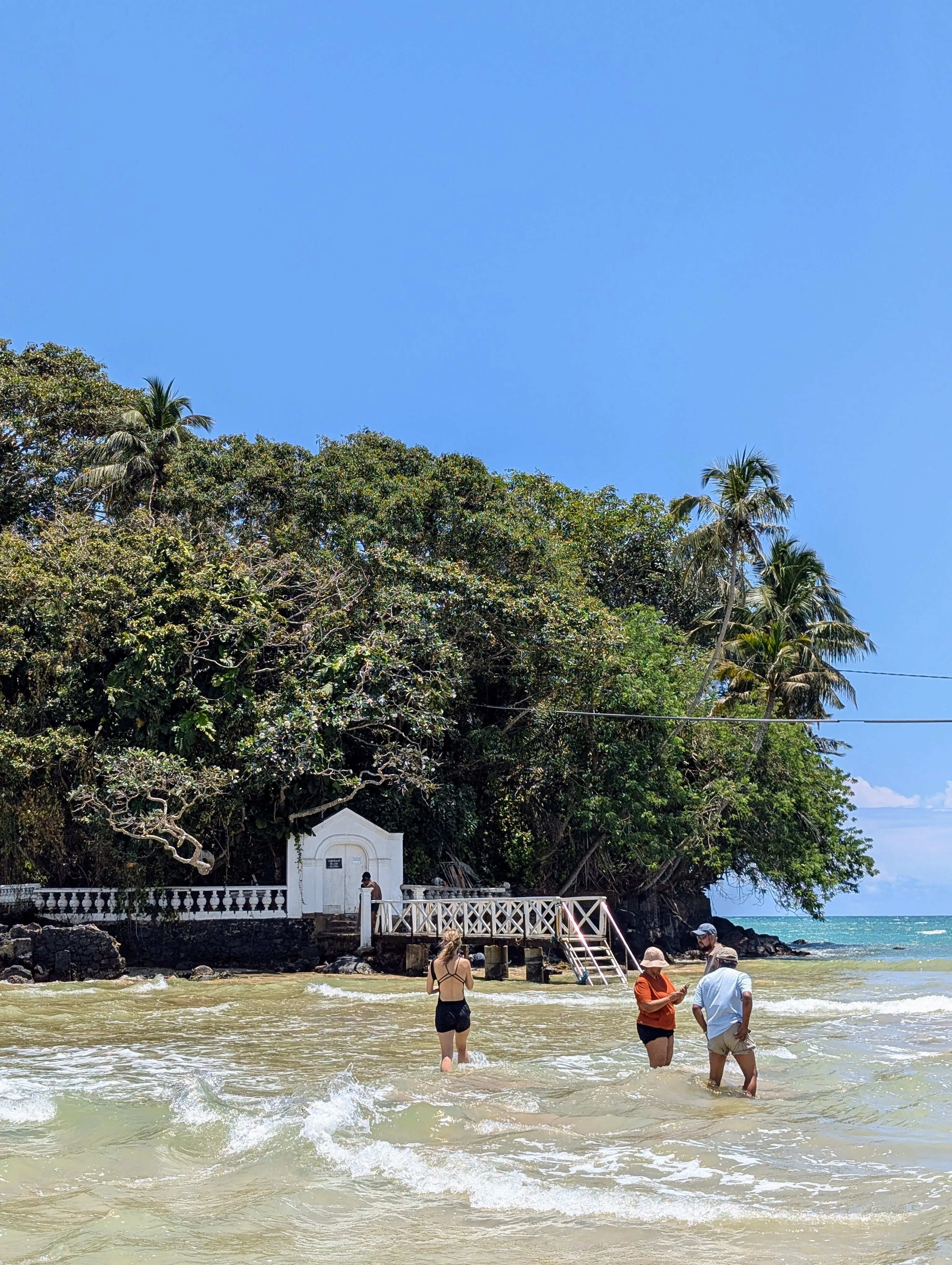 Our guesthouse’s namesake.
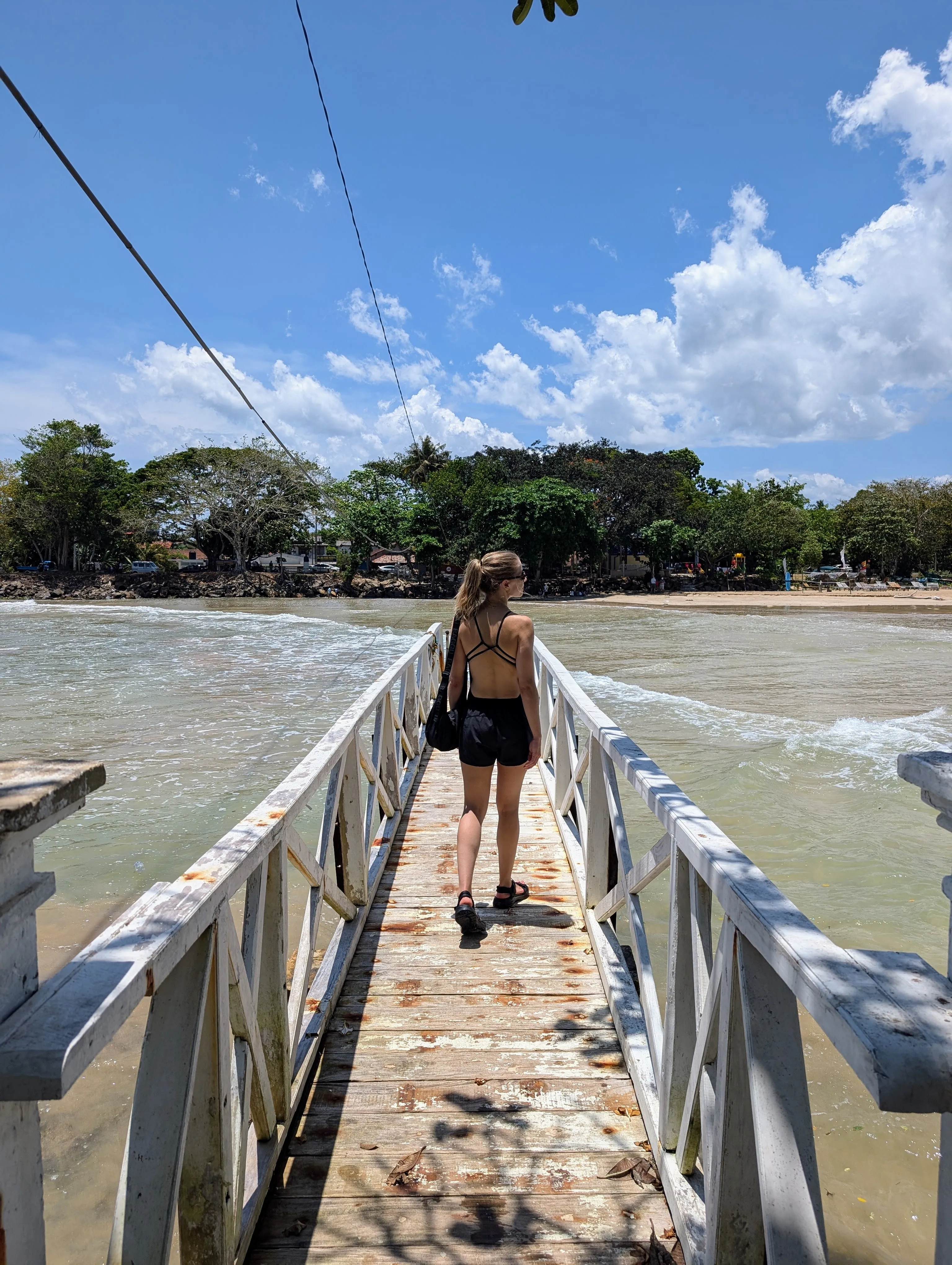 Taprobane Island.
We stayed at an exceedingly charming guesthouse called Temple Tree, which sits tucked away near a small island in the bay with a Buddhist temple (and some trees). The guesthouse was run by a wonderful married couple, and the husband made possibly the best iced coffee I have ever had. Our neighbors were an Israeli couple who had fled after the United States and Israel jointly initiated war with Iran. The husband’s mother survived Auschwitz in part due to her relationship with one of the Nazi guards, and he served in the IDF during the Six-Day War in 1967. Needless to say, we had some interesting conversations.
Given the ideal beginner surf conditions, naturally there are surf schools and camps all over the bay. Initially Makeda and I had planned to take a lesson with the highest rated school we could find on Google, but while making our way along the bay early in the morning on our first full day, we could see that the popular camps overwhelmed the main surf breaks and had a poor instructor to learner ratio. Instead, we opted for a smaller outfit closer to our side of the bay - a serendipitous decision. Island Beach Surf Camp is not so much a structured surf camp as it is a group of teenage and early twenties friends who hang out on the beach and teach folks how to surf if the opportunity arises. They had casually adopted an adorable puppy who snoozed and romped around the beach - reason enough to pick them over any other surf camp.
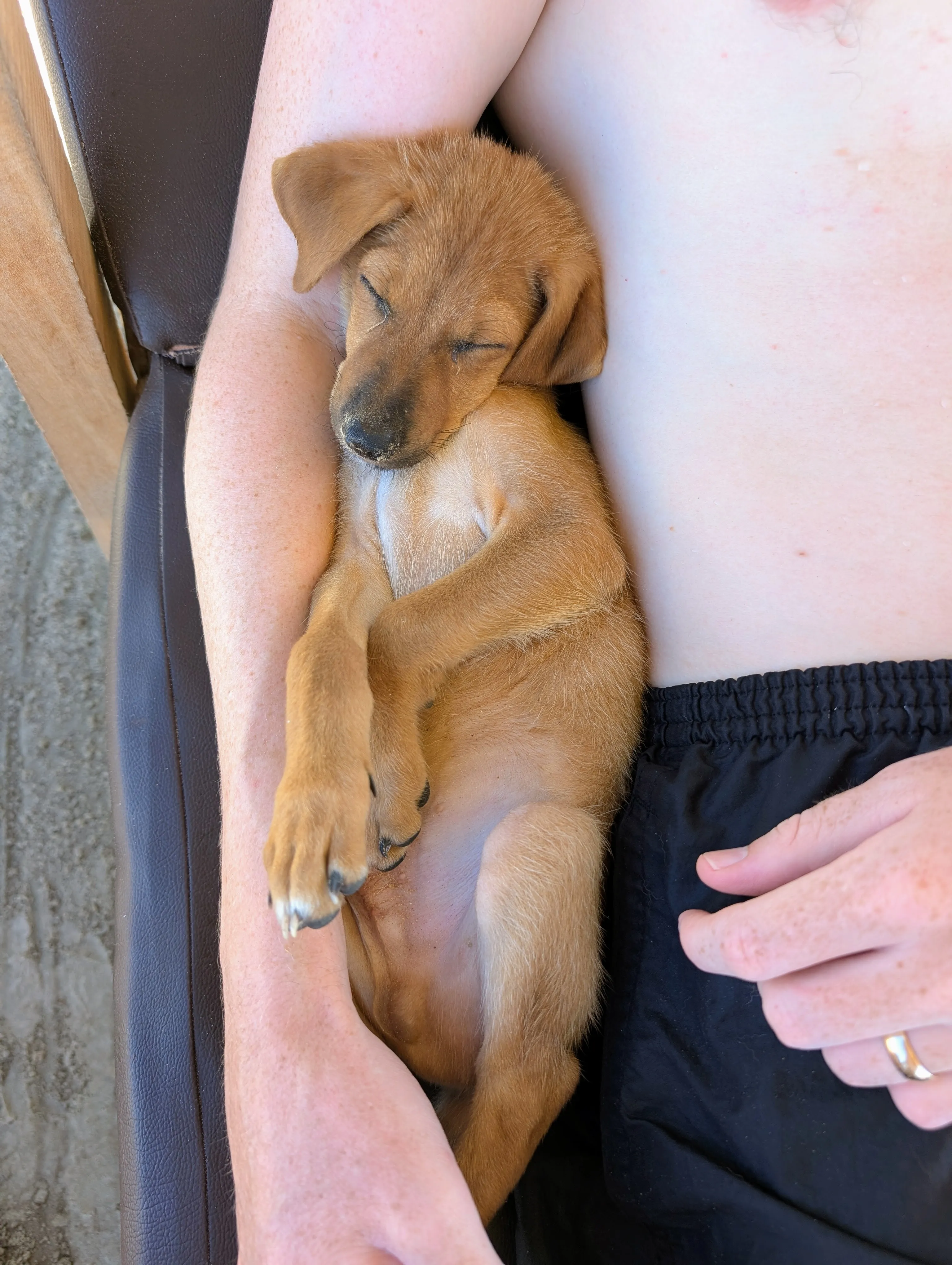 Napping after a grueling five minute play session.
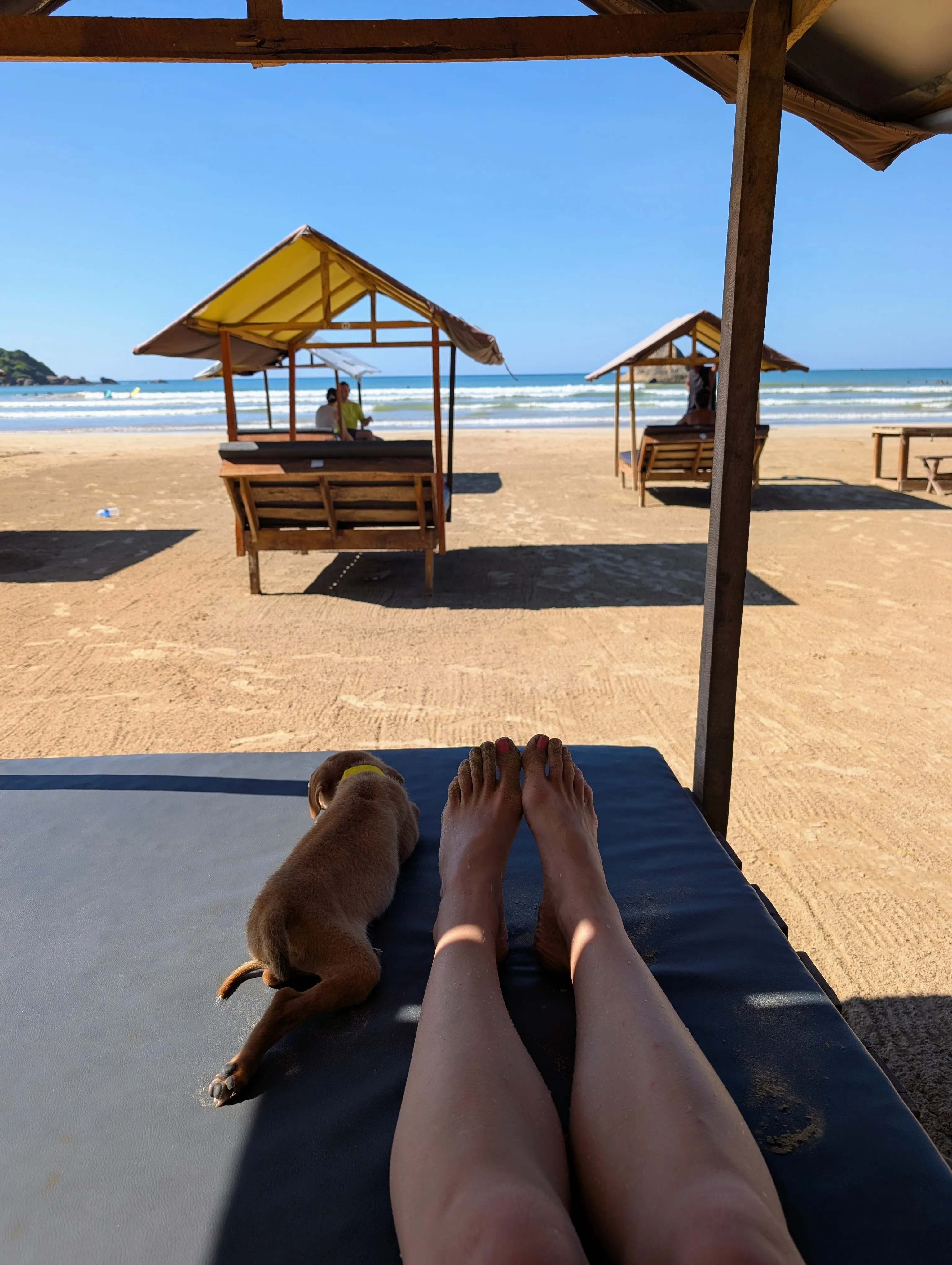 Nice spot for a nap!
Our first lesson with their main instructor, Hara, went much better than expected. Both Makeda and I managed to get up (with significant assistance from Hara) within the first few waves. By the end of the lesson we could almost paddle into our own waves! Personally, I was just thankful that I was actually enjoying the process of learning and being in the water, which contrasted my few attempts to surf in college in Santa Barbara. After our first lesson it was immediately apparent just how exhausting it is learning to surf, compounded with three months of travel taking some muscle off our bones. I mentioned off-hand to Makeda that I would love to rinse off after the lesson, and Hara immediately insisted that we come to his house a few blocks away and use his backyard shower. We crashed for the rest of the day before a delicious dinner of rice and curry. Later in the week on a particularly hot day I would be destroyed by heat sickness. I would also experience “kook rash” on my inner thighs that later became infected, a situation for which I’m taking antibiotics as I write this (it’s getting better!). No pain no gain!
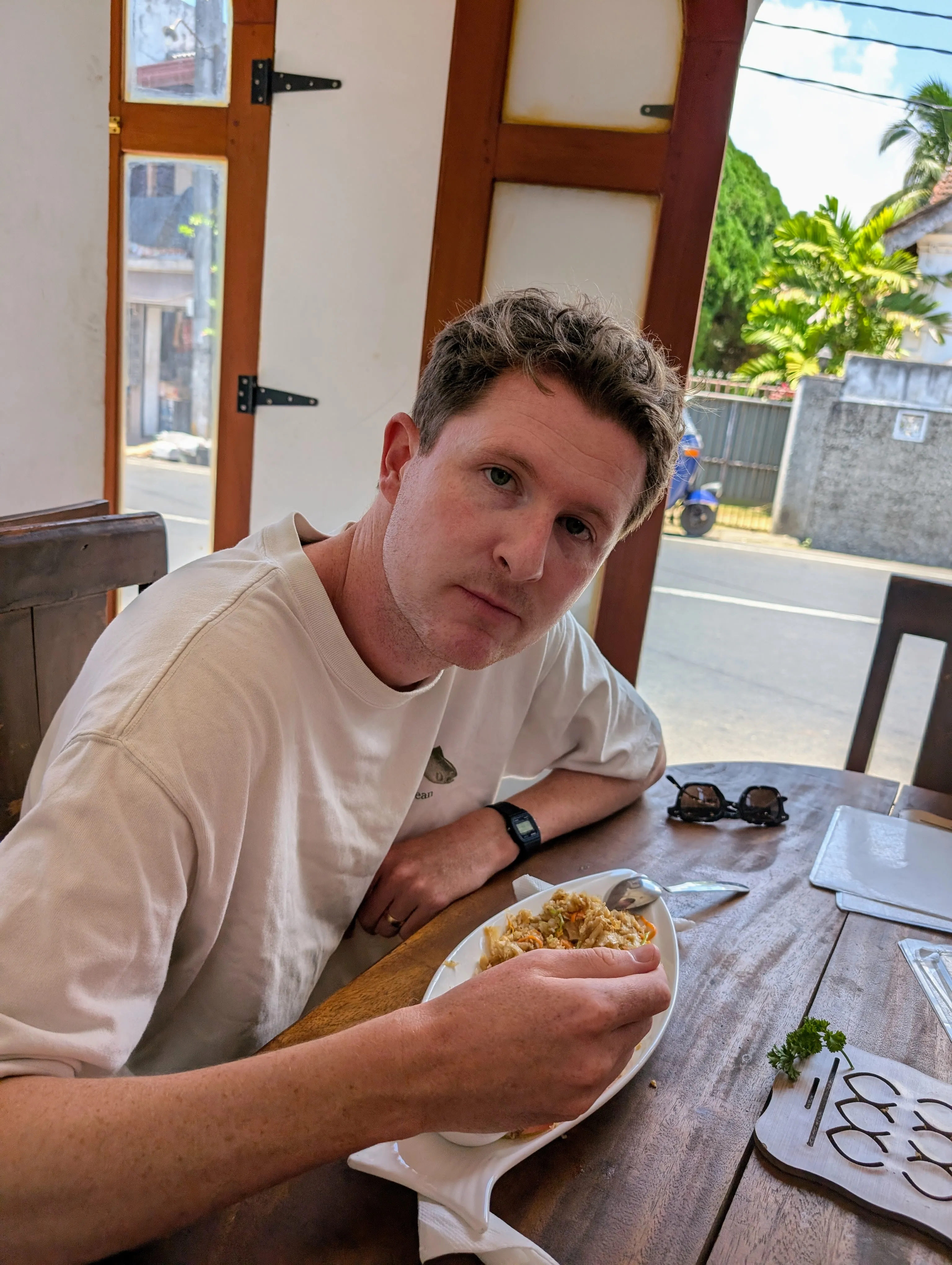 The face of heat exhaustion.
Over the next five days we surfed once or twice a day, getting better and better with each lesson. We also started to befriend the guys in the surf crew - an easy task given how friendly and welcoming they all were. A routine emerged - after each lesson Makeda and I would hang at the beach for a bit to catch our breath, play with the puppy (who we named Joey due to his kangaroo-like appearance), smoke spliffs and listen to music with the guys, and relax. Then we would grab some lunch and nap or read until dinner. One evening, Hara invited us to an open-mic night at a hostel in town where we were treated to a local up and coming rapper and his twerking Russian girlfriend, pop-punk ballads, and an amazing impromptu set from a British tourist. Total backpacker-hostel early 20s energy in a great way.
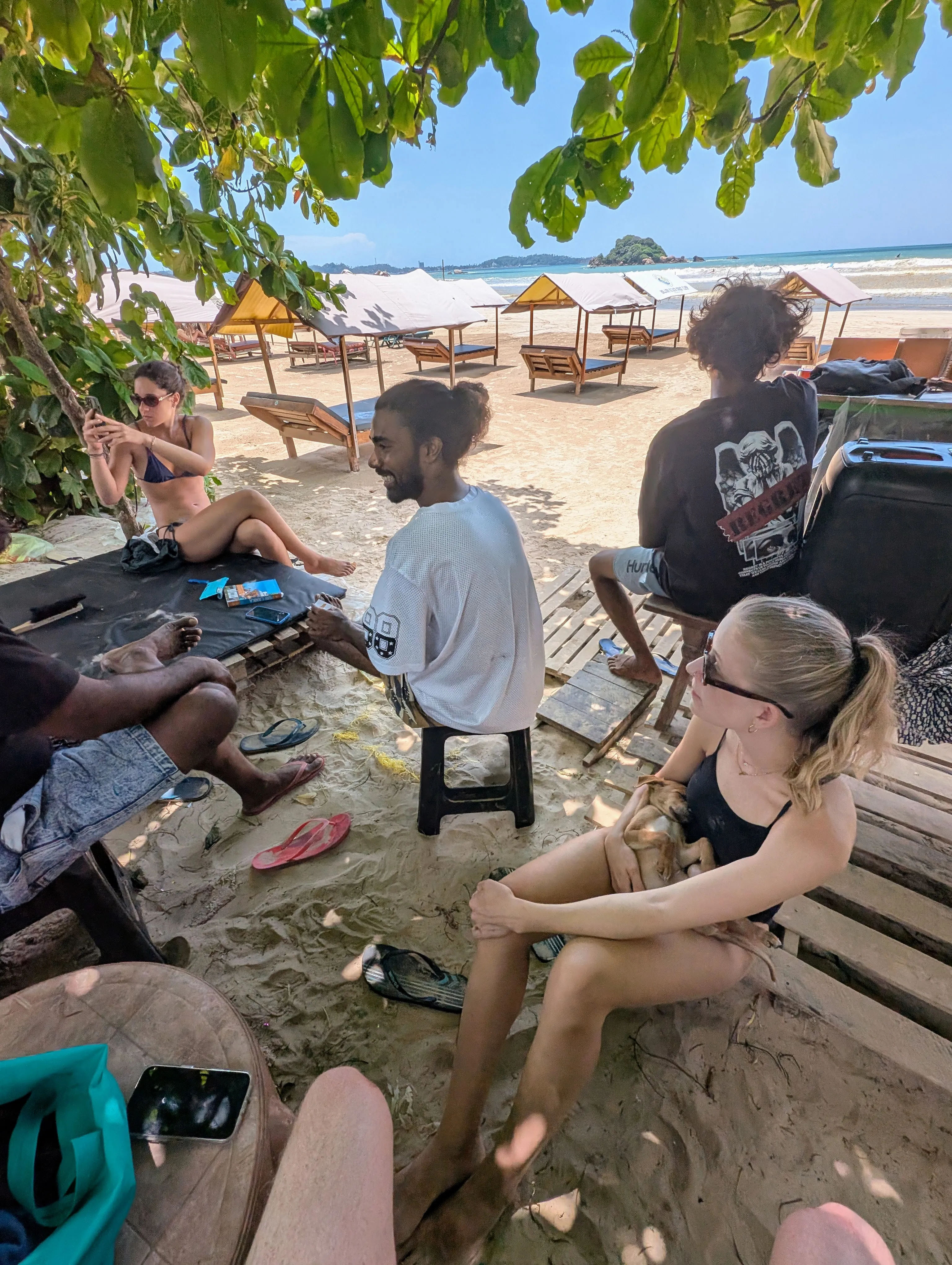 Dilanka, Hasi, Joey, and Makeda relaxing at the beach.
Having a routine for even just five days after three months of travel was a refreshing change of pace. We loved having a shared goal for our time in Weligama that simplified our daily decisions. By the end of the week our lessons felt more like regular surf sessions with new friends, and we were sad to part ways but grateful for the experience.
Galle
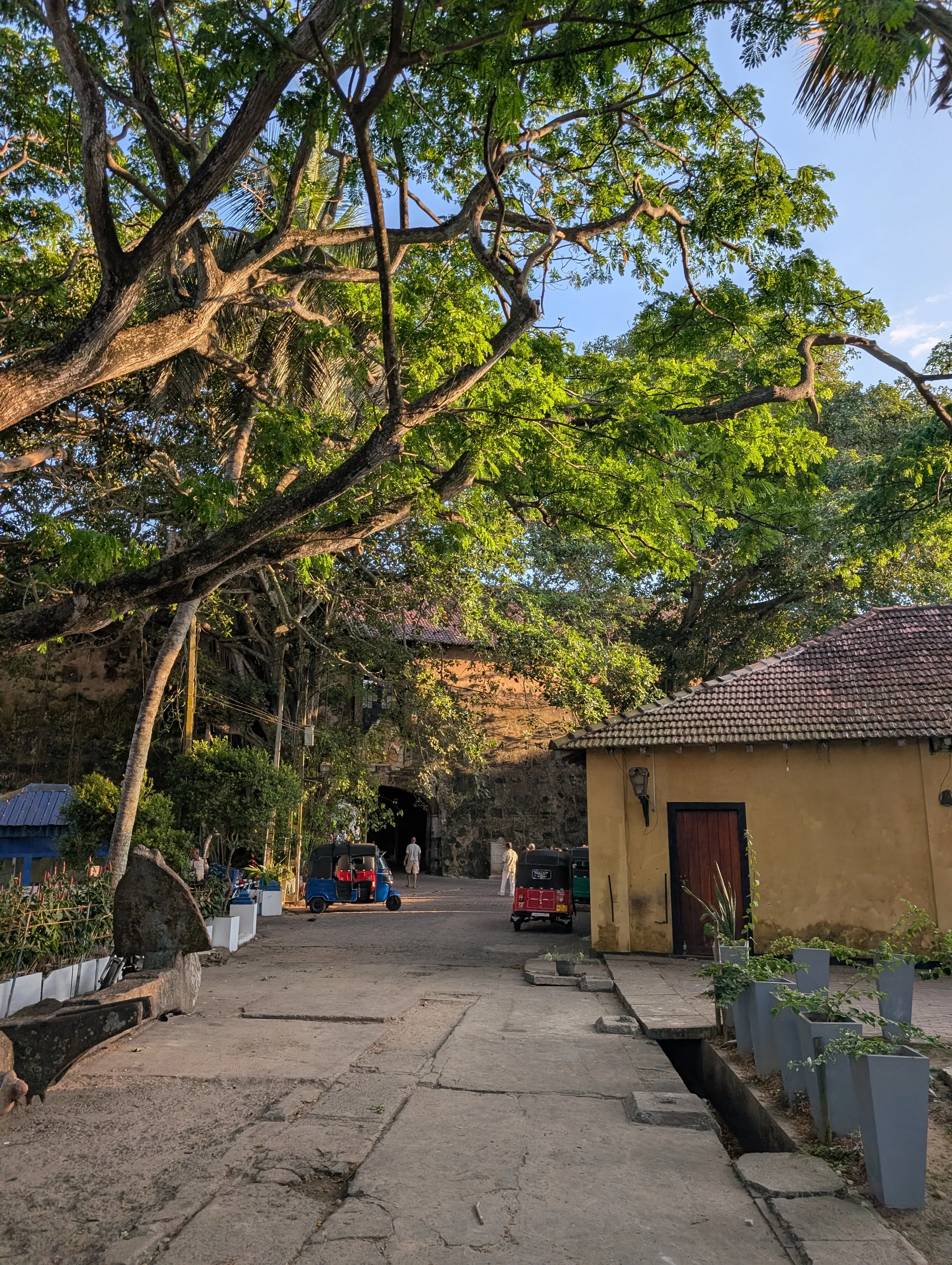
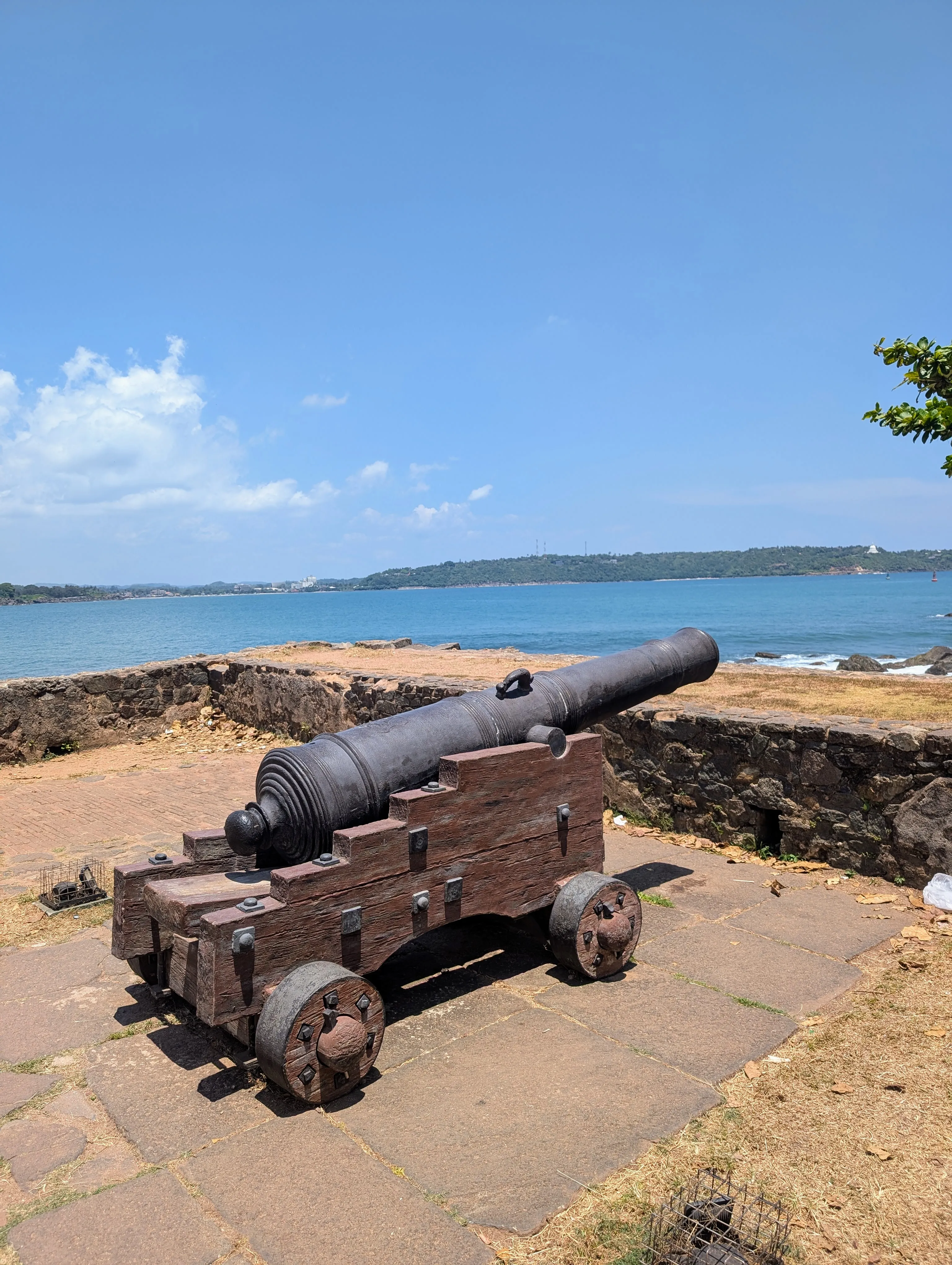
We took one day off of surfing in Weligama for a day trip to Galle, a popular destination just 45 minutes north along the coast. The city was founded by Portuguese colonists in the 16th century and is known for the Galle Fort and Portuguese, Dutch, and British colonial buildings. A late start in Weligama meant that we were exploring the narrow streets and alleyways of the Fort during the hottest part of the day, but we managed with protracted visits to stores with AC, trips to the beach, and scoops of gelato. Makeda spent nearly three hours in a jewelry store designing a custom ring with a helpful and patient salesperson. Sri Lanka is nicknamed Ratna-Dweepa, which means Gem Island. A huge portion of the world’s sapphires are mined and cut in Sri Lanka, alongside cat’s eyes, zircon, alexandrite, and other gems. Naturally there is a massive jewelry industry, and cut stones can be had for a fraction of the price in the United States. Makeda was able to fulfill a jewelry-design dream, as well as procure some stones for friends and family back home.
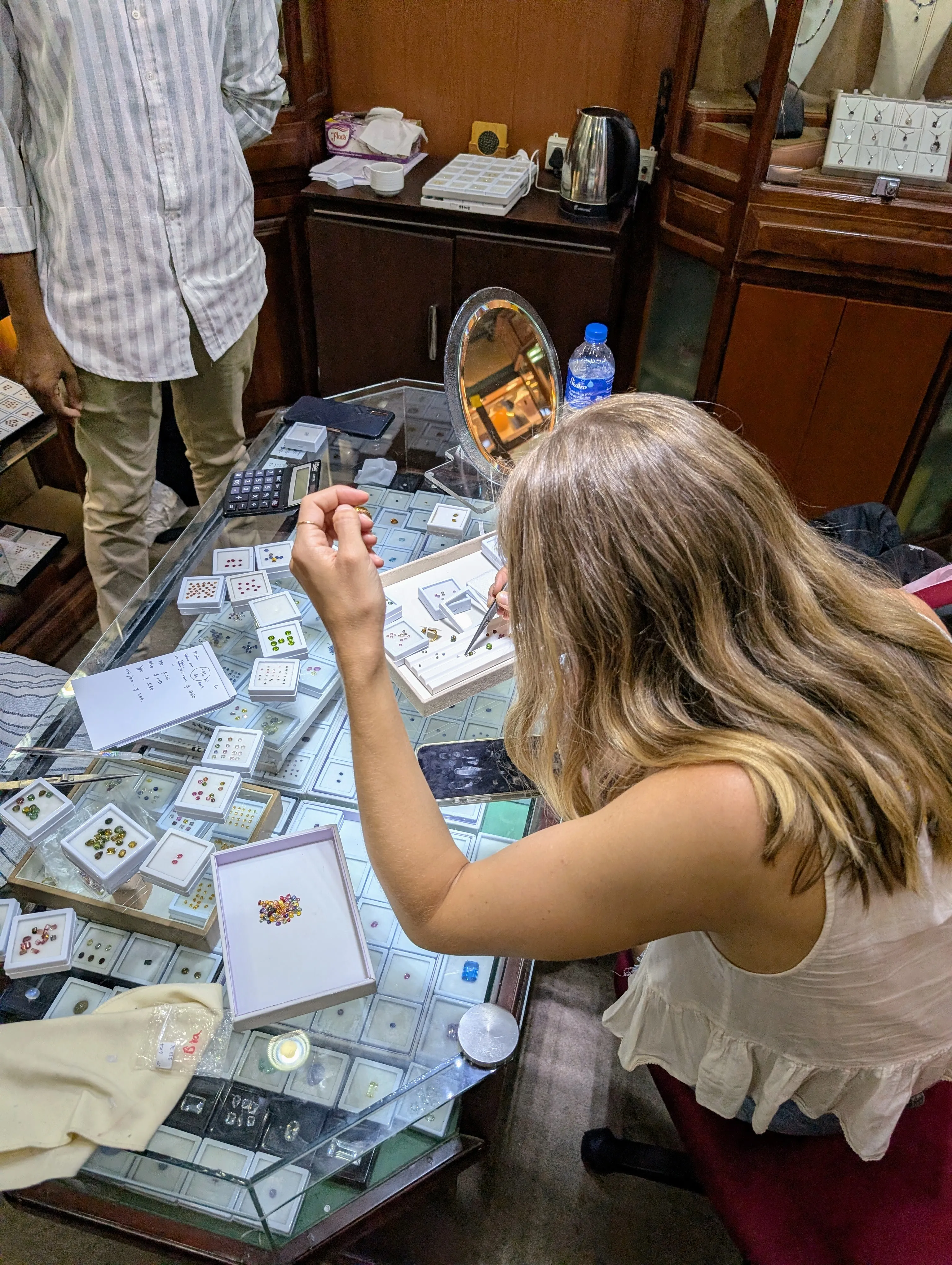 Makeda in her element.
While Makeda was happily scrutinizing sapphires through a loupe, I continued to explore Galle. Peacocks and monkeys could be seen in trees all over town, and fish were jumping in the evening tide in the bay. I made my way to a dock where a group of Sri Lankan guys were practicing their dives after the workday. After such a hot day, I happily stripped down to my briefs and dove in alongside them. We had a bit of a dive competition while the older fisherman looked on, mildly annoyed that we were disturbing their catch. Eventually I made my way back to the jeweler to catch the last 45 minutes of Makeda’s design session.
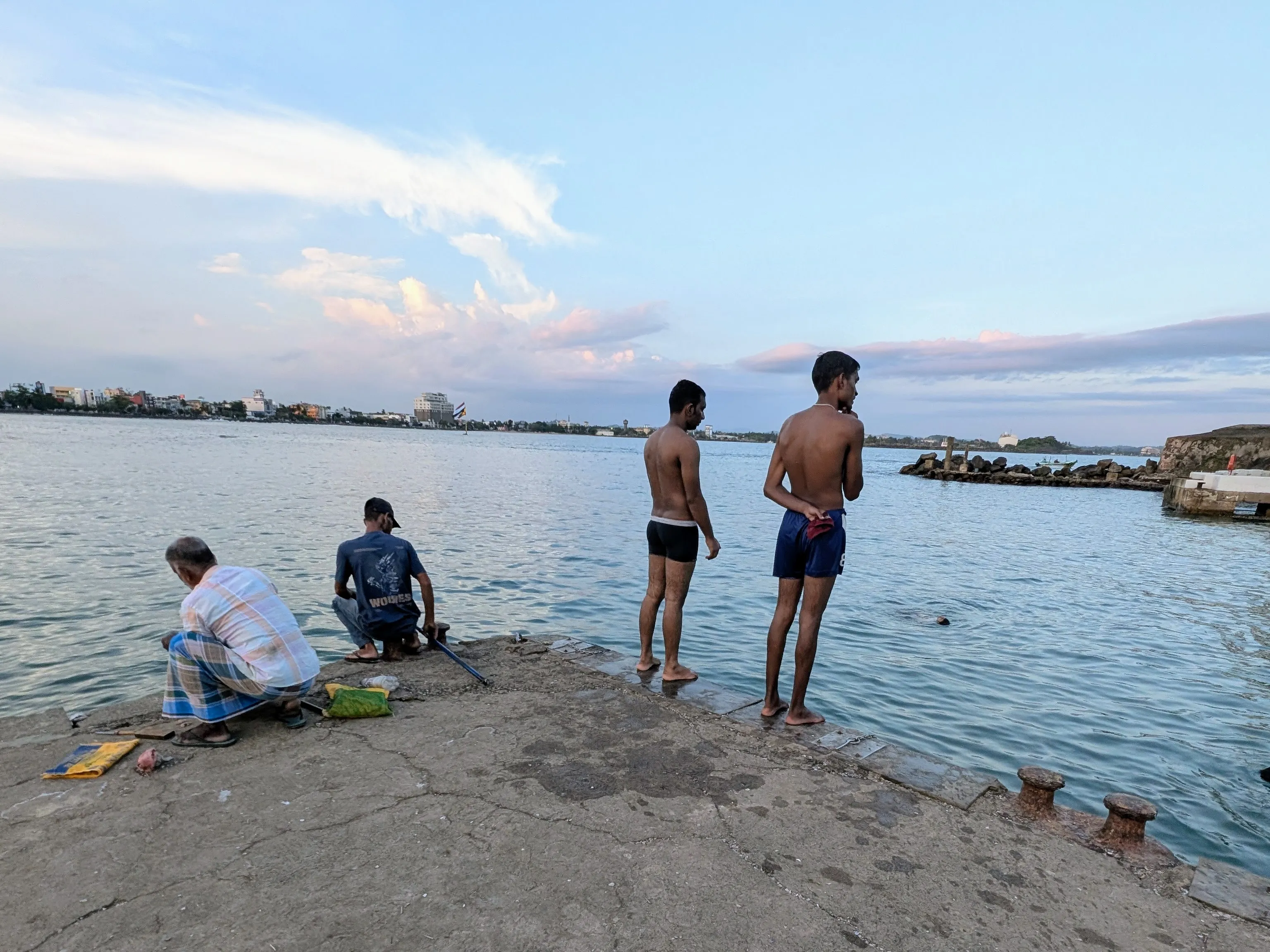 A late afternoon swim.
Weligama to Tissamaharama
During our downtime in Weligama we sketched out the rest of our time in Sri Lanka. The initial plan we made in Singapore was to make a counterclockwise loop of the southern portion of the island: Colombo to Weligama, train or bus to Tissamaharama, bus to Ella, then catch the train through the hill country back to Colombo, maybe passing through Kandy. Of course, in Sri Lanka we learned there were several flaws in our plan. The most unfortunate was that the train from Ella to Kandy was not operational after the track was damaged in a monsoon the previous year. We had been told this is an incredibly scenic journey and were looking forward to experiencing the trains, so we were sad to miss it. The other thing we learned is that bus drivers in Sri Lanka are actually Formula 1 racers, rally car drivers, and party bus operators all rolled up into one. By that I mean: they drive like maniacs. The roads are already cluttered with old men on bicycles, mopeds and tuk tuks scurrying around, and trucks and sedans wading through the rest. You would think the buses would more or less crawl behind the crowd, but no. They roar at top speed around smaller vehicles, shunting oncoming traffic into the shoulder, all while honking their customized horns like the charge of cavalry into battle. Additionally, they are decked out with custom signs, paintjobs, and decals that make them look like something out of a videogame. They were simultaneously awe inspiring and terrifying, and ultimately the latter beat out the former and we took the buses off the table. Finally, the train did not go all the way to Tissamaharama from Weligama. Our choices were slim.
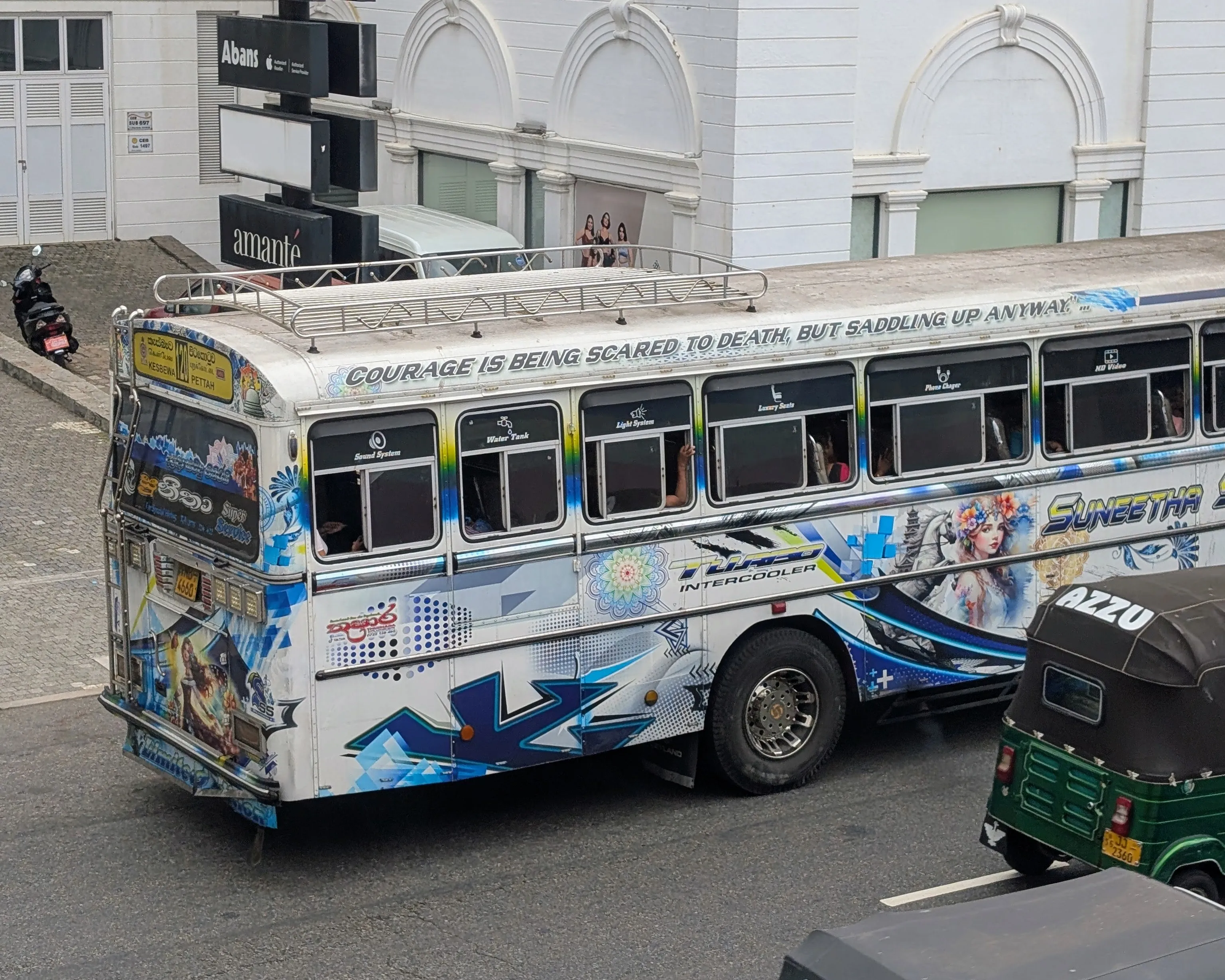 A sentiment we did not share.
Effectively, trains and buses were out. On the recommendation of my sisters and their husbands, we hired Najeem as our driver for the remainder of our time in Sri Lanka, and we are so glad we did. He was the nicest man, a very safe driver, and incredibly helpful with planning out our route. It also simplified the rest of our journey greatly. Even though I love pathfinding, sometimes it’s nice to conk out in the back of a car and wake up where you need to be. For our first leg with Najeem, this was Tissamaharama.
Tissamaharama
The town itself is small, pastoral, and relaxing. We stayed at a small homestead owned by a local family and largely run by their adult daughter, Viveka. Her father worked fastidiously in his beautiful garden, creating a shady and peaceful oasis amid the scorching heat. The family also owned the red rice field adjacent to the garden, and we watched the harvest shortly after arriving. During our stay we ate rice from their field at each meal - delicious. Despite the idyllic stay, most travelers, ourselves included, stay in Tissamaharama for one reason: safaris in Yala National Park.
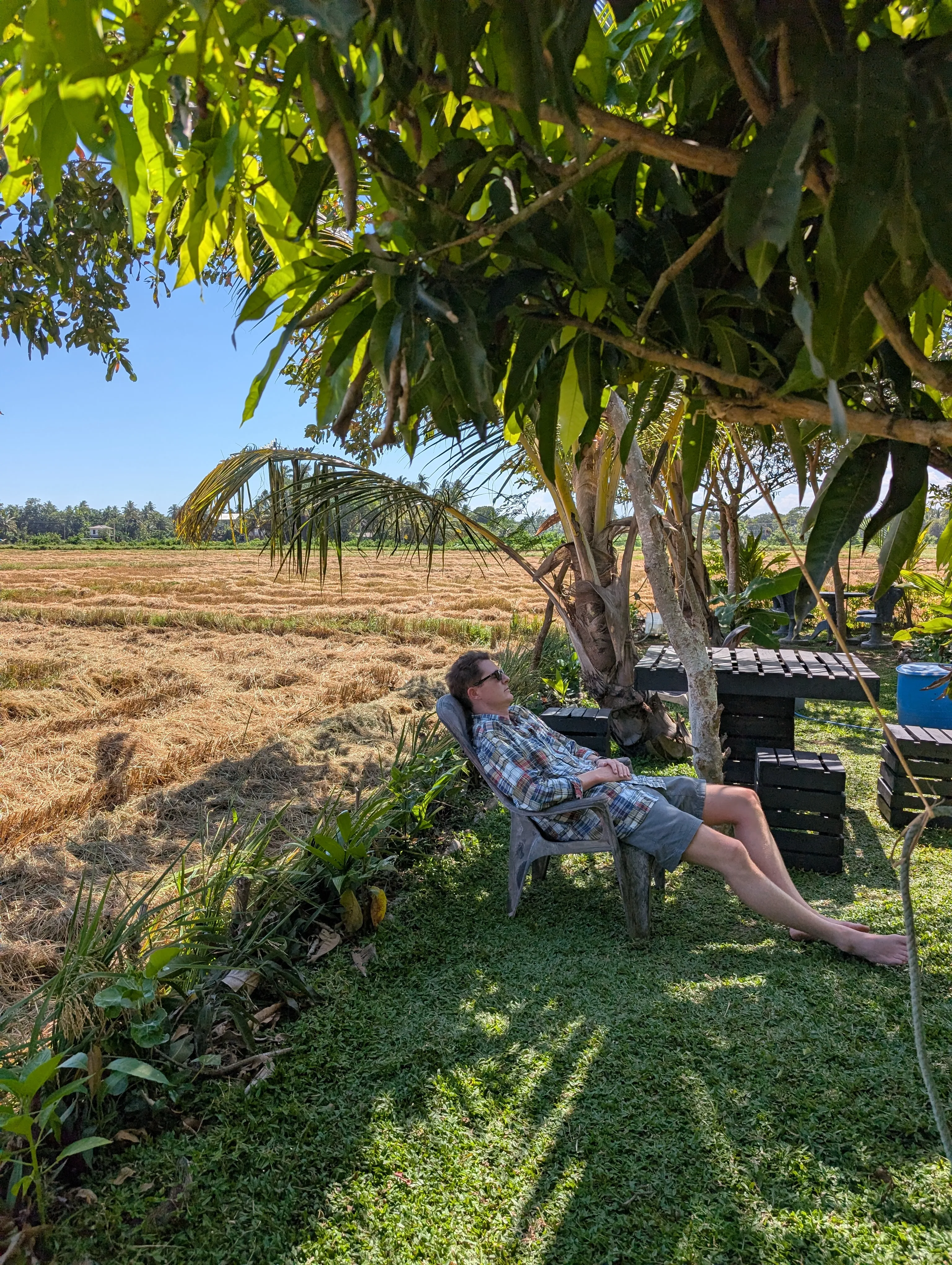 Relaxing in the shade of the garden.
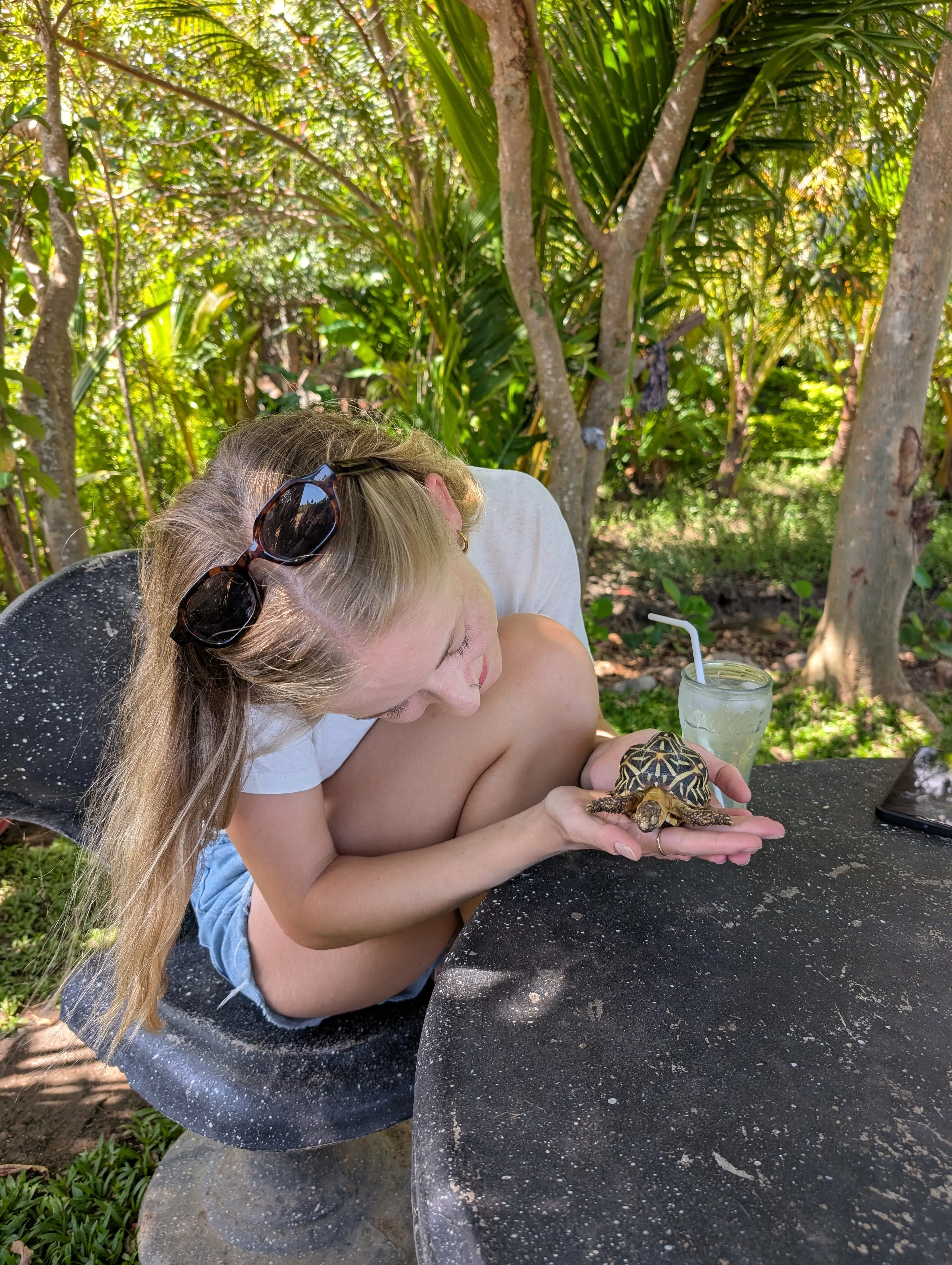 Viveka’s pet tortoise, Speedy.
Yala Safari
Yala is a national park that borders the Indian Ocean on the southeast corner of Sri Lanka. It is a diverse habitat and is famously home to Sri Lankan leopards, among dozens of other mammallian, reptilian, and avian species. We booked two half-day morning safaris. We were picked up at 4:30 a.m. by a diesel pickup truck outfitted with six seats and a shade cover bolted in the truck bed. The park allows only a certain number of trucks in per day on a first-come, first-serve basis. We were joined by three other travelers. Our driver was a seasoned guide: he hauled ass through Tissa at breakneck speeds in the dark of the morning to get a good spot in line for the park opening.
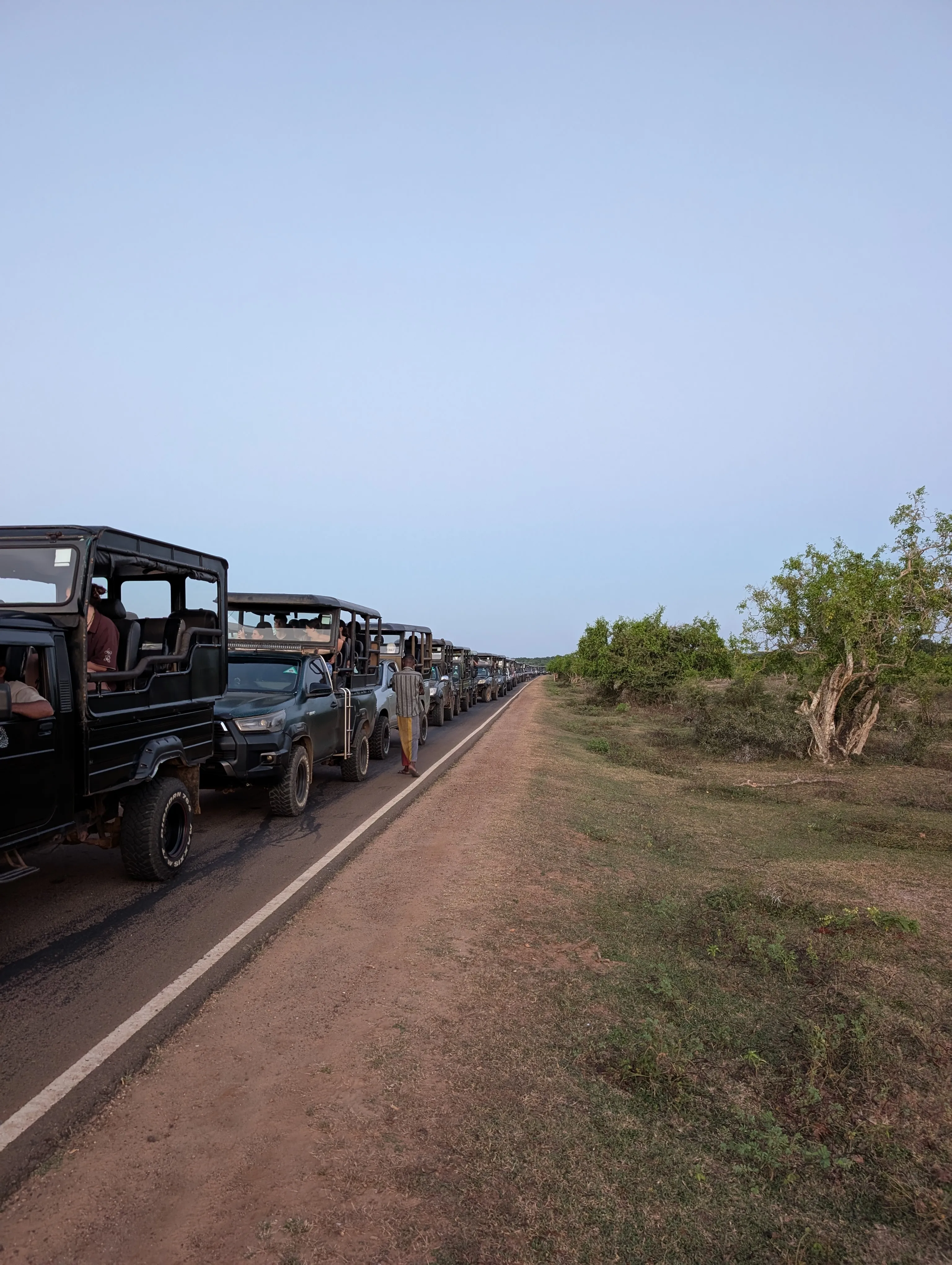 Jeeps in line to enter the park.
While waiting in line at the entrance, we saw two Asian elephants, a mother and her baby. An auspicious start. Shortly after, the park opened its gates and we were off to the races. Immediately we began seeing wildlife everywhere: crocodiles, peacocks, deer, jungle fowl, mongoose, water buffalo, kingfishers, Asian bee eaters, eagles, kites, monitor lizards, owls, parrots, hornbills, rabbits, and black faced langurs. It felt like everywhere we looked we were seeing new animals. We stopped for an early lunch near the beach to get ahead of the crowds, and before long we were back in the truck.
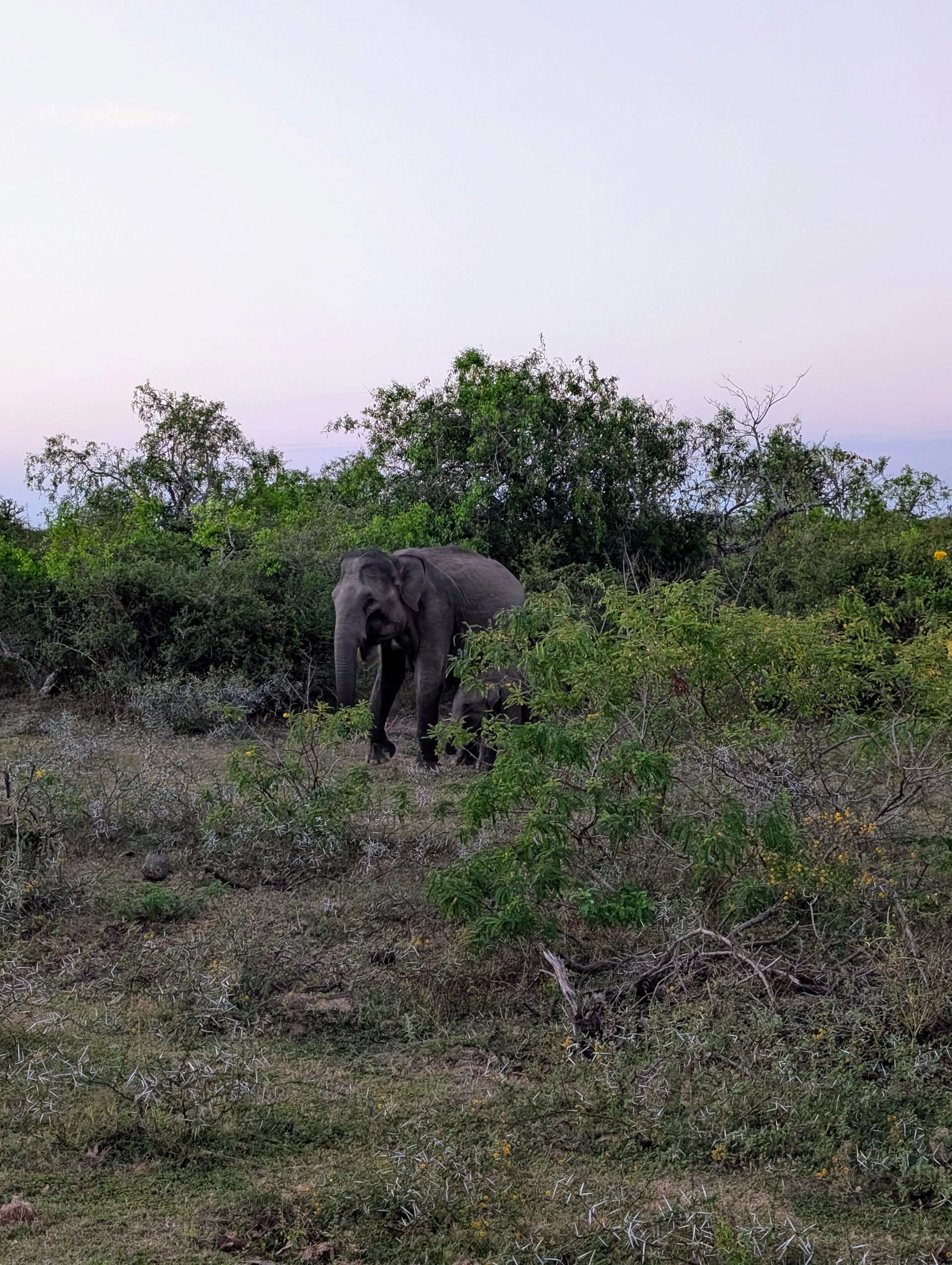 An elephant and her baby.
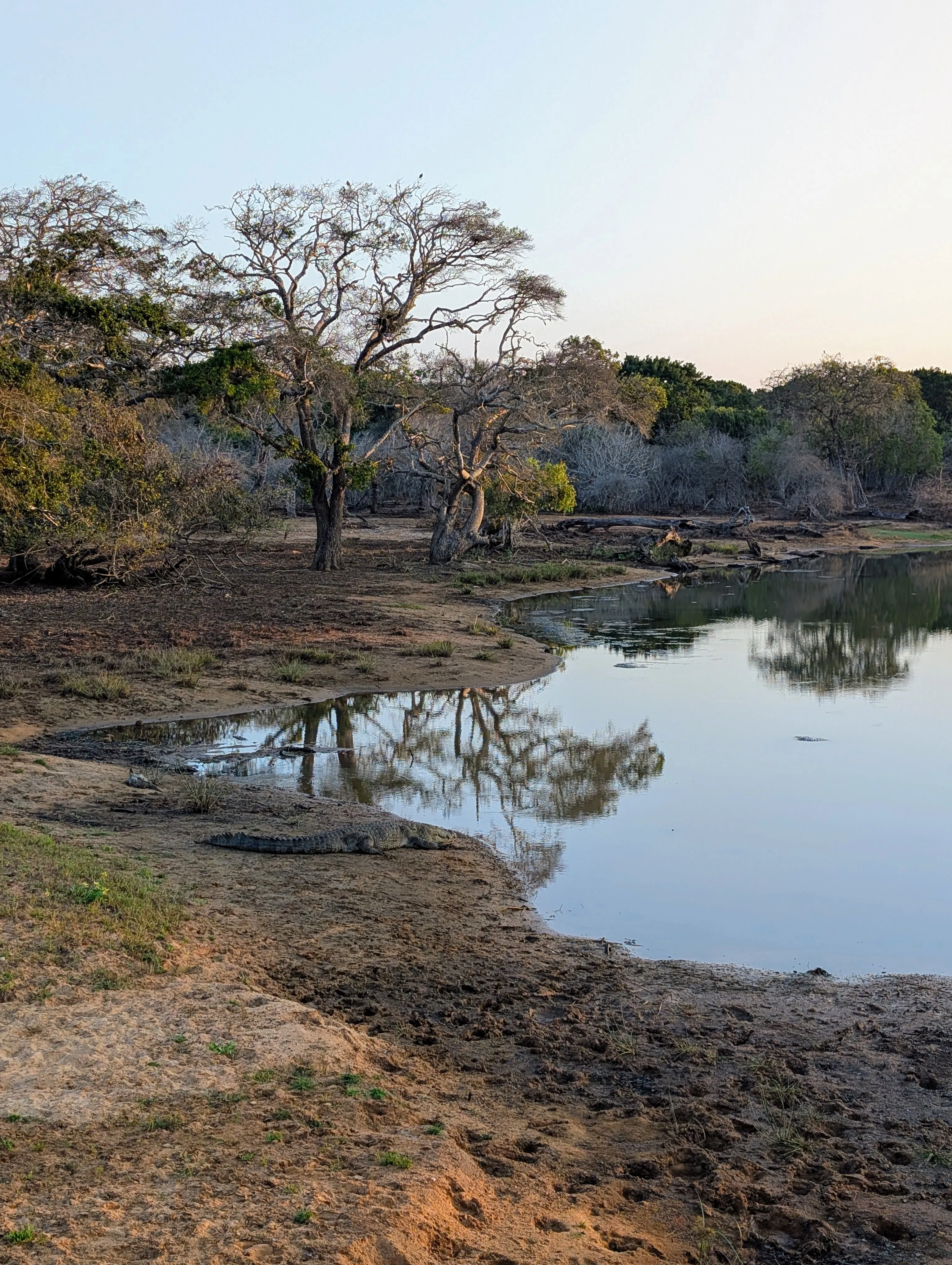 A crocodile waits by the water.
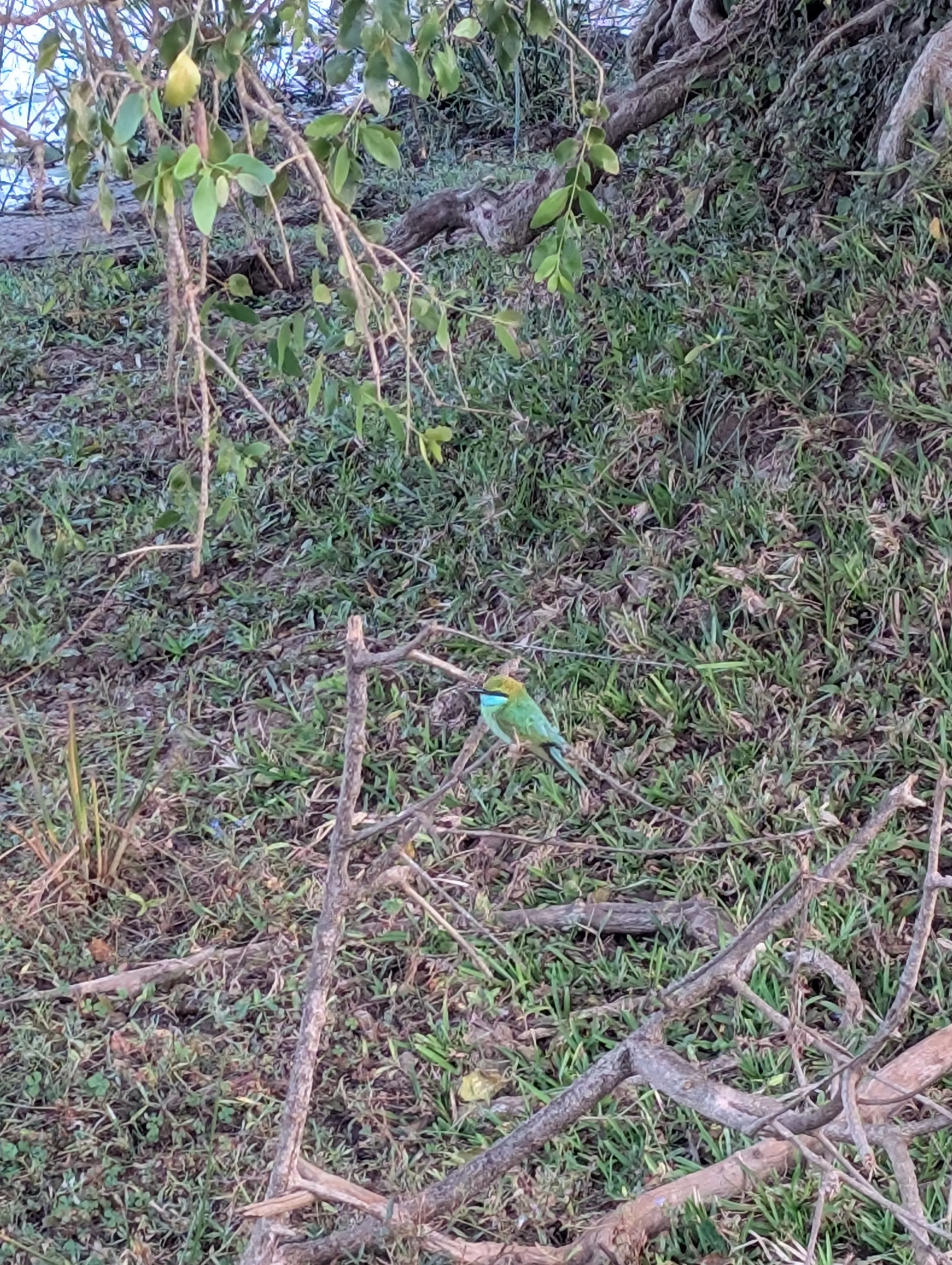 A colorful Asian bee eater.
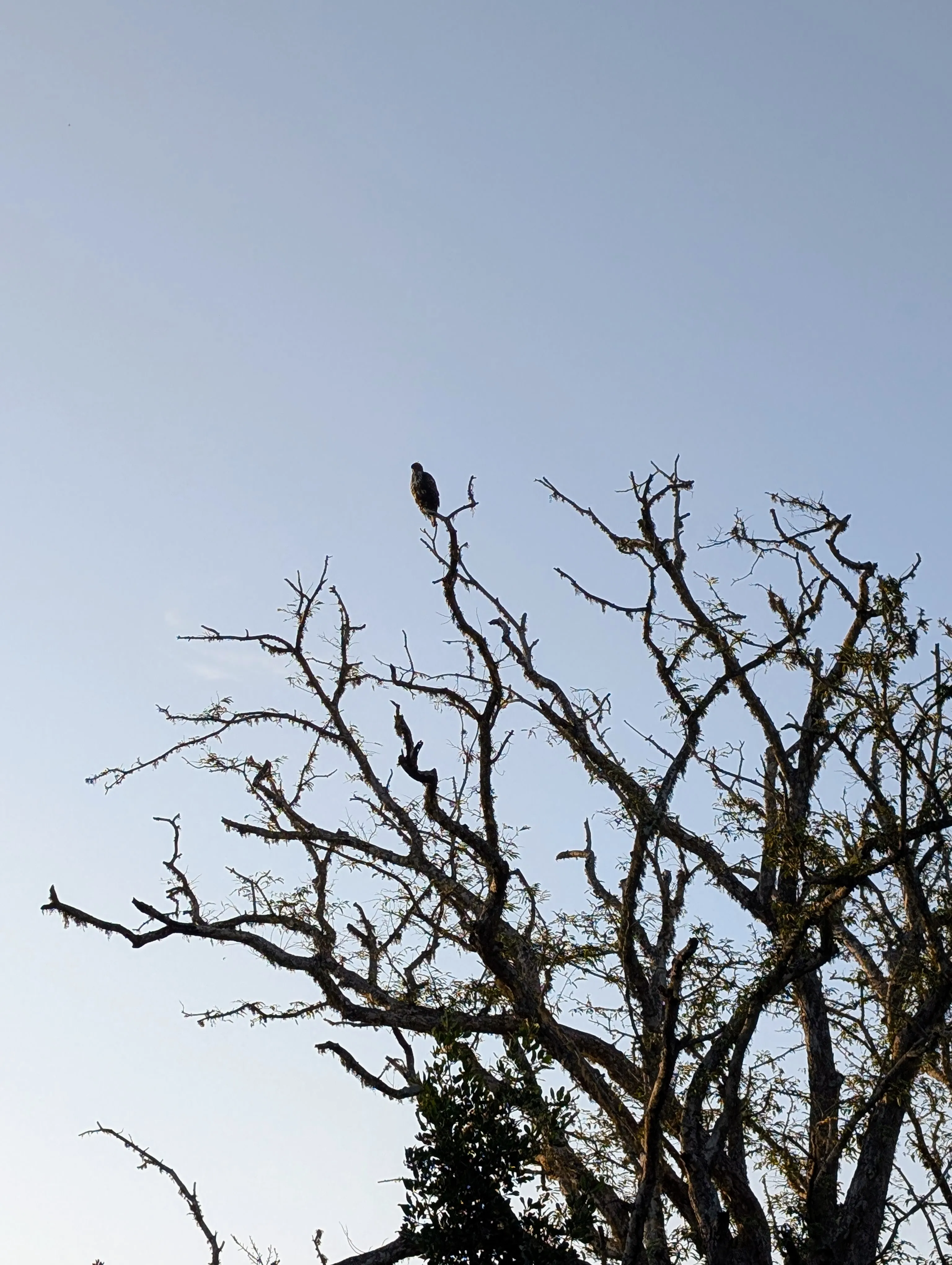 A crested serpent eagle (I think).
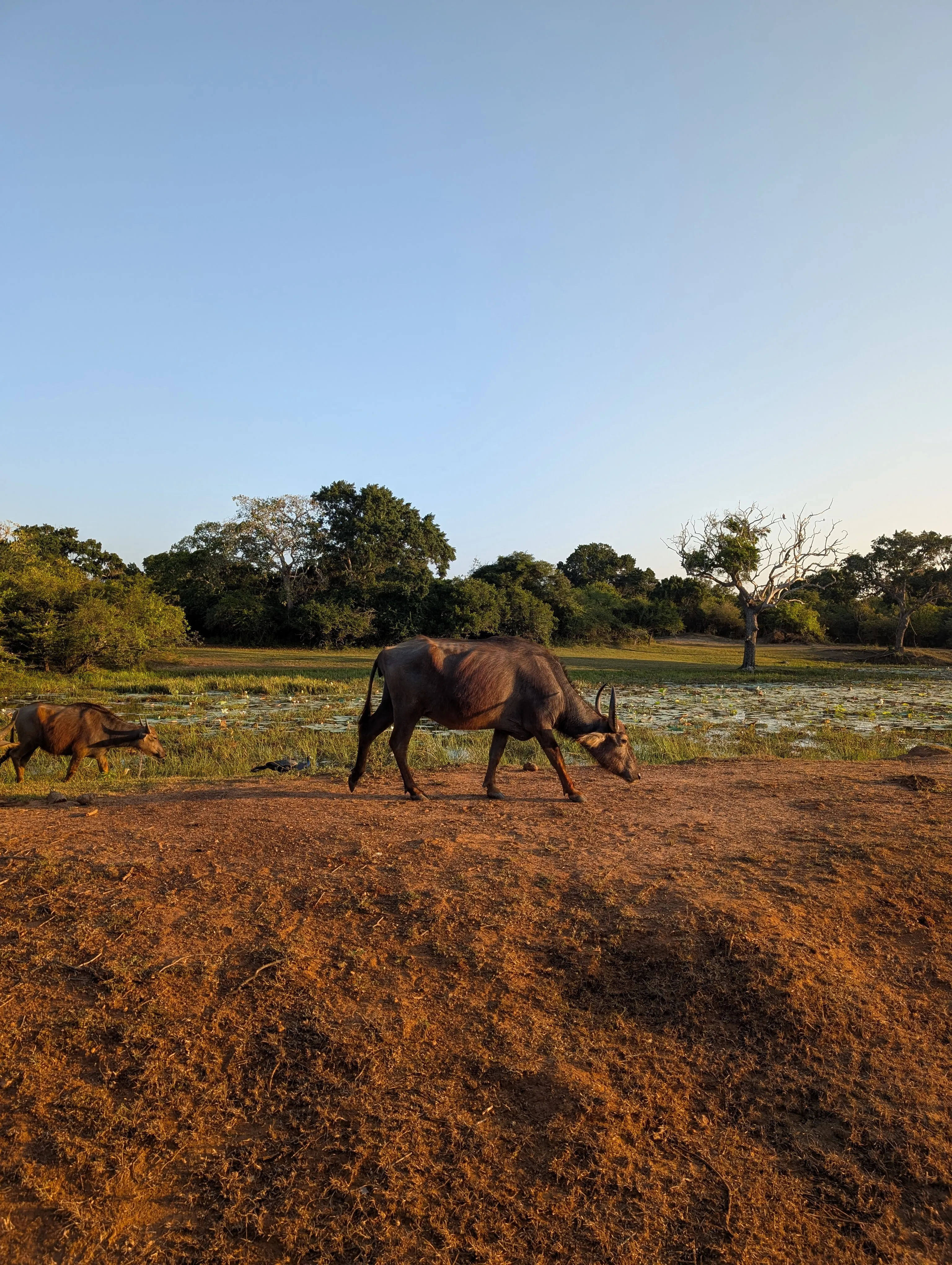 Water buffalo.
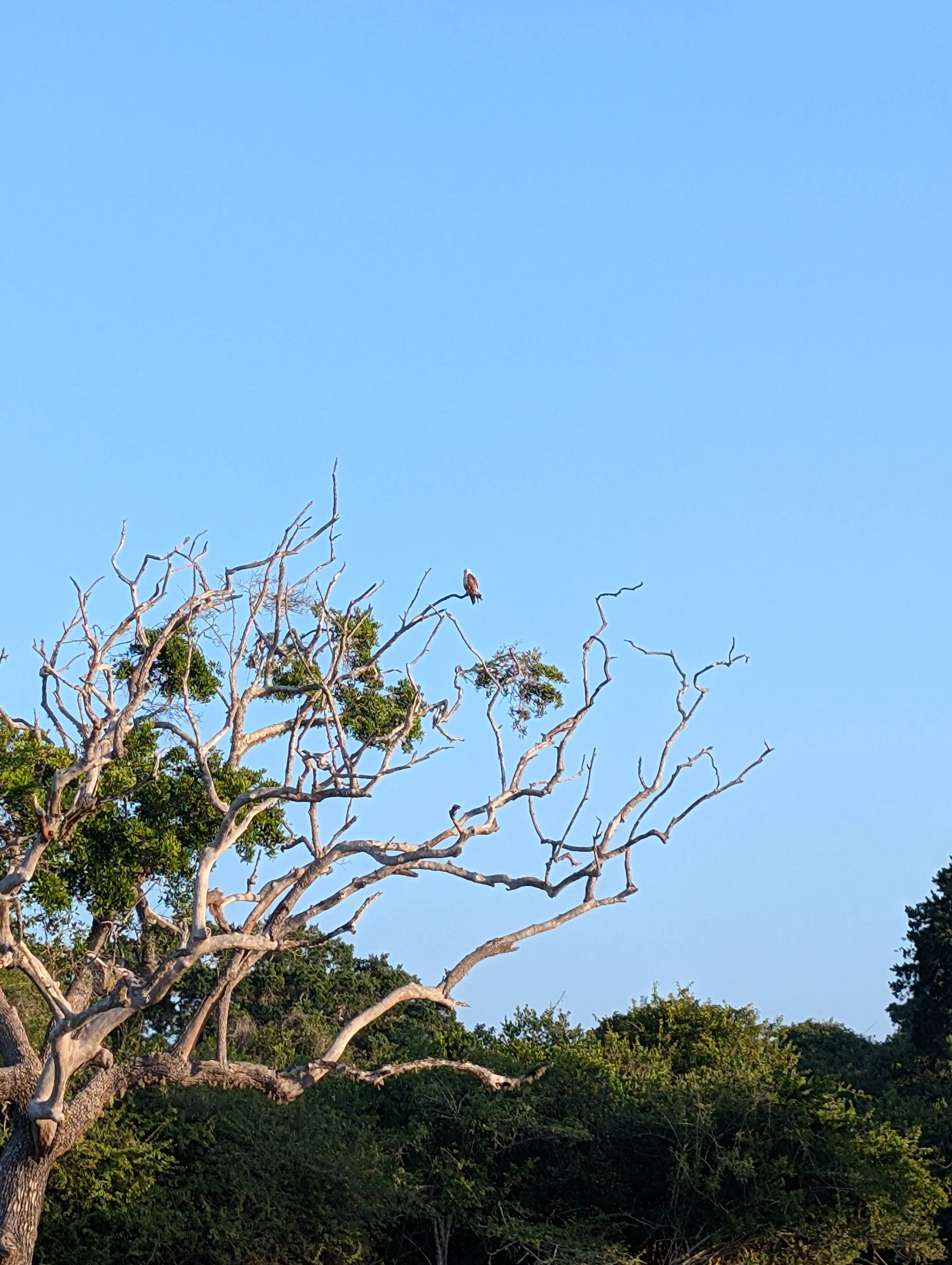 White-bellied sea eagle.
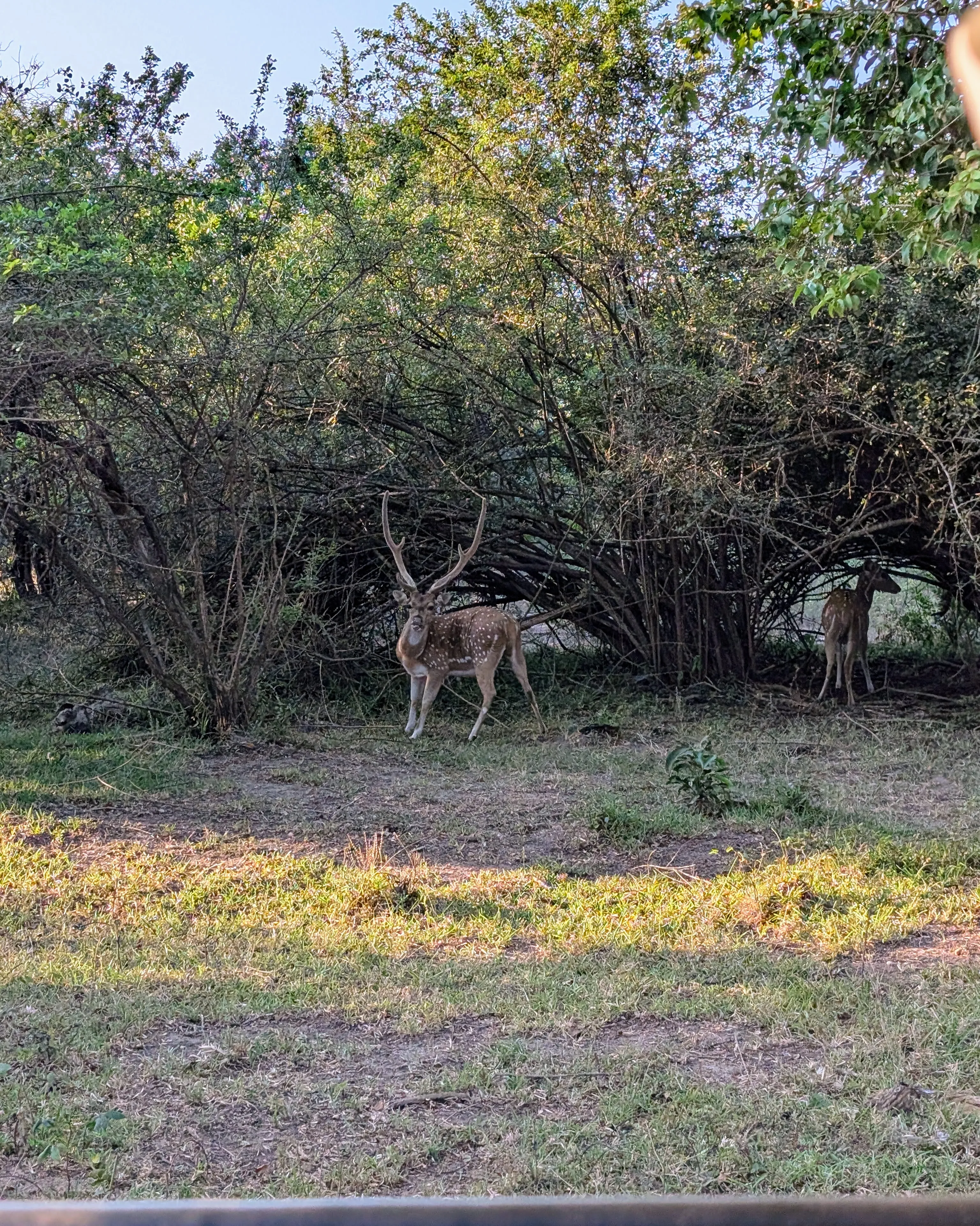 A spotted deer.
As the day progressed, I started think that we would not see a leopard. However, all the drivers stay in close contact while in the park. As soon as someone sees something, they let everyone else know, and dozens of trucks go racing to their location. With under an hour before we had to exit Yala, someone sent up the sign. Our driver immediately skidded to a stop, threw the car in reverse, backed up at least a kilometer down a narrow dirt road before hauling to the other trucks’ location. Sure enough, an adult leopard could just be seen prowling in the bush. I thought for sure it would get spooked and run away, but instead it ever so casually made its way across the road, past at least 20 trucks all jockeying for position, and climbed up a tree to lazily lick its chops. It was absolutely amazing.
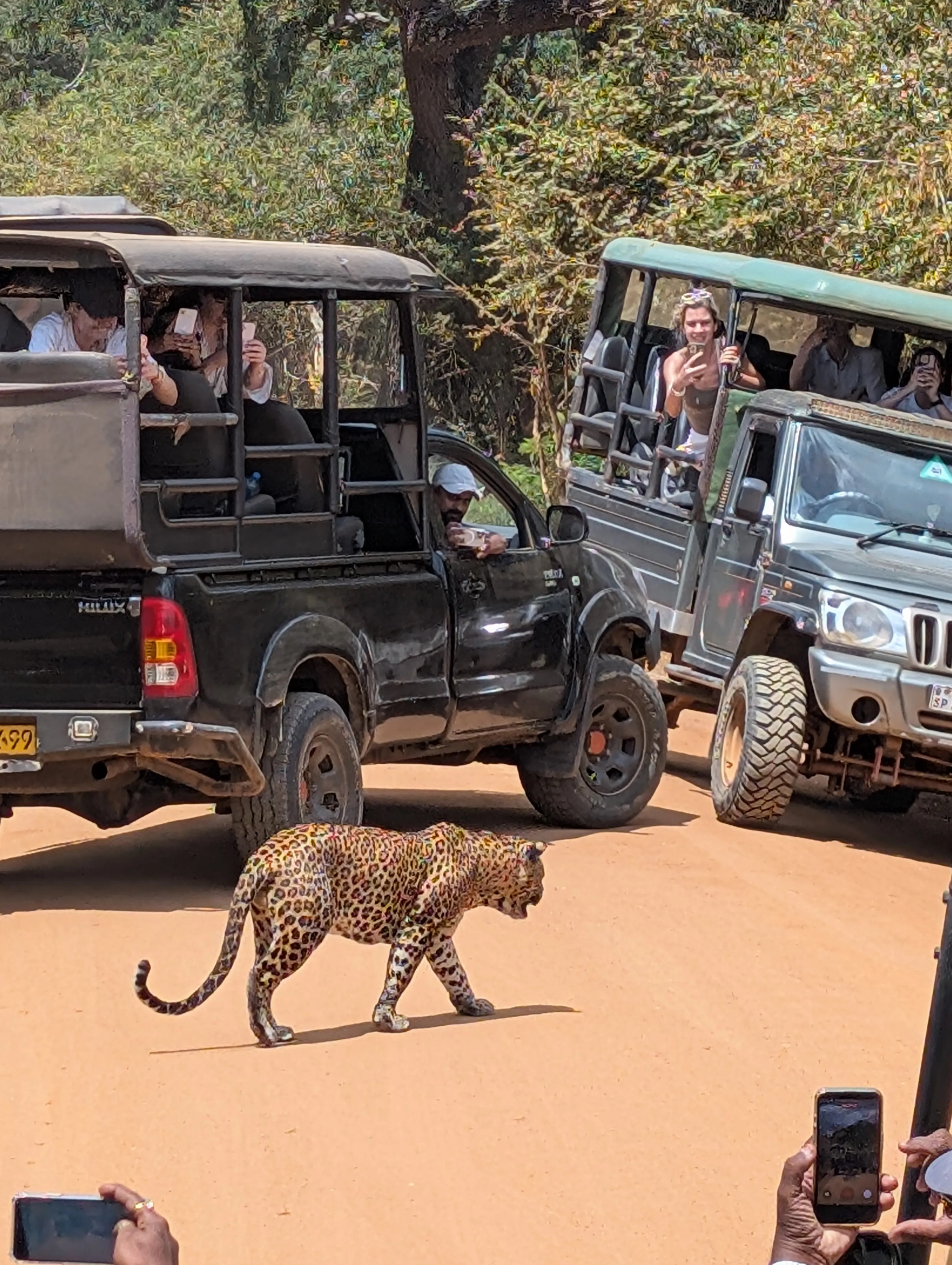 A leopard casually crossing the road.
After seeing the leopard, we began to make our way back to the entrance. But before we made it too far, our driver got another call - a sloth bear had been seen. Once again, we careened down single lane dirt roads, practically catching air on the bumps in the road, and made our way to see the sloth bear. These are smallish black bears that feed on fruit, ants, and termites. The one we saw was busily sniffing around for ants, barely paying us and the other trucks any mind. Surely not its first rodeo. Following the sloth bear, our safari was truly done, and we exited the park wondering how we got so lucky.
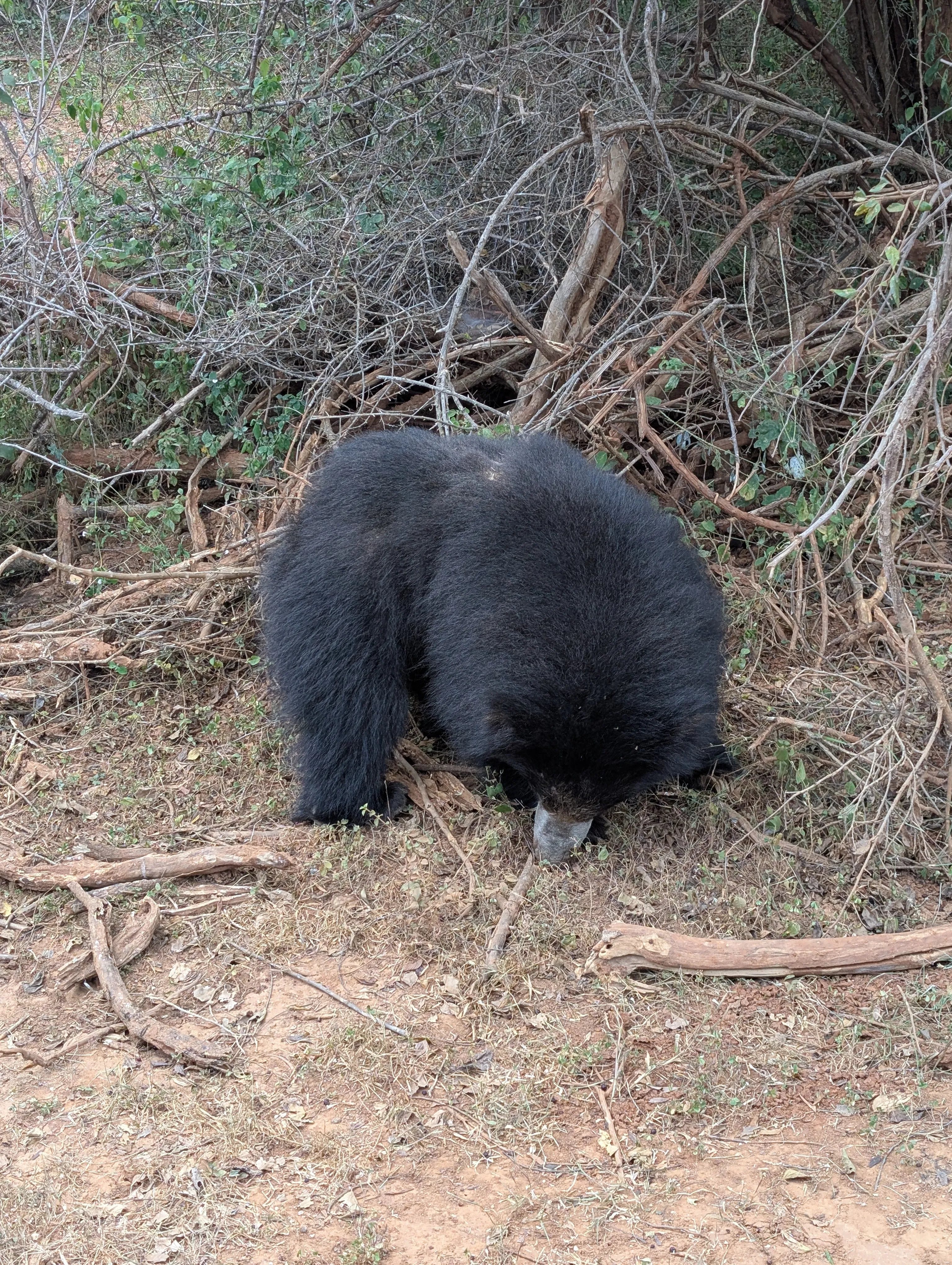 A sloth bear sniffing around.
We spent another day relaxing in Tissamaharama, catching up on our books and Survivor. On our last evening we walked just a few minutes from our guesthouse to Tissa Lake, where a massive colony of fruit bats dominates a few huge trees near the water. During the day they hang upside down from the branches by the hundreds, and as dusk falls the colony slowly rouses, the bat shrieks increase in quantity and volume, and soon enough all the bats take flight, swarming the trees and lake before dispersing into the night sky. I have seen many bats in the United States, but those are small, insect eating bats that I usually catch glimpses of while they flit through the night sky. The fruit bats in Sri Lanka are comparatively huge, with cute furry faces and wide leathery wings. Seeing them hang en masse felt like something out of a movie, and their silouhettes against the sky were just like someone putting up thousands of bat signals. This experience, combined with the successful safari the previous day, made Sri Lanka feel like a gigantic wildlife preserve that folks happened to live within.
Ella
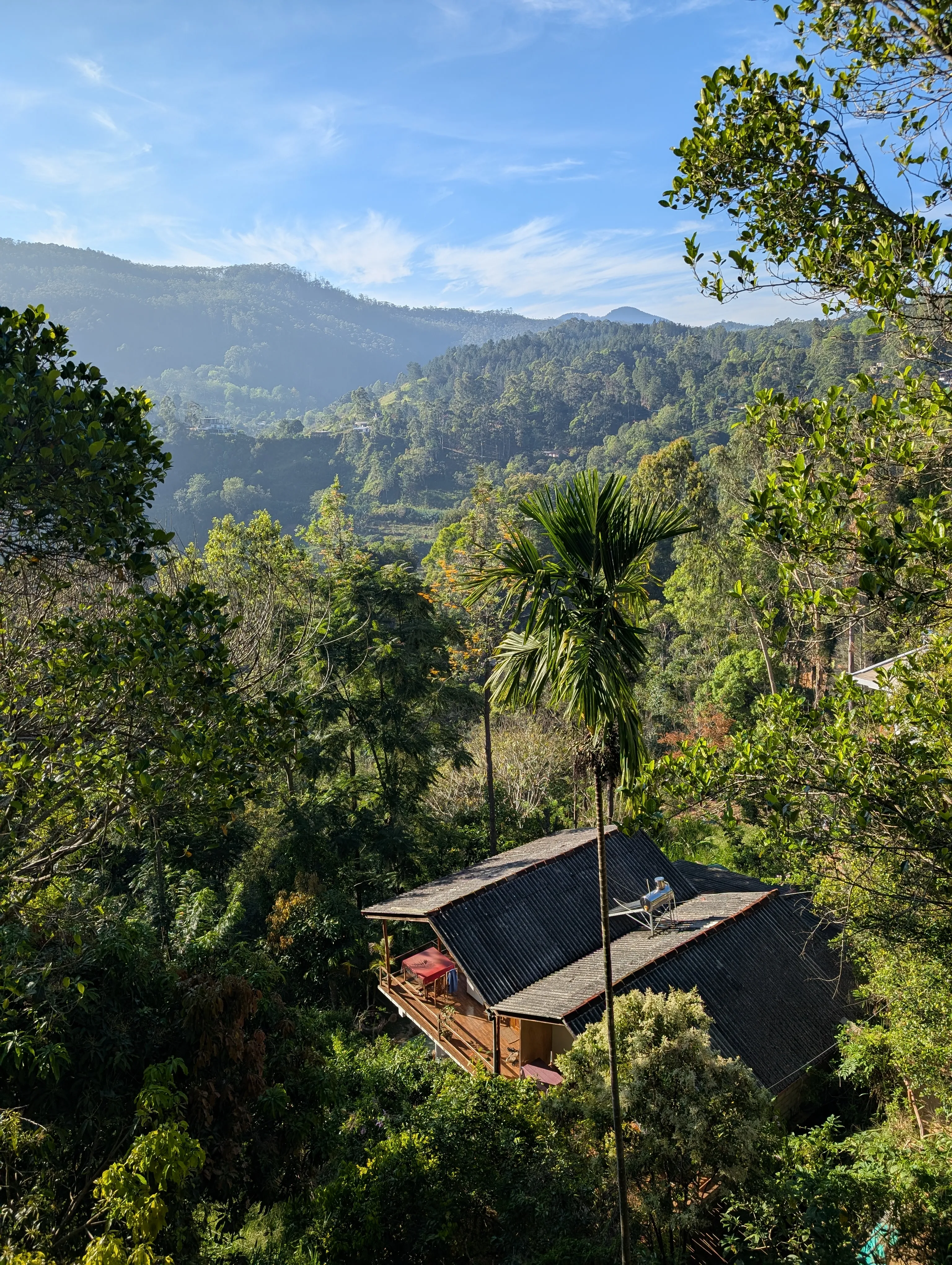 Our bungalow above Ella.
From Tissamaharama, Najeem, Makeda, and I drove north into the south central hill country to a small mountain town called Ella. This area is the primary tea growing region of Sri Lanka, and lush green tea plants cover the hillsides everywhere you look. It was here that Tommy Lipton began his tea empire at the turn of the 20th century. We stayed at a beautiful guesthouse overlooking the Ella Gap on a hillside above the main town. Compared to Tissamaharama and even Weligama, Ella felt almost entirely geared towards tourists. The main strip in town was dominated by large, two story restaurants with eager promoters beckoning us to join them for happy hour or a musical guest that evening. Interspersed were cheap souvenier stores and western clothing shops. We felt that in Ella we typically encountered more tourists than Sri Lankans, and likened it a bit to Cabo San Lucas: whatever the town once was, it’s now a place that largely caters to tourism. Now, I totally understand that Makeda and I are, in fact, tourists, and our presence in Ella increased the sense of it being “touristy” for other tourists. As the saying goes, “you’re not in traffic, you are traffic.” For us, though, any negative feelings we had about Ella being “touristy” was not to do with the presence of tourists per se, but rather the ratio of tourists to locals.
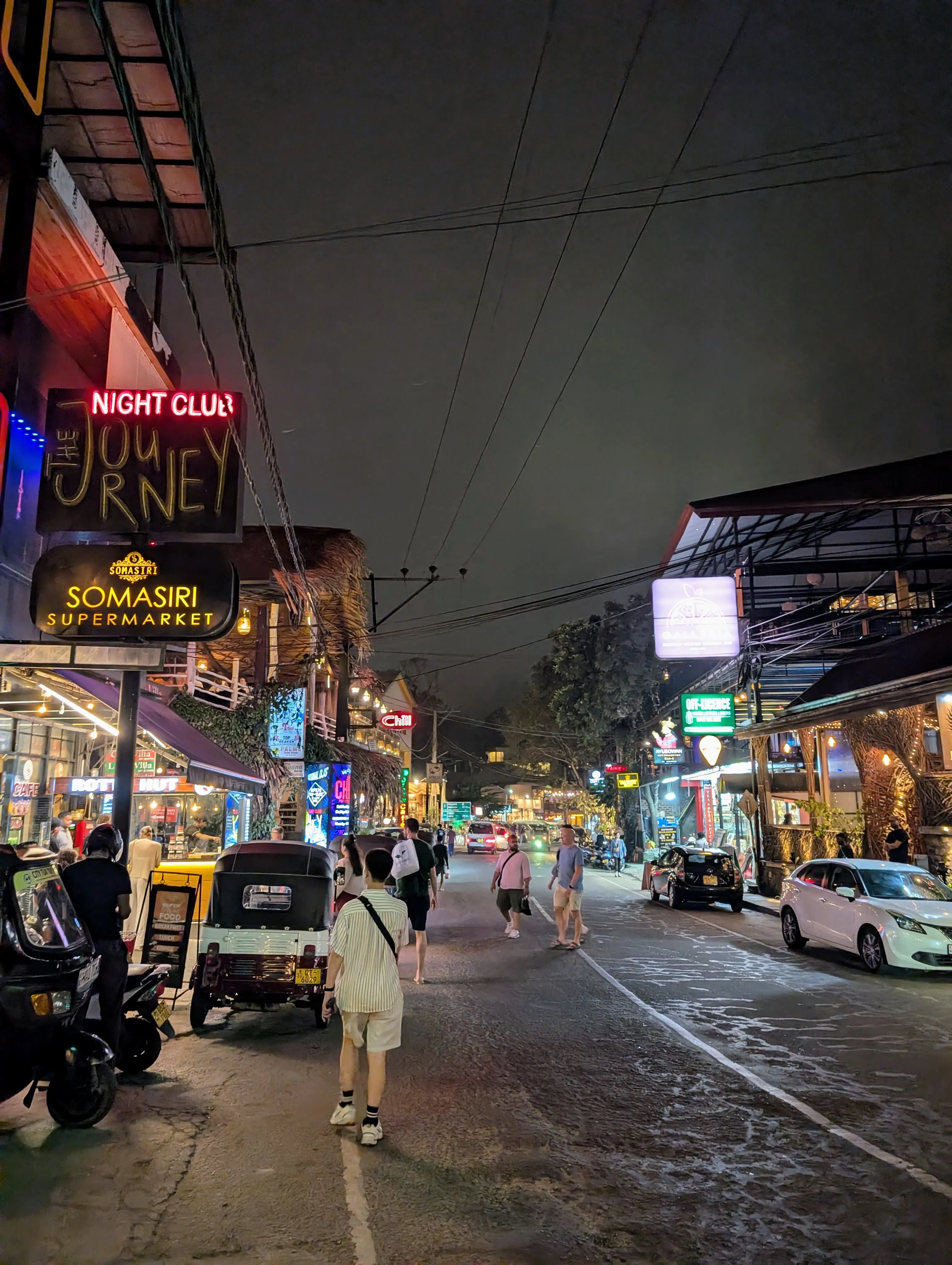 The main street in Ella.
Ella Rock
Having said all of that, Ella is genuinely beautiful and was a wonderful change of pace compared to the Weligama and Tissamaharama. The weather was cool with foggy mornings, and there was a ton to do and see. We hiked to Ella Rock: a moderate and blissfully shady hike to a stunning viewpoint over the Ella Gap. On our descent we (I) opted for a different route per our Alltrails map, which was going smoothly until we dropped down a steep scramble into overhead bush and seemingly no trails. Another English couple had made the same mistake, and the four of us bushwacked our way along the alleged trail displayed on our phones. Mercifully, a local farmer noticed our plight from his fields below, and after his initial bewilderment of seeing four pasty white tourists clamboring through the bush subsided, he made his way up to our position and guided us down. He then proceeded to show us the way through his and his neighbors’ farms, all while stopping to point out occasional plants or animals of interest. Grinning a stained red smile from chewing betel nuts, he bade us farewell at the train tracks we could follow to get back to the trailhead. By this point in the trip I had concluded that Sri Lankans are the nicest people in the world, and his cheerful helpfulness in response to our foolish imposition only deepened this belief.
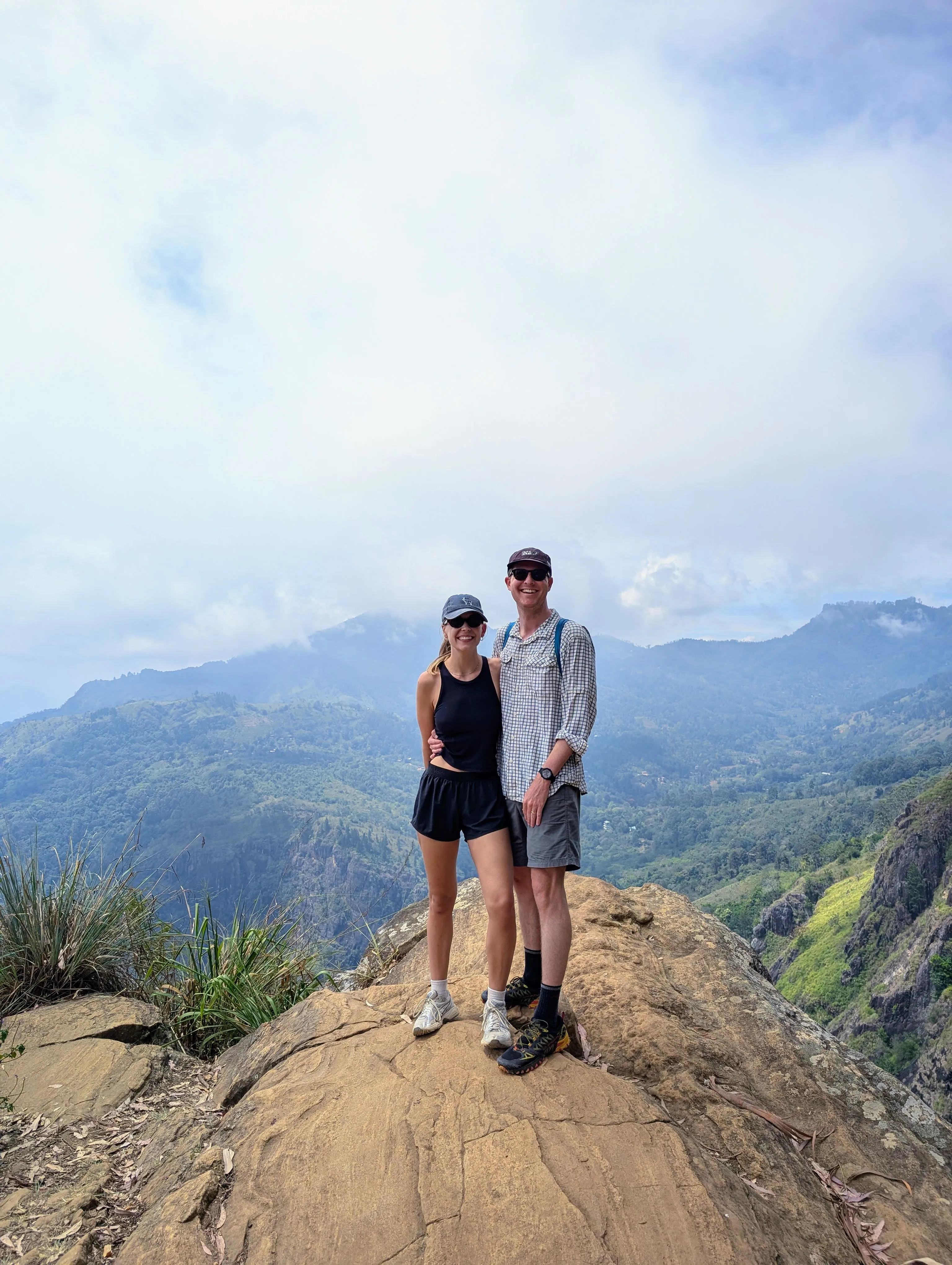 At the summit of Ella Rock.
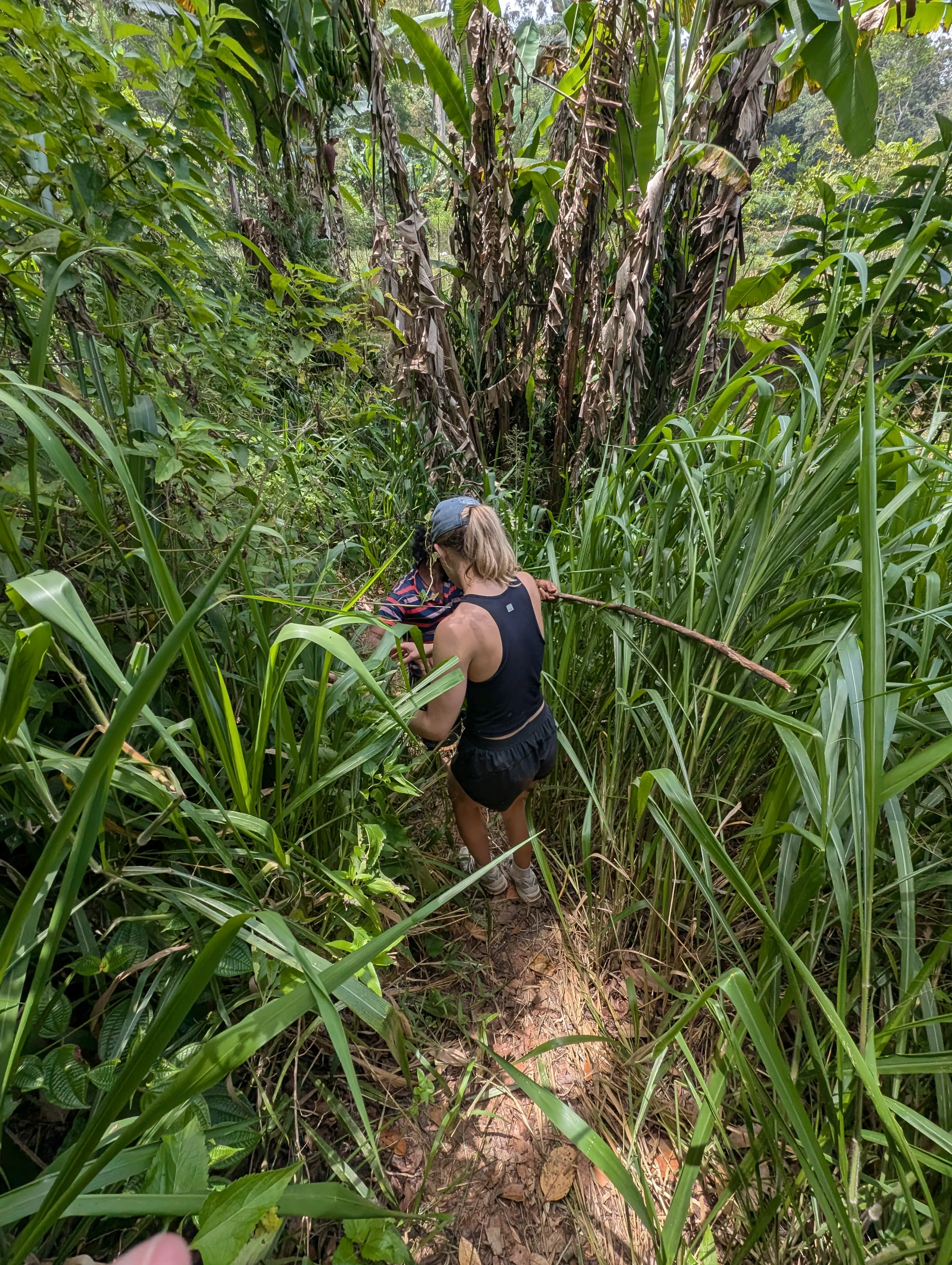 Making our way through the bush.
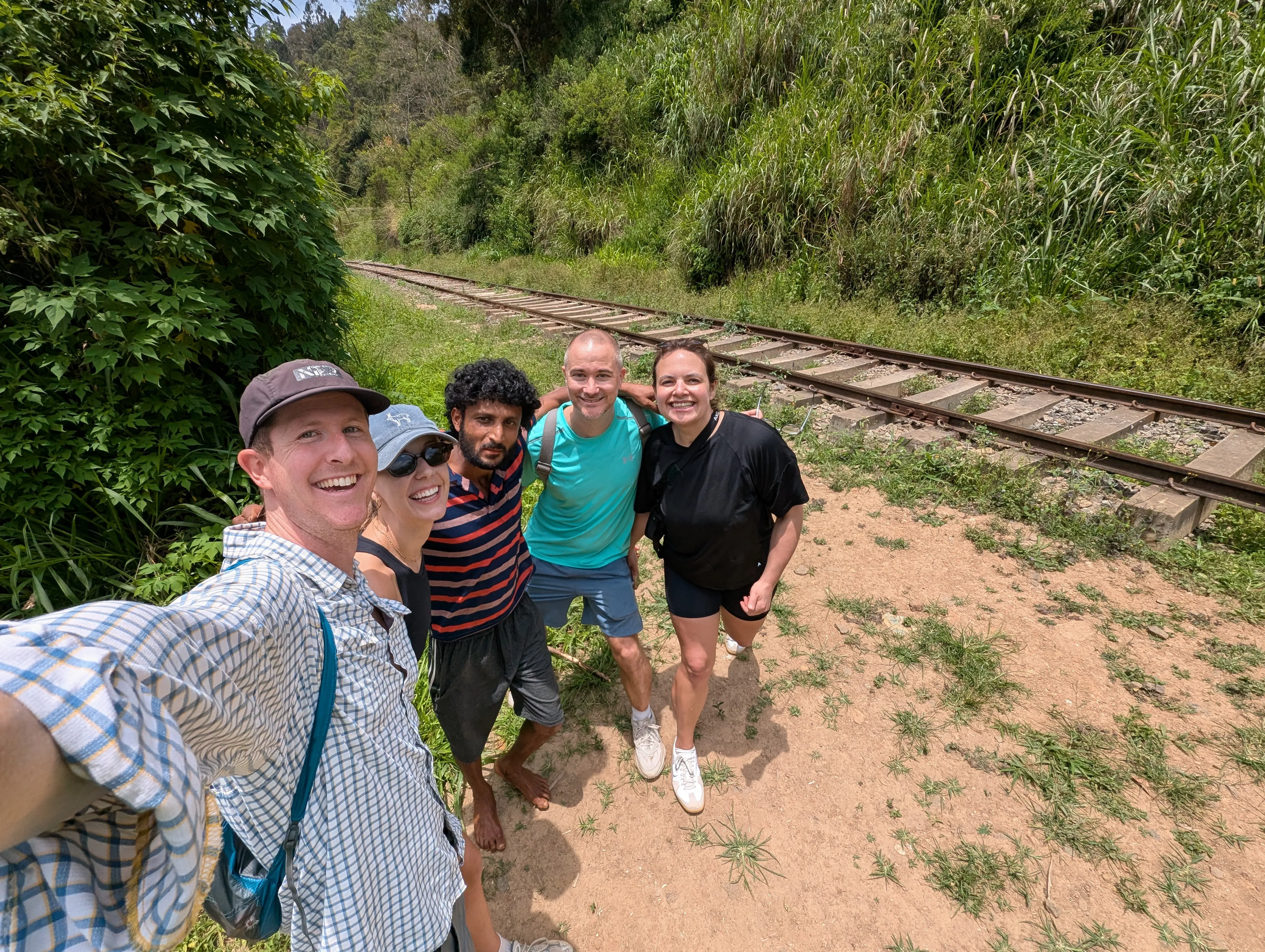 Our hero, Geylon.
Riding the train
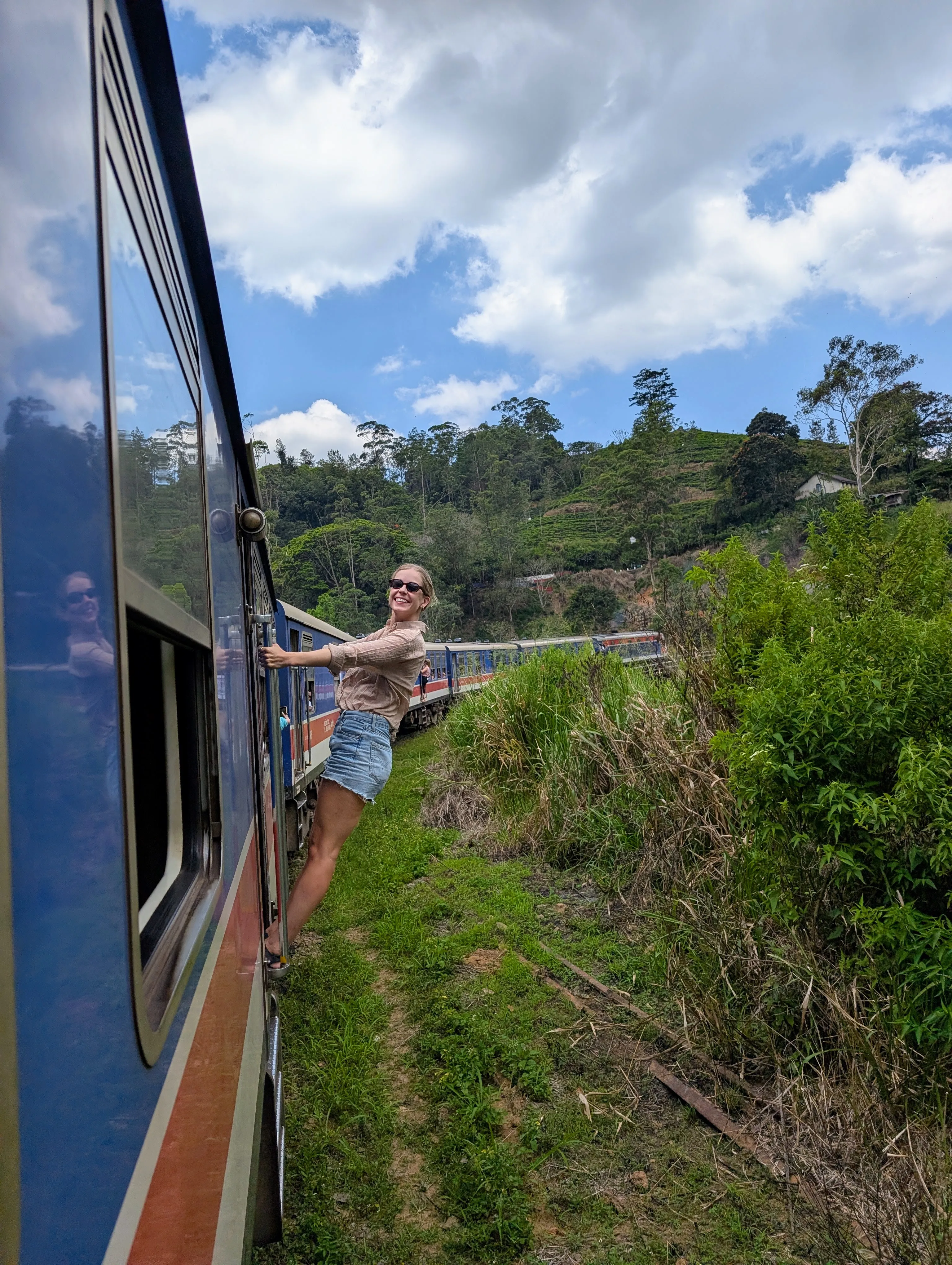
Makeda and I also rode the Instagram-famous train journey from Ella to Badulla. As I mentioned, the train to Kandy was not operational, but we still wanted to experience the rail system so we went for a joyride. On the first leg of the trip the train passes over the Nine Arches Bridge, a curved stone bridge with gorgeous views of the valley below. If there is anything I feel comfortable labeling as unabashedly touristy, it was this leg of the train.
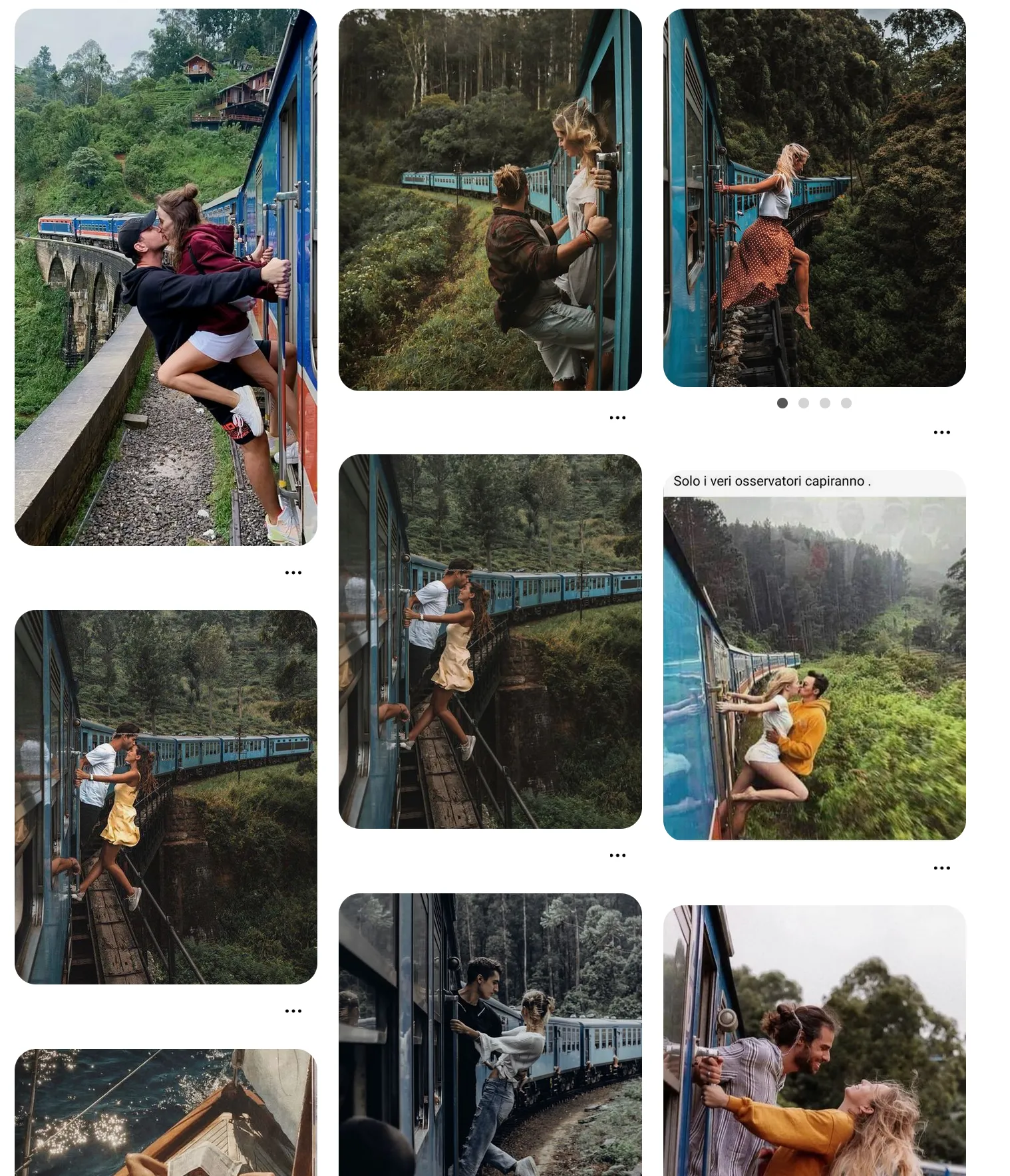 A collection of influencers’ pictures from Pinterest.
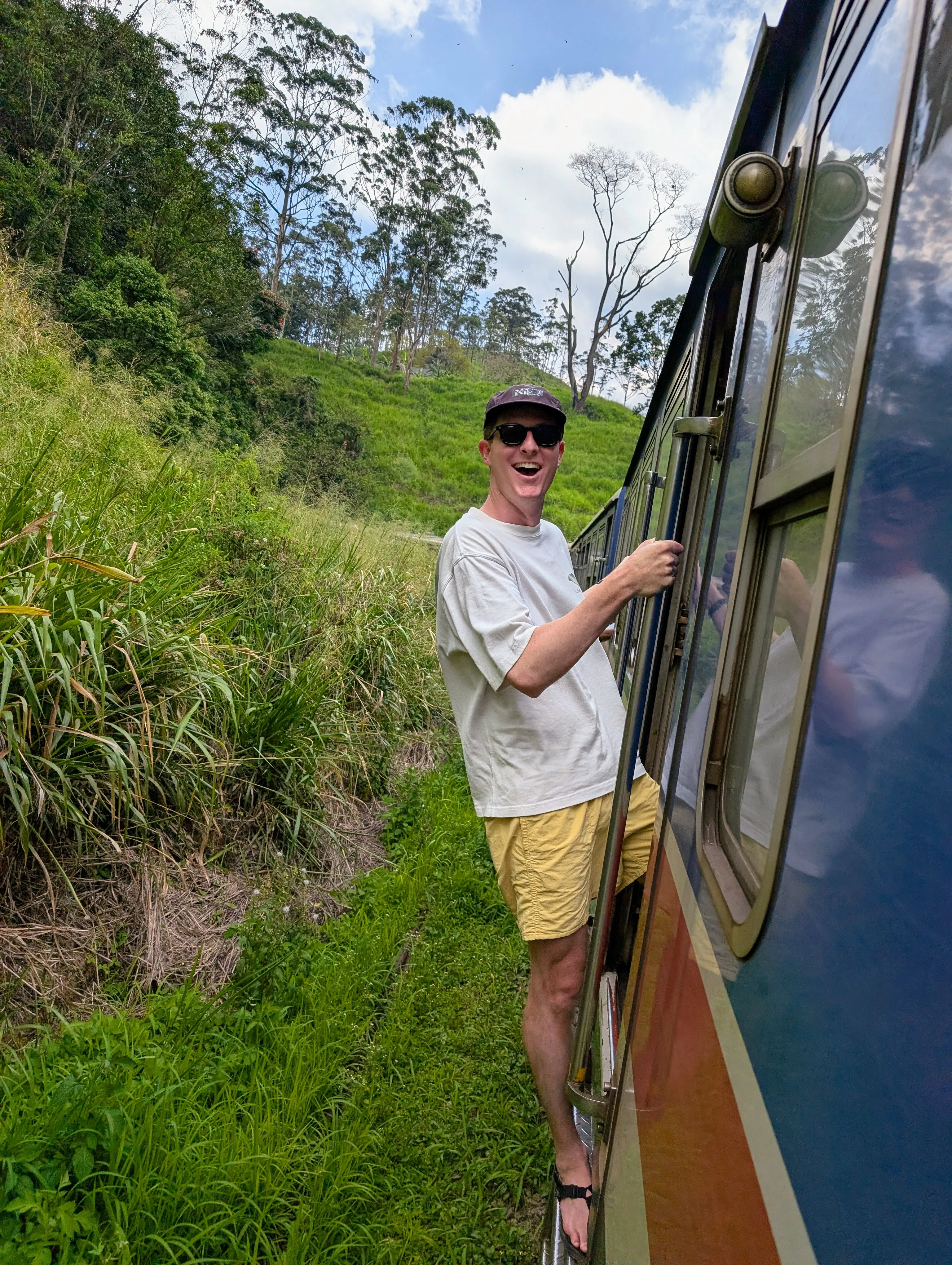
The majority of passengers were tourists and or influencers who only rode the train on the first leg, took a million pictures on the bridge, and got off in Demodara to drive back to Ella. There was also a mad dash when the train arrived to get on the “correct” side of the train, and (mostly) women lined up to hang out of the open train doors while their husbands or boyfriends jockeyed for position in a window to snap pics and videos. It definitely left an unsavory taste in our mouths and peeled the curtain back on travel influencer posts. That being said, after everyone else got off the train, Makeda and I totally took pics hanging out of the train door like everyone else.
Uva Halpewatte Tea Factory
Najeem met us in Badulla and drove us to the Uva Halpewatte Tea Factory for a tour and tea tasting. The factory felt like something out of a Ghibli movie: huge, welcoming yet intimidating, full of interesting sights and smells, and had a charming blue exterior. Our tour guide walked us through the line, showing us tea leaves being dried, rolled, fermented, sorted by size, and filtered. We learned that green, black, white, Earl Grey, jasmine, and many other teas all come from the same plant and only differ by processing or flavor additions. You can imagine how good the entire factory smelled.
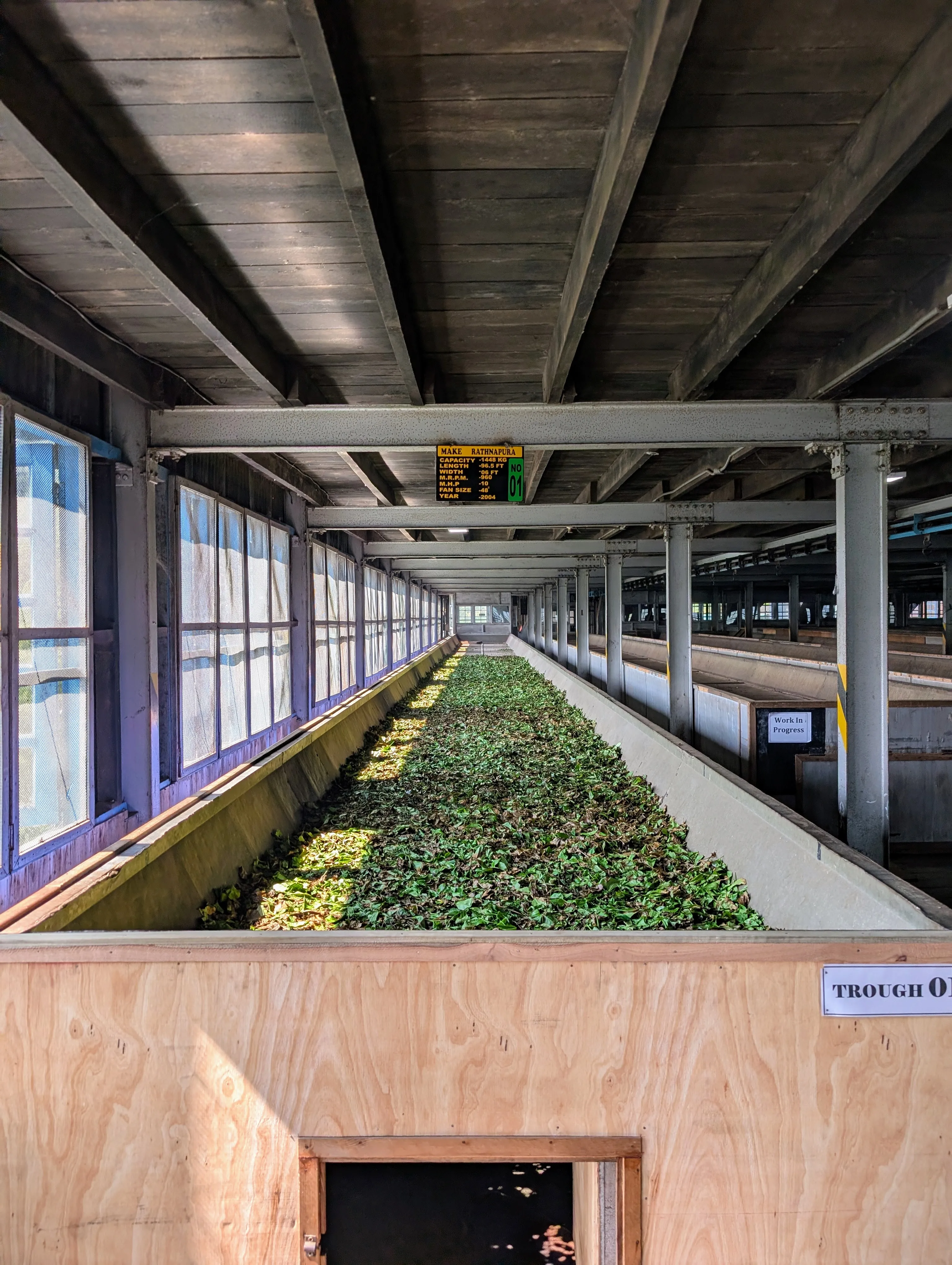 Tea leaves being dried.
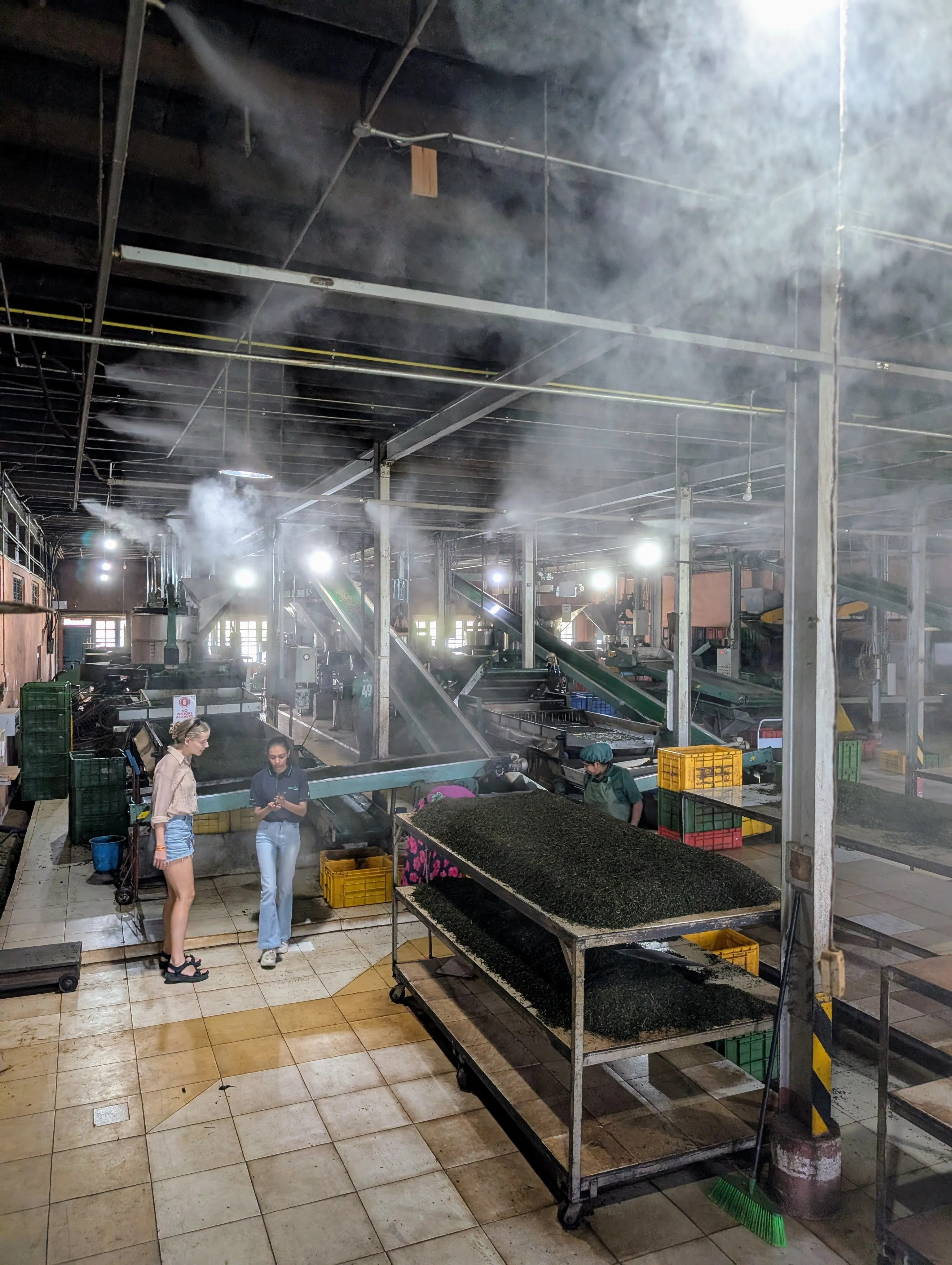 Inside the rolling and fermenting room.
After the tour we got to try several different teas, and it was so fun to taste the difference between black teas brewed from different sized tea particles. Our favorite classification was Pekoe - the second largest tea size.
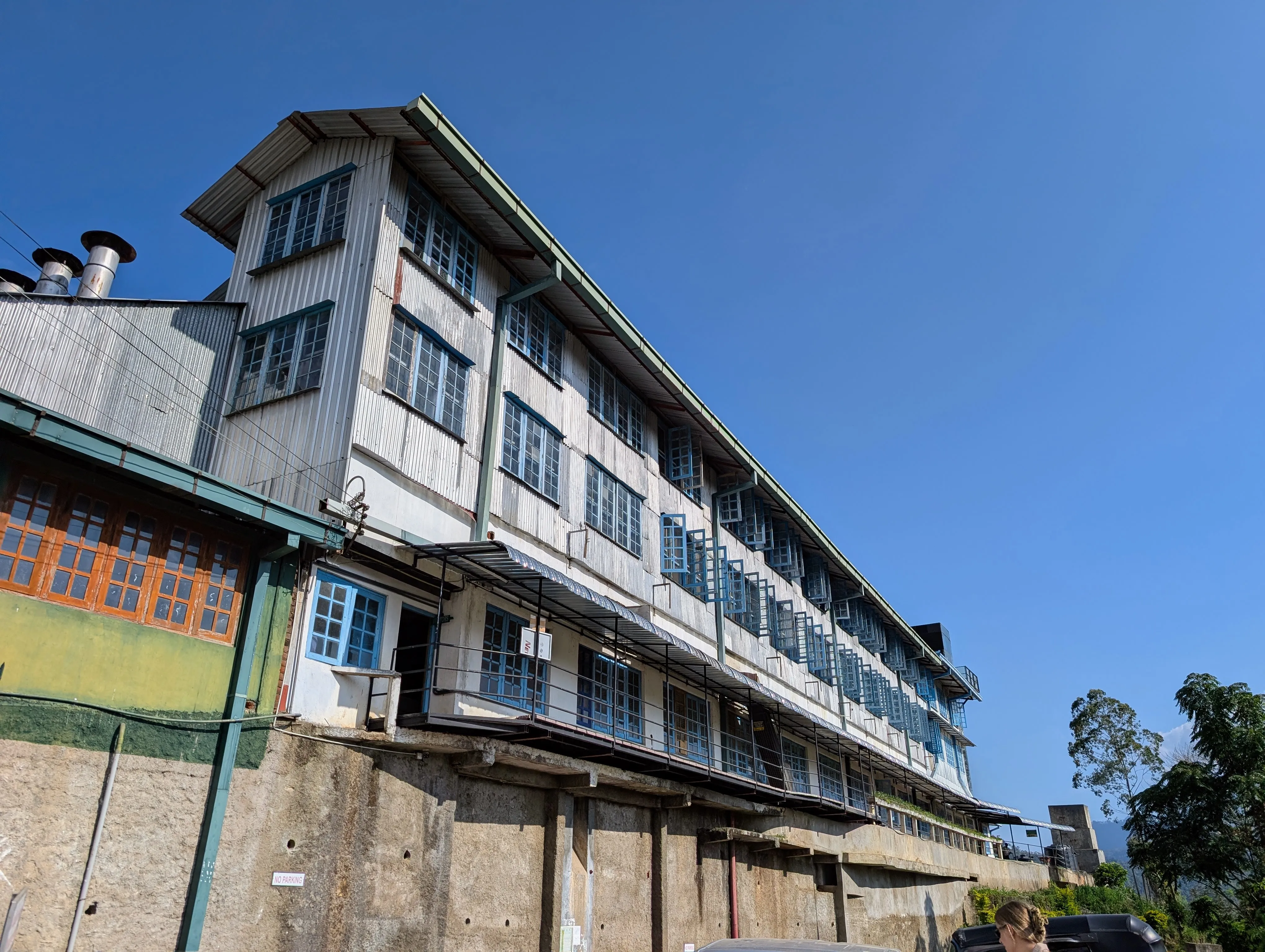 Outside the Uva Halpewatte Tea Factory.
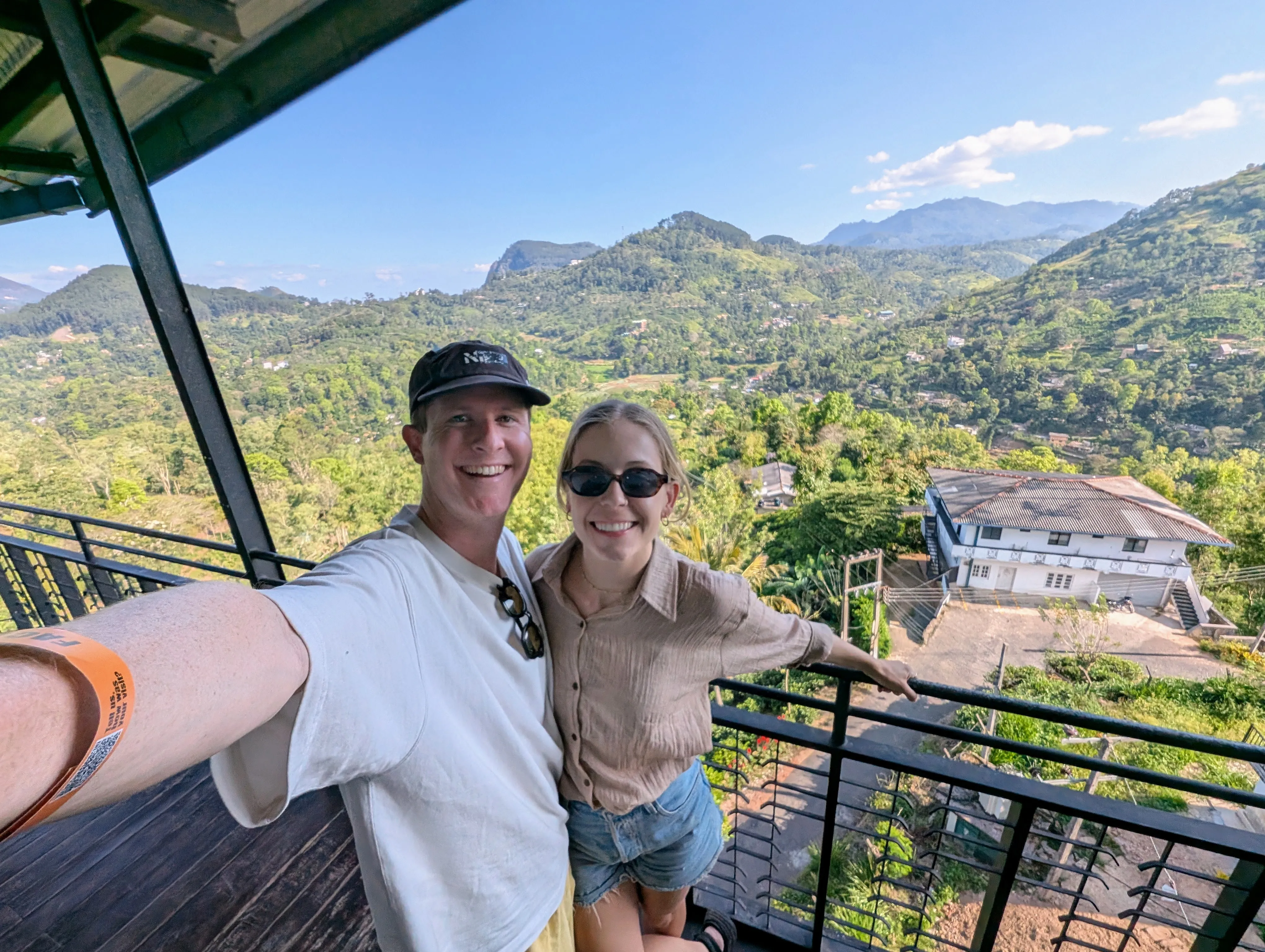 On the veranda after our tea tasting.
On our last night in Ella we shot pool at a bar in town were I was summarily hustled by our bartender - he kindly let me pocket all but two balls before cleaning up his last five in one go.
Colombo
We had two options to return to Colombo from Ella by car: travel 200 kilometers east through the mountains over six hours, or backtrack 315 kilometers down and back up the coast over five hours. Although the mountain journey would undoubtedly be beautiful, we had no hesitation in taking the shorter, far less windy option along the coast. On the way back we stopped for lunch in Mirissa, a coastal town just east of Weligama, and by the mid afternoon we had arrived in Colombo.
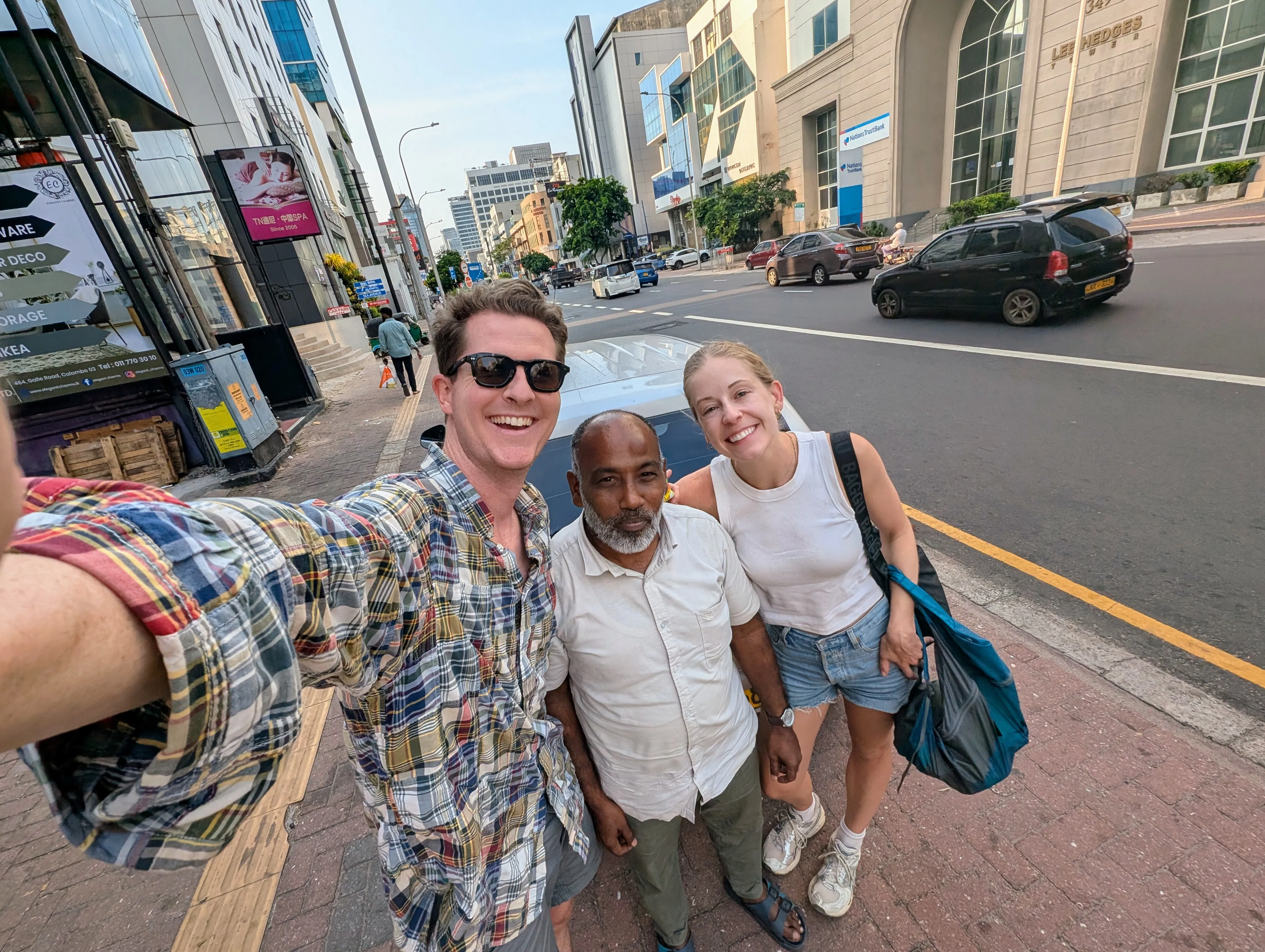 Saying goodbye to Najeem.
We only booked two nights in the city, so we did not have much time to explore. Additionally, we stayed in an unexpectedly luxurious apartment, complete with a kitchen, living room, and main bedroom. We spent much of the first night relaxing in the apartment, ordered incredible Chinese takeout, and played house for a change. During our first full day we checked out Viharamahadevi Park and did some shopping, and Makeda found her way to another jewelry store where she happily pored over more gems, this time for friends and family. That evening I walked out to the ocean just three blocks from our apartment. There is no beach, but rather the rail line dominates the water. During a spectacular sunset the train came rolling by, making for an especially memorable moment.
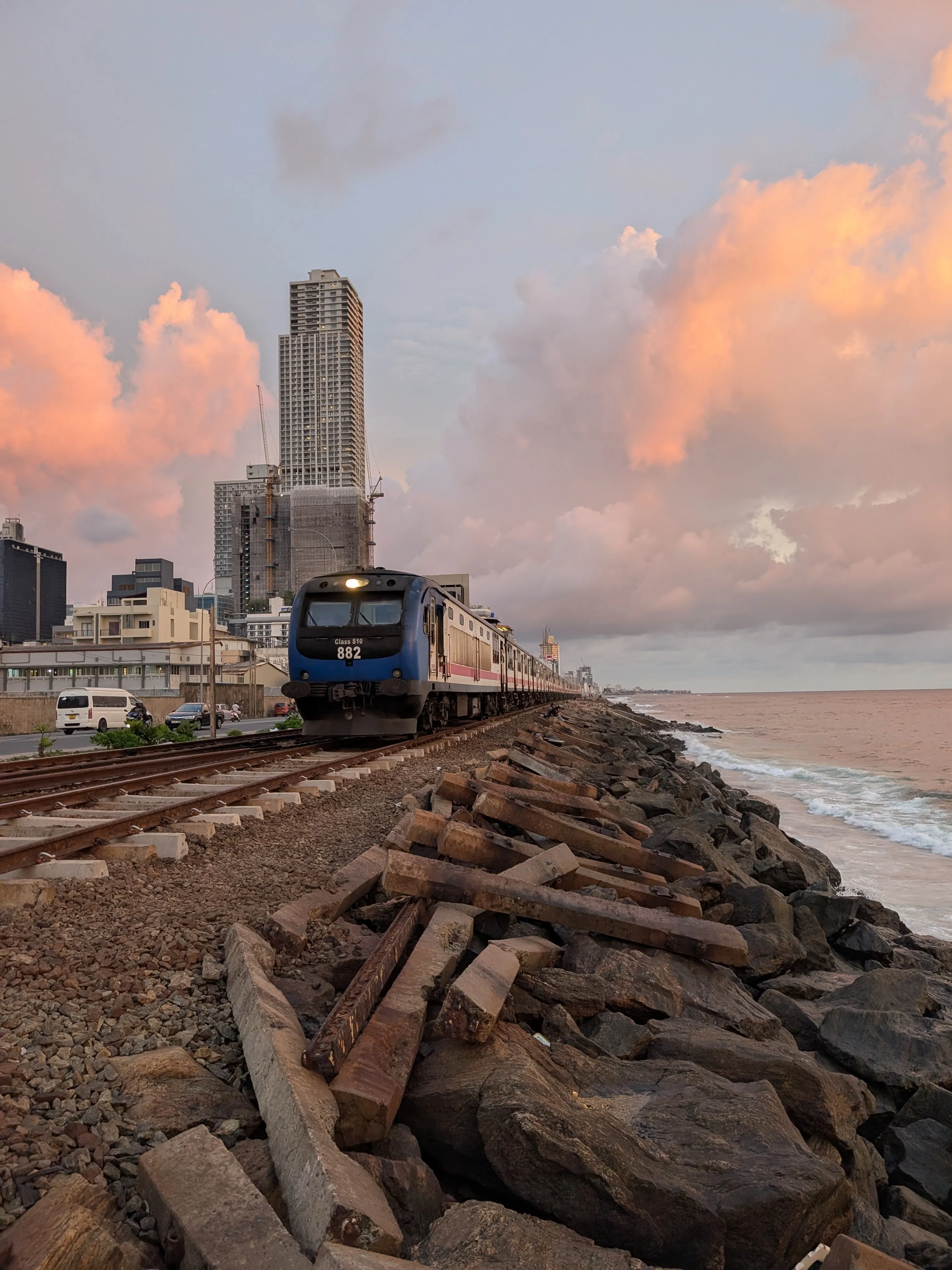 The train approaching at sunset.
Our flight to New Delhi did not leave until the afternoon, and that morning I had the dumb realization that I had really not seen much of Colombo at all. While Makeda went back to the jewelry store to finalize her purchases, I took a tuk tuk to the Jami Ul-Alfar mosque. This is a landmark mosque with a distinct red and white patterned exterior. Unfortunately I was not there during public visitation hours, but I am glad to have made it there before leaving Sri Lanka.
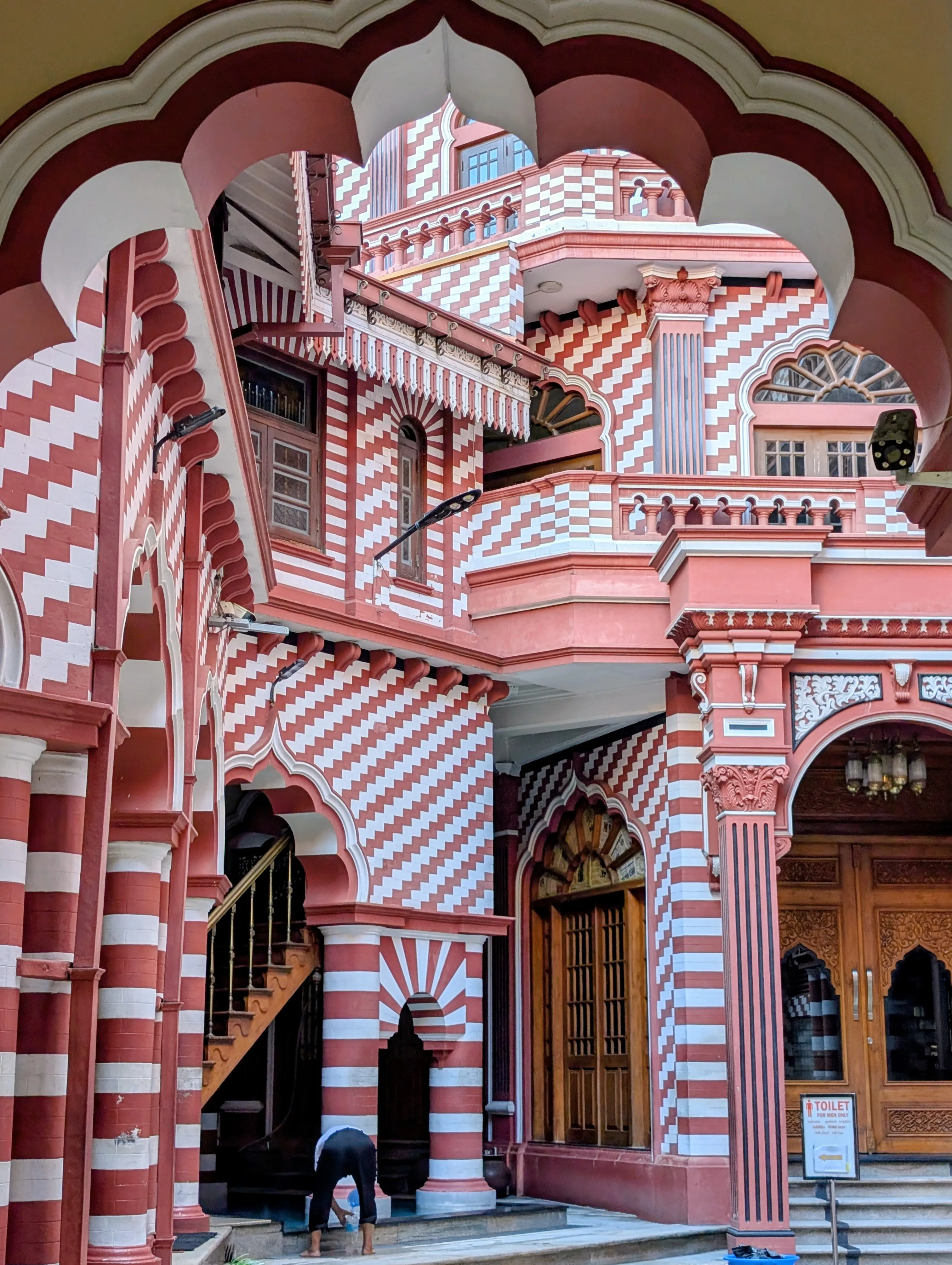 Peeking into the Jami Ul-Alfar mosque.
Conclusion
Our time in Sri Lanka somehow exceeded our already high expectations. It is a lush, diverse, and gorgeous place with incredible scenery, food, and wildlife. There is something for everyone, whether it is surfing, hiking, sightseeing, eating, gemology, or history. But our absolute favorite thing was the people we met. On our travels we have found that anywhere we go, people are generally kind, helpful, and polite. But Sri Lanka felt like a different level. In the United States there’s a saying that, “Californians are nice but not kind, and New Yorkers are kind, but not nice.” Well, the Sri Lankans we met were nice and kind. Folks never failed to return a greeting with a wave and a big smile; everyone was so generous with their time, energy, and resources; and people were so excited to chat, no matter the subject.
These days, we are never sure how people will react when we tell them we are American, and we were especially unsure in Sri Lanka. Like many countries, the unmitigated disaster that is the U.S. and Israeli war in Iran totally disrupted Sri Lanka’s fuel supply, and prices for petrol more than doubled just in the time we were there. Sri Lanka is still recovering from an economic collapse in 2022 in which the country ran out of foreign exchange reserves, causing massive fuel and food shortages and soaring inflation. According to the World Bank, almost a quarter of the population lives below the poverty line and earns at most $3.65 per person per day. Makeda and I had many conversations, especially with the guys at the surf school, about how they felt trapped by the constant increase in prices while their wages stayed stagnant. Although the war in Iran did not create these problems, we felt so ashamed that our country was exacerbating them by engaging in such a senseless conflict.
And yet, the people never seemed to see us as an outlet for the ire I am sure they felt towards the United States. In a way, I almost longed for their anger, as if it could absolve the shame I felt for my country. But it never came. It was like an entire country was patting me on the shoulder and saying, “I’m not mad, just disappointed.” Instead, they opened their homes to us, shared their meals with us, and guided us down the mountain and back to the trail. We were only there for two weeks, but one only needs a single day to know: Sri Lanka is a special place.