7 Things: South Korea!
Here’s another “X Things” post, South Korea edition! As always, this is not a stack-ranked list but rather a collection of interesting things we came across during our time in Seoul.
1. Naver
The primary application for real-time navigation in South Korea is Naver, not Google Maps. The South Korean government does not allow any real-time location or transit information to be stored on servers outside of Korea, nor does it provide external access to domestic map data that would fully enable foreign applications like Google Maps. This means that Google Maps cannot provide walking or cycling directions to destinations and instead shows an error message saying, “Cannot find a way there.” South Korea primarily cites national security concerns as the reason for its resistance to exporting map data, alongside protecting domestic companies and historical disputes with Google over displaying place names in Japanese rather than Korean.
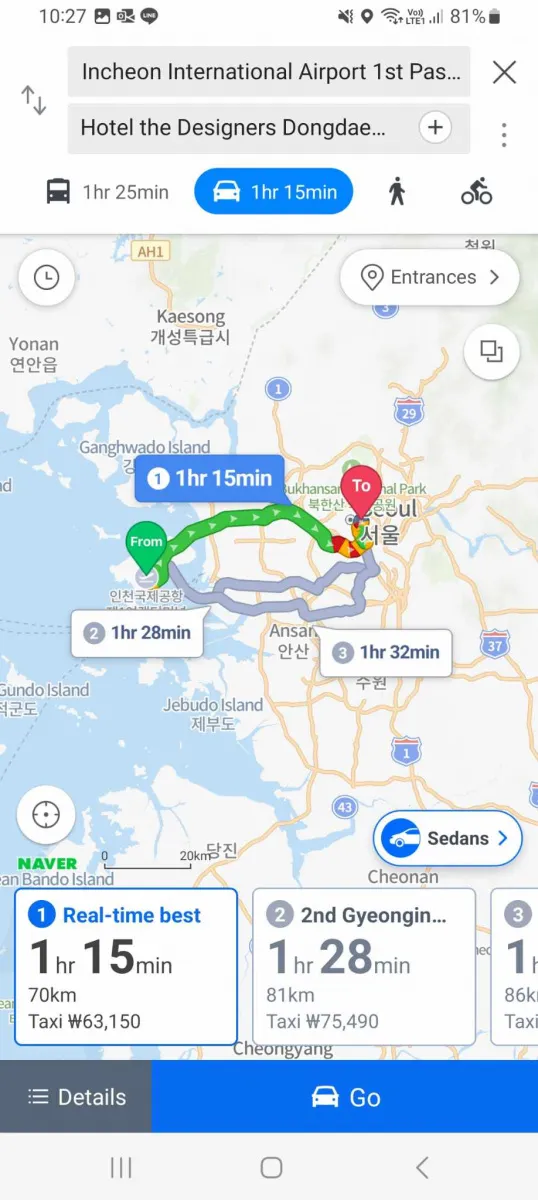 The Naver Maps interface.
My experience using Naver was a mixed bag. Searching for a place in English would work most of the time but not always. Navigating around the app felt very sluggish, using the app requires account creation, and naturally most of the reviews in the app were written in Korean. On the other hand, the navigation information was extremely accurate. It provided the exact door on the exact train to board for the quickest transfers on the subway, and creating lists of saved places was intuitive. Ultimately I would have preferred to use Google Maps, but Naver worked well in its absence.
2. Gas Masks in the Subway
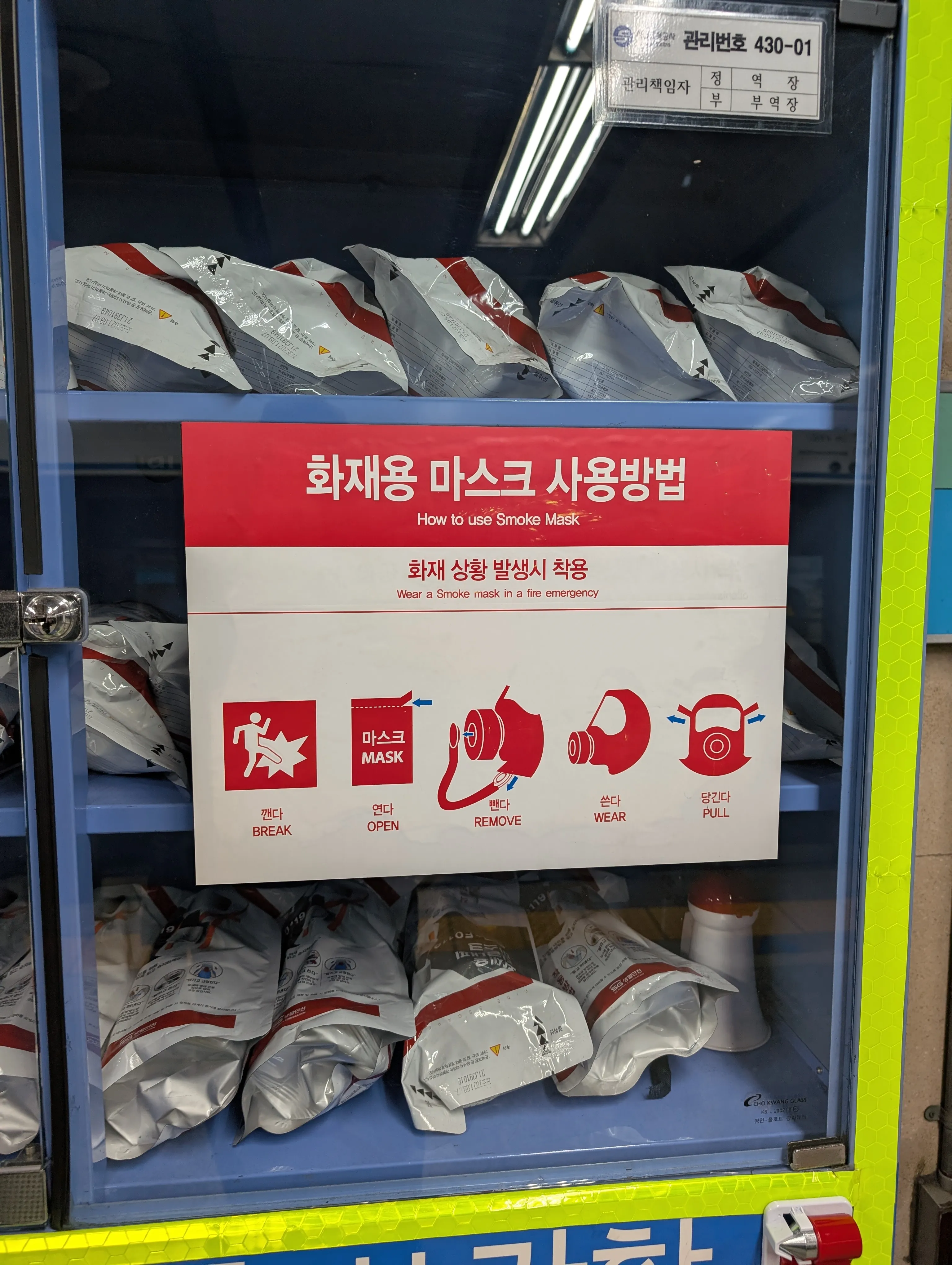 Gas masks in the Seoul subway.
Seoul subway stations are equipped with glass emergency cabinets containing gas masks, water, first-aid kits and other emergency supplies. These emergency stations were installed in response to the 2003 Daegu subway fire, in which an arsonist set fire to Jungangno Station as a train arrived, killing 192 people and injuring 151 others.
3. South Koreans Became 1 to 2 Years Younger in 2023
Before 2023, South Korea counted age differently: newborns were one year old from birth, and everyone aged up on New Year’s Day instead of on their birthday. So if you were born on Dec. 31, by Jan. 2 you would be two years old. We learned of this unique age system on our tour of the DMZ when our tour guide was discussing South Korea’s mandatory two-year military conscription for men aged 18 and older. Under the traditional Korean age system, this meant that some biological 16-year-olds were serving in the military. In an effort to eliminate legal and bureaucratic issues, South Korea switched to the international age system in 2023.
4. Metal Chopsticks, Metal Bowls
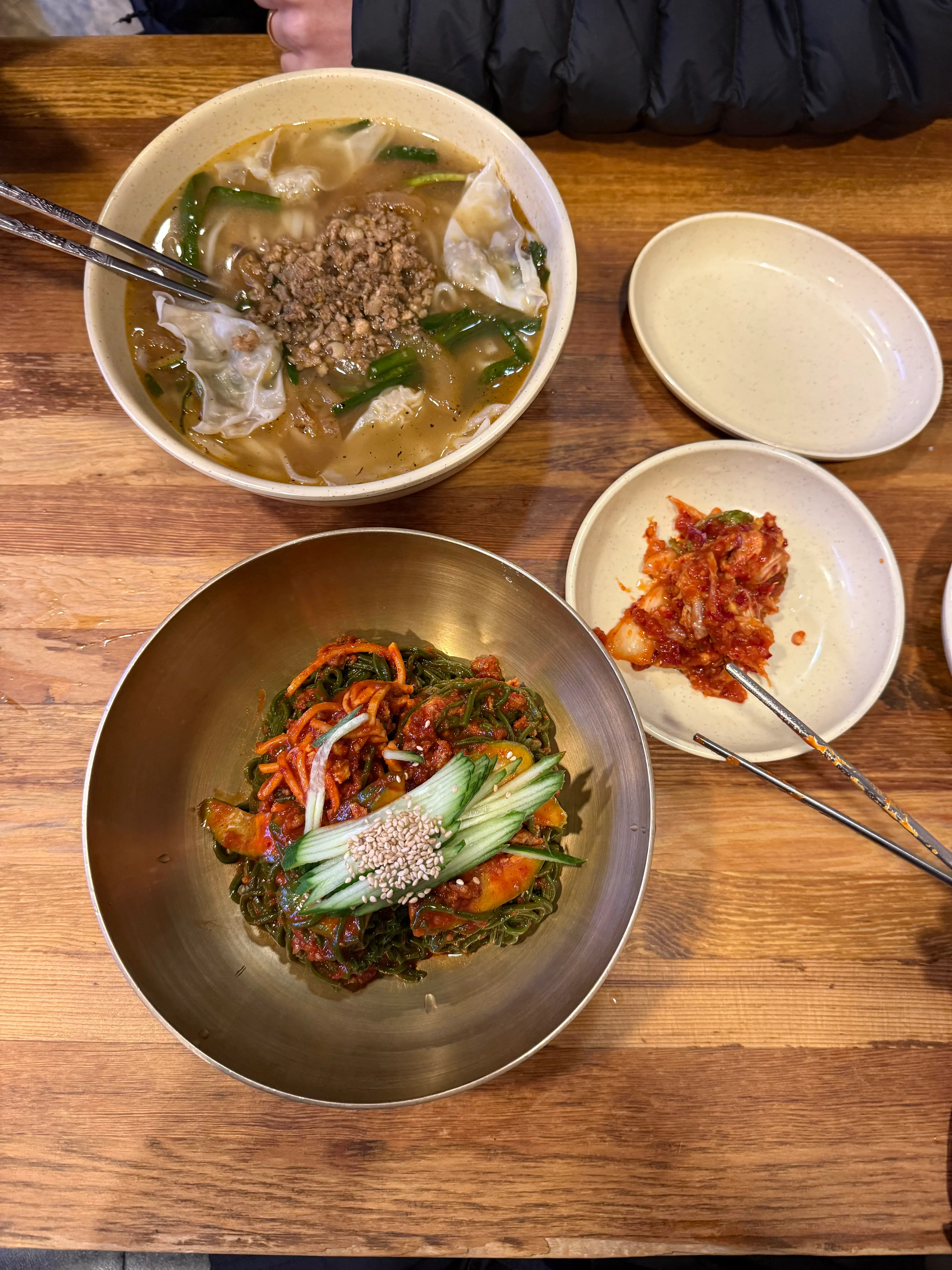 Korean tableware, including a metal bowl and chopsticks.
While bamboo or wood chopsticks are dominant in China and Japan, stainless steel chopsticks are ubiquitous in South Korea, alongside stainless steel soup and rice bowls. While researching this, I came across several sources claiming the reason for this is that during the Baekje period, royalty would use silver chopsticks to protect against arsenic poisoning, though it is possible this is entirely apocryphal. Other sources claim that grippier wooden chopsticks are unnecessary in South Korea because rice is eaten with a spoon. Regardless of the origin, chopsticks and bowls in South Korea are indeed stainless steel, which was consistent with my experience at Korean restaurants in the United States. A major difference, though, is that in South Korea the chopsticks are flat, a fact that hindered my dexterity greatly while eating. Most restaurants also provide a convenient drawer built into the table with a repository of spoons, chopsticks and napkins.
5. National Geographic Is a Popular Clothing Brand
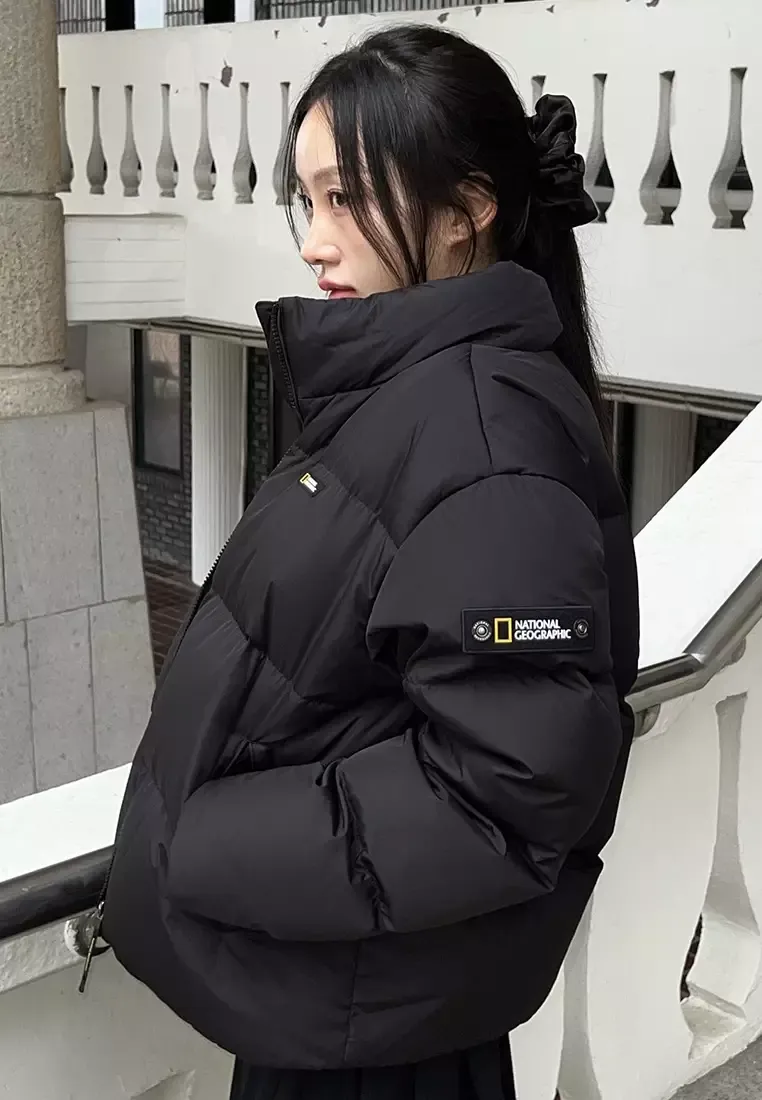 A National Geographic jacket.
Remember National Geographic? The magazine that once published stories about travel, environmentalism and global affairs? Well, thanks to the magic of brand licensing, National Geographic is a popular brand of outdoor clothing in South Korea. In 2016, a South Korean company called Nature Holdings purchased licensing rights from American National Geographic TV and launched a clothing brand with offerings similar to the North Face or Columbia. Seeing the famous logo with the yellow border on jackets all around Seoul was personally a strange and nostalgic experience, surfacing childhood memories of thumbing through each new issue of the magazine before categorizing it in specially sized Nat Geo containers.
6. People Power Party
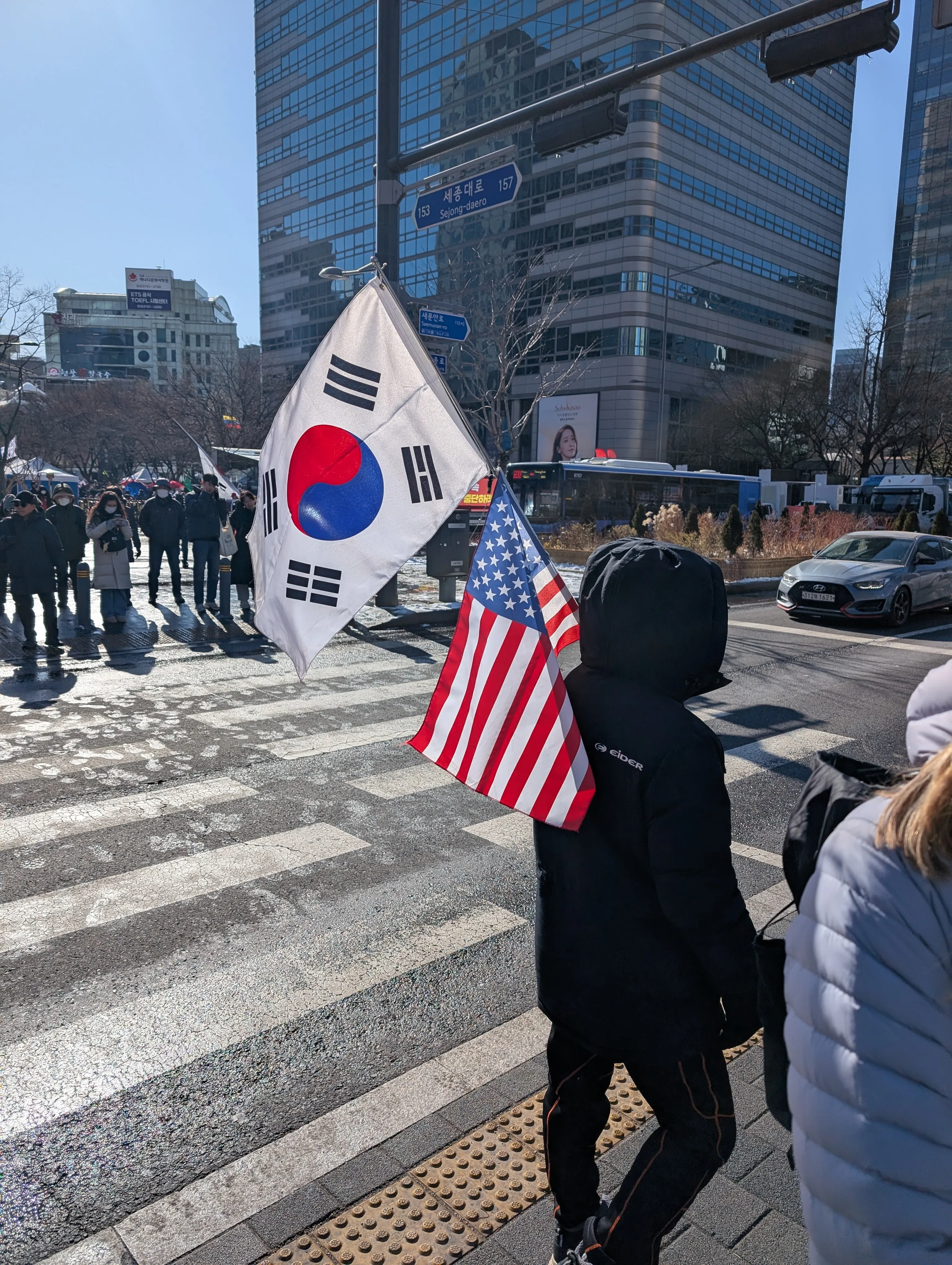 A PPP member with South Korean and U.S. flags.
While waiting for the changing-of-the-guard ceremony at Gyeongbokgung Palace, Makeda and I heard what sounded like a public concert nearby. We had time to spare, so we made our way south from the palace to Gwanghwamun Square, where we were greeted by an extremely strange situation: hundreds of (mostly) elderly South Koreans were fervently singing along with an extremely spirited man on a stage, backed by several women doing a choreographed dance, with many audience members waving massive South Korean and U.S. combination flags. At first, I thought it was a religious event. Many people in the audience had their hands raised to the sky as they sang with what appeared to be spiritual ecstasy, following along with what I thought might be a Korean megachurch pastor onstage. However, the flags were the giveaway that it was actually a political rally, specifically for the People Power Party (P.P.P.).
The P.P.P. is South Korea’s second-largest political party and is the dominant far-right conservative party in the country. Among other things, it is hostile toward communism, hawkish regarding North Korea and strongly supportive of South Korea’s alliance with the United States (hence the flags). In 2022, P.P.P. presidential candidate Yoon Suk Yeol was elected. However, because of Yoon and the P.P.P.’s unpopularity, the party lost the 2024 legislative election. In December 2024, Yoon declared martial law, claiming the rival Democratic Party, with its majority in the National Assembly, was guilty of various crimes against the state. This was met with massive public protests, and hours later the National Assembly unanimously passed a motion to lift martial law. Yoon was impeached 10 days later, and on Jan. 15, 2025, he was arrested and indicted for leading an insurrection. He was found guilty and sentenced to five years in prison.
Many members of the P.P.P. still support Yoon and oppose his arrest. The rally we saw in Seoul was at least partially in support of the disgraced former president.
7. Fruit Is Expensive in South Korea
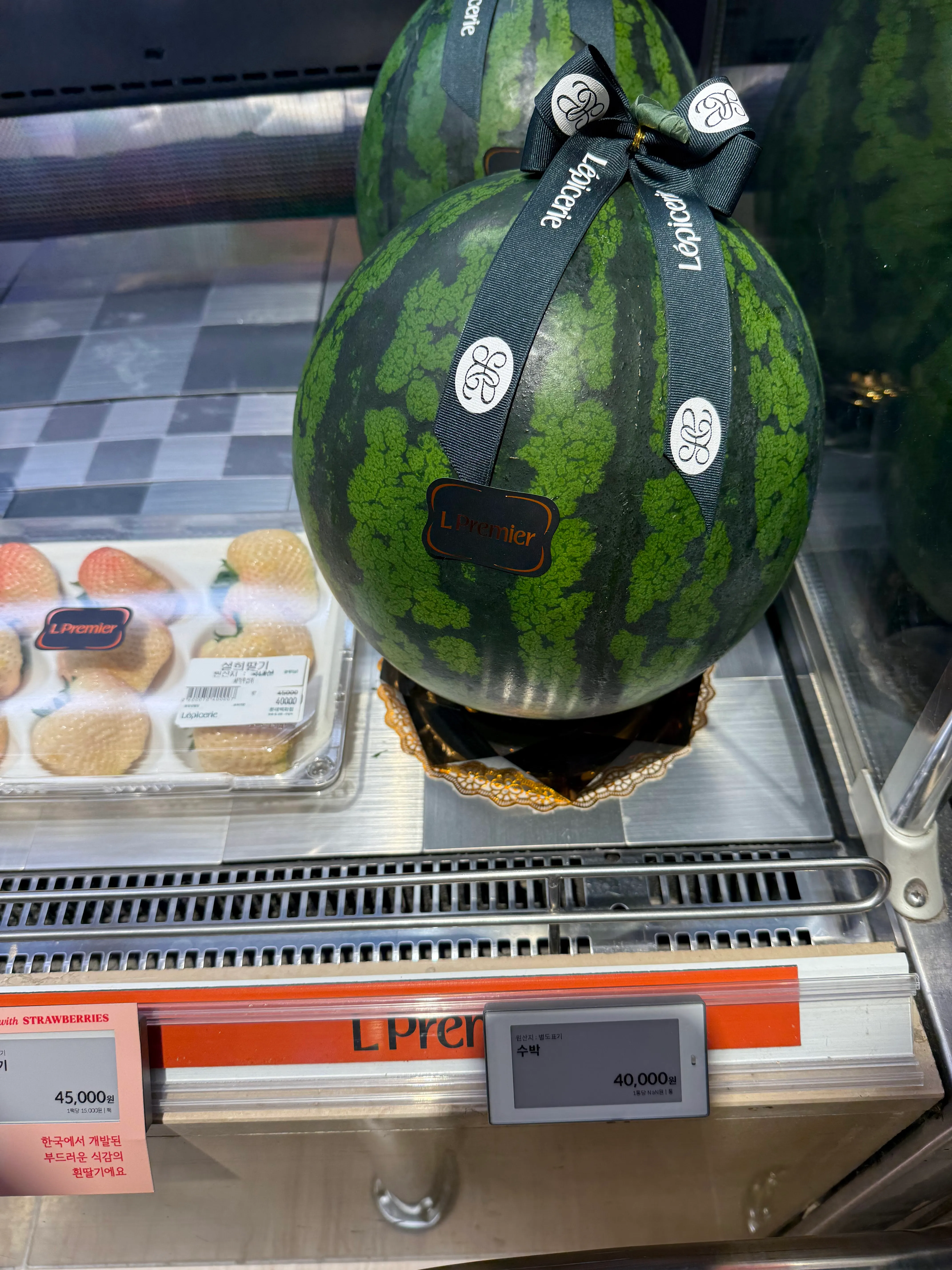 $28 watermelon.
Yes, that is a photo of a $28 watermelon. Enough said.