Japan Ski Review
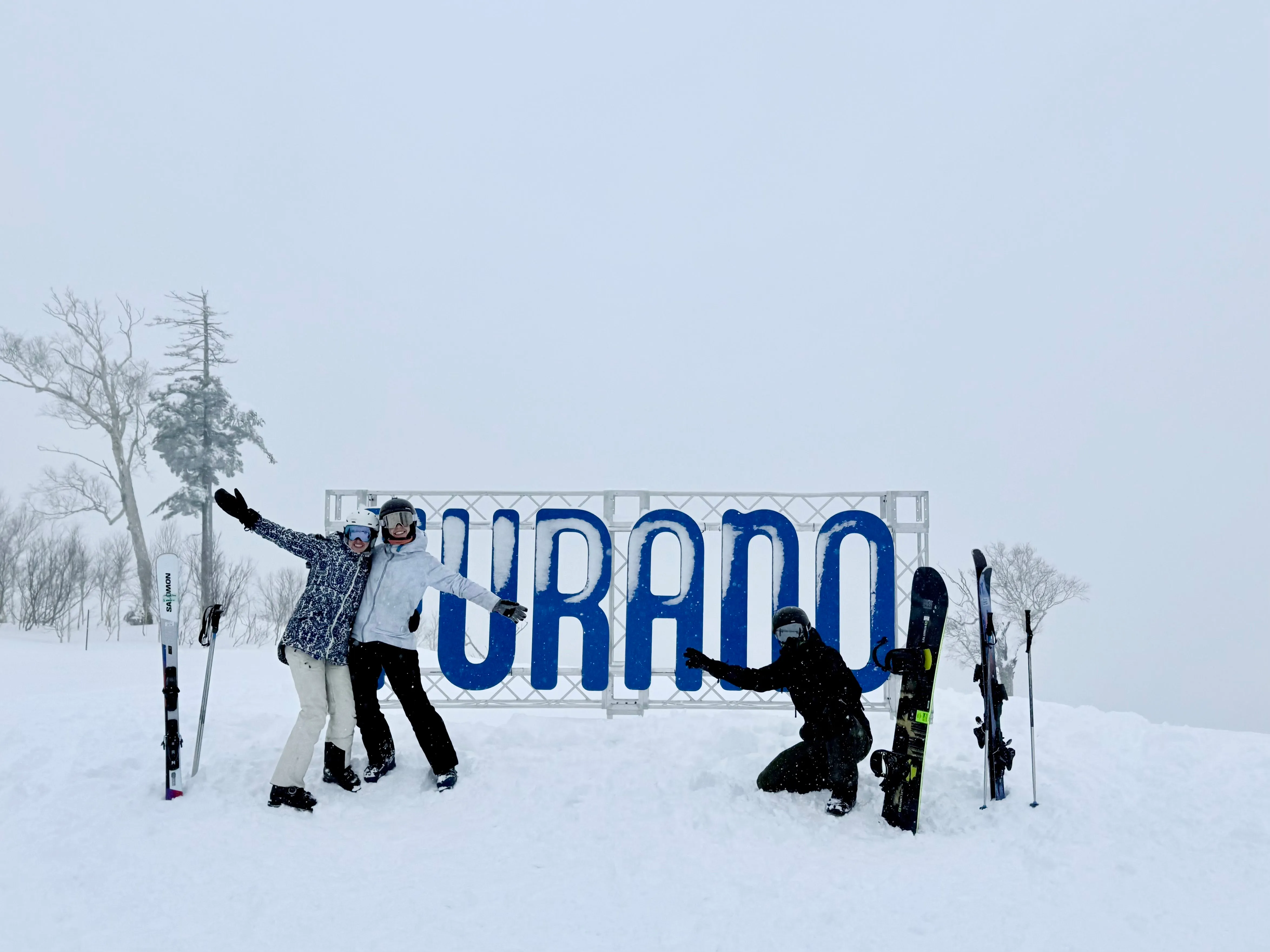 At the top of the Kitanomine Zone in Furano
I knew I was in trouble when I stepped off my snowboard on an off-piste run and immediately sank down to my sternum in fresh powder. But it was when I tried to haul myself out and felt my foot break through into thin air beneath the powder that I thought, “Man, I guess I’m going to be that American who has to be dug out of a tree well in Hokkaido.” Thankfully, I was still clinging to my snowboard, holding on to it quite literally like a piece of driftwood in a shipwreck. After quelling the rising panic with some deep breaths, I cautiously began pushing my board ahead of me, tamped the powder as best I could, and pulled my body forward to meet it. I proceeded in this way for around forty yards, up and out of the ravine, and rolled onto the groomed run like a swimmer flopping onto a dock. Drenched in sweat, covered in snow, and grinning like I got away with something, I made my way down to the lift.
My wife Makeda, our friend Tara, and I skied and snowboarded five full days in Japan. Four of the days were in Furano in Hokkaido, and the fifth was a day trip to Shiga Kogen from Yamanouchi in Nagano prefecture. Like most people who come to Japan to ski, we prayed for the famous Japanese powder, and in Hokkaido - we got it.
Furano
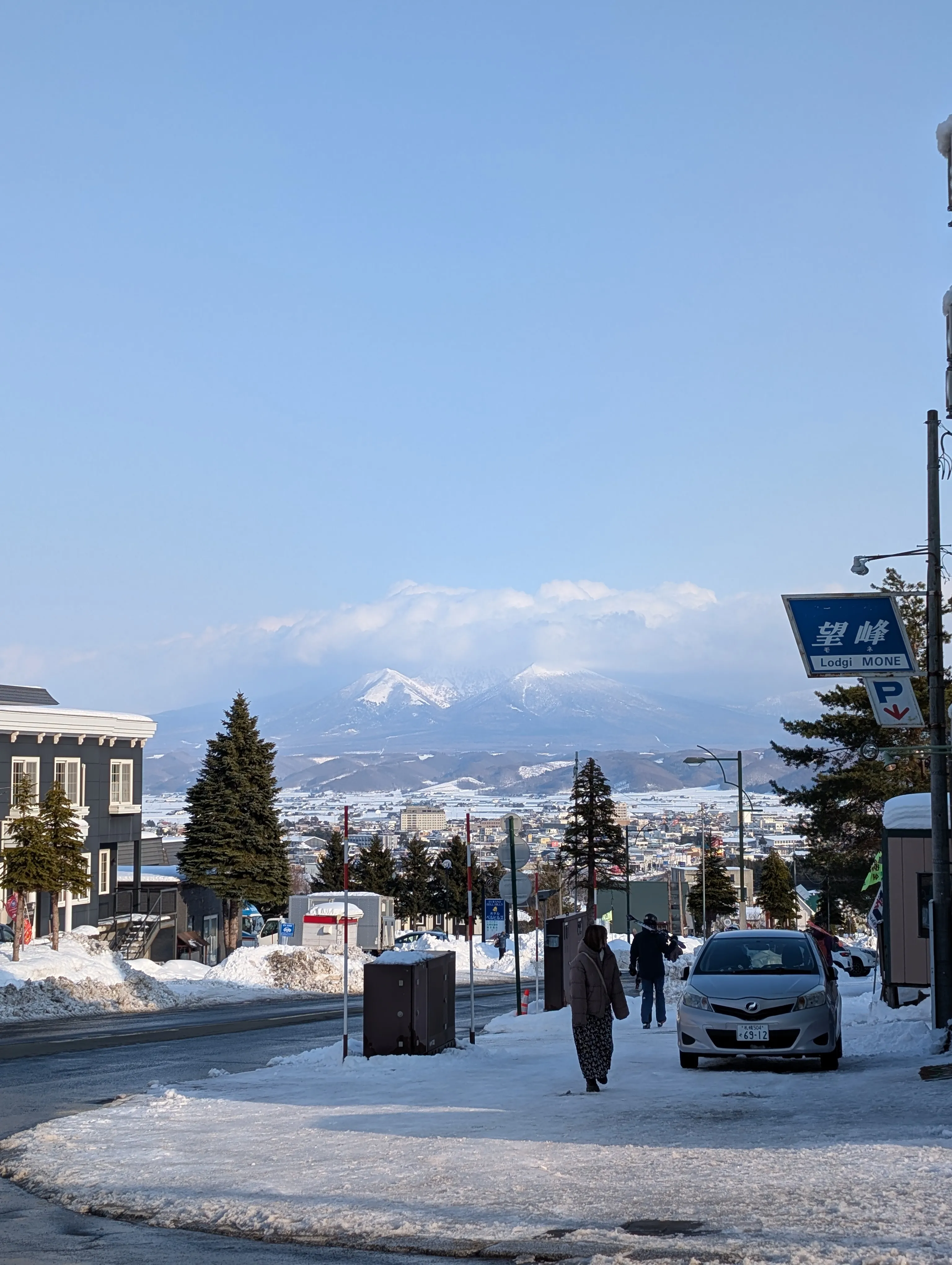 Looking east over Furano from the base of Furano Ski Resort
Furano is a small agricultural town in central Hokkaido, known for its rolling lavender and flower fields and the Furano Ski Resort. Access to Furano from Sapporo, like most transit in Japan, is affordable and easy: take the Lilac-Kamui train from Sapporo Station to Takikawa Station, then transfer to the Nemuro Line and get off in Furano. Not only is this journey clean and relaxing, but on the Nemuro Line you are treated to an charmingly old, single-car train journey replete with metal fans and metal do-dads and whirligigs in the conductor’s area.
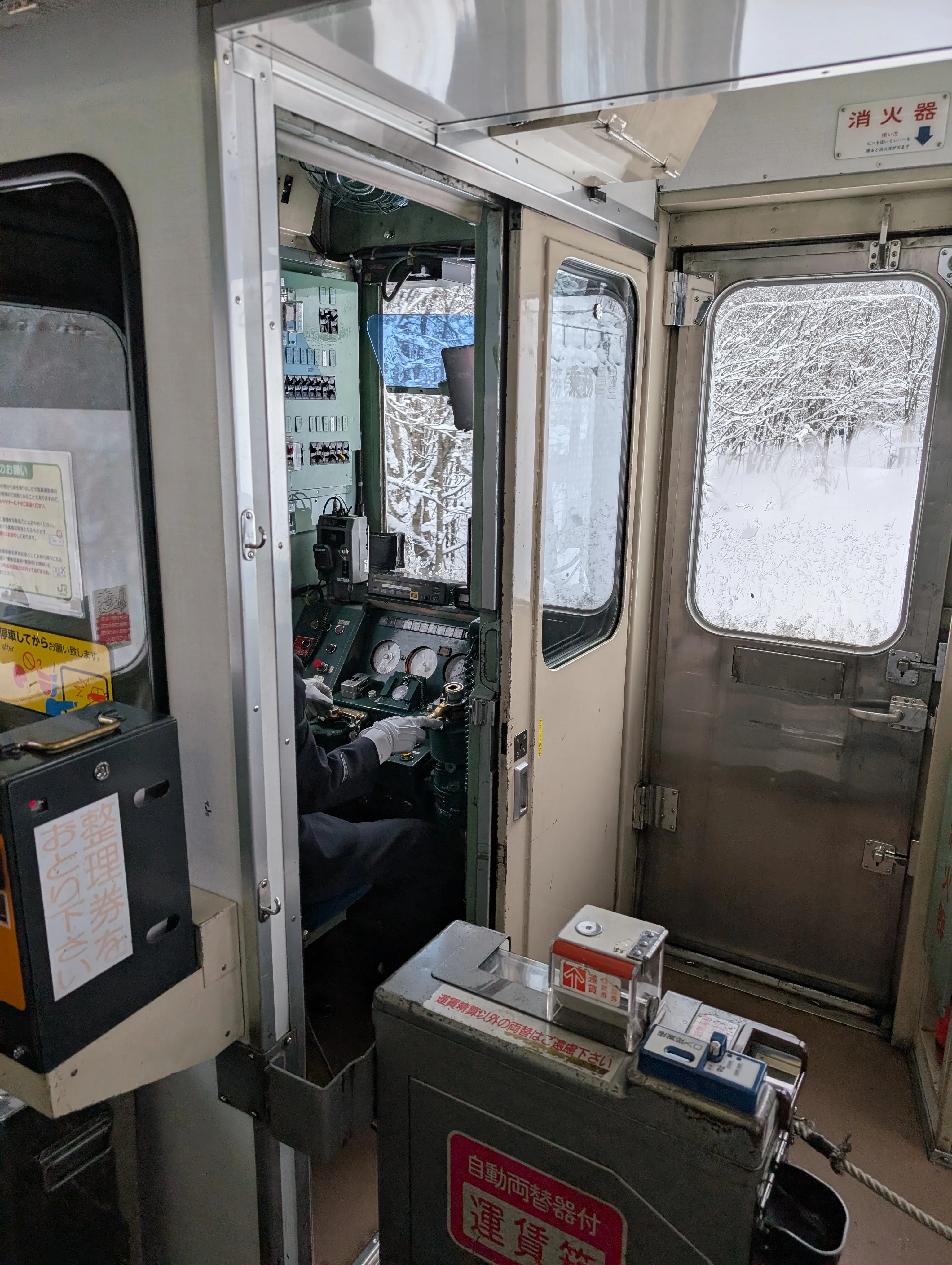 A peek into the train conductor cabin
There are also direct Sapporo to Furano buses. Once in Furano, assuming you have come to ski, you’ll likely want to find a place to stay west of the Sorachi River within walking distance of the resort. We stayed at Hotel Edel Warme, a modern hotel with a Bavarian theme, complimentary breakfast, and a five minute walk from the gondola. Wherever you stay - an onsen is non-negotiable.
We opted to rent ski gear in Furano. The town offers many rental options, but the two we decided between were Sportpia Furano (SP) and Rhythm. SP is attached to the gondola station so we opted for the location convenience and minor cost savings, but in hindsight Rhythm was probably the better choice, at least for me (the snowboarder). The gear from Rhythm we saw on other renters was newer (and cooler), and they offered my beloved Burton Step-On bindings. SP gear was totally serviceable and functional, but I was left with a bit of renter’s remorse.
American ski resort enjoyers - brace yourselves. Japanese resorts are shockingly affordable. Not only is a full-day pass only $50, Furano Ski Resort also offers 5-hour passes for $45 and 3-hour passes for $40. Furthermore, there isn’t a discount for buying multi-day passes, so there’s no need to know how many days (or how long per day) you will ski. Just show up in the morning and buy the pass you need for that day! As of writing this, a single day ticket to Park City, UT is $279. Thanks, Vail!
Furano Ski Resort
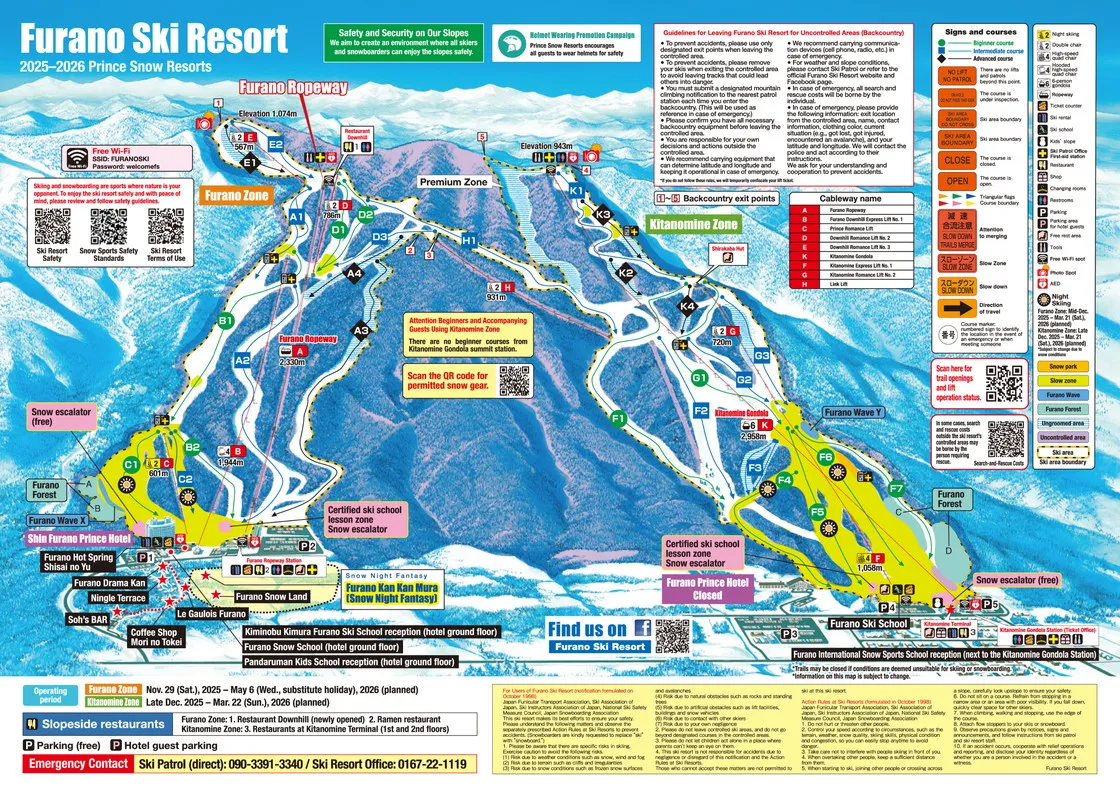 Furano Ski Resort map
Furano Ski Resort is bisected into two distinct zones connected by a single lift: the Kitanomine Zone and the Furano Zone. The Kitanomine Zone is smaller, but the base is connected to the town itself, while the Furano Zone is bigger but essentially only connected to the Prince Hotel.
Kitanomine Zone
This zone is only serviced by two lifts and a gondola. Unfortunately, the only way to get to the top of the zone is by taking the gondola from the base. This means that you get long, connected runs from the top to the bottom, but the line for the gondola can move quite slowly. Additionally, the resort was incredibly cautious and did not hesitate to shut down the gondola in “windy” conditions. Anyone who has skied at Heavenly would be shocked at the relatively tame conditions that prompted a wind hold at Furano.
Despite the infrastructural drawbacks, the Kitanomine Zone offers the most advanced terrain within the official resort boundary. In the Premium Zone, adventurous riders will find steep runs, trees, and the deepest powder. For most, this area is the reason they came to Japan.
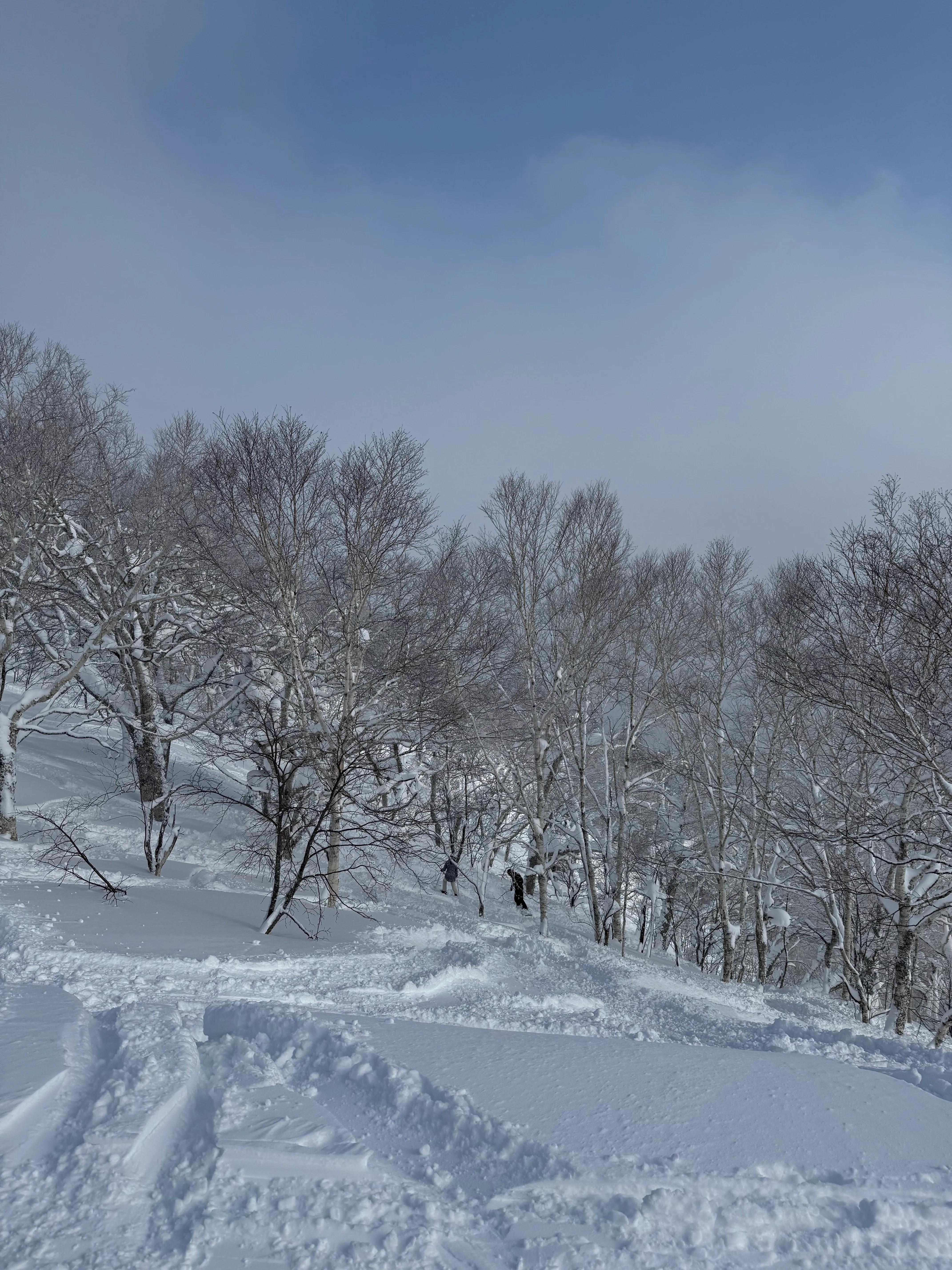 Furano Premium Zone
Furano Zone
This side of the resort offers more runs, better lift access, and less challenging terrain. It is perfect for fast and fun on-piste laps, with some powder and tree access as well. We loved lapping the “bubble lift” (officially the “B” lift) as it provided respite from the cold while on the lift and access to relatively long runs. The E lift is the most challenging area on this side and is quite fun despite the comparatively short runs.
The weather
We were blessed with two full-on powder days. After talking with other riders who have been to Japan in the past, as well as friends who visited Furano just weeks before us, we learned that the conditions we had were uniquely good. It snowed non-stop for the last 48 hours of our trip, dumping the absolute lightest, driest snow we had ever experienced. It is impossibly light and fluffy - you just float through it. And it is as if there is no water at all in it, it just falls off clothing and gear, leaving us relatively warm and dry.
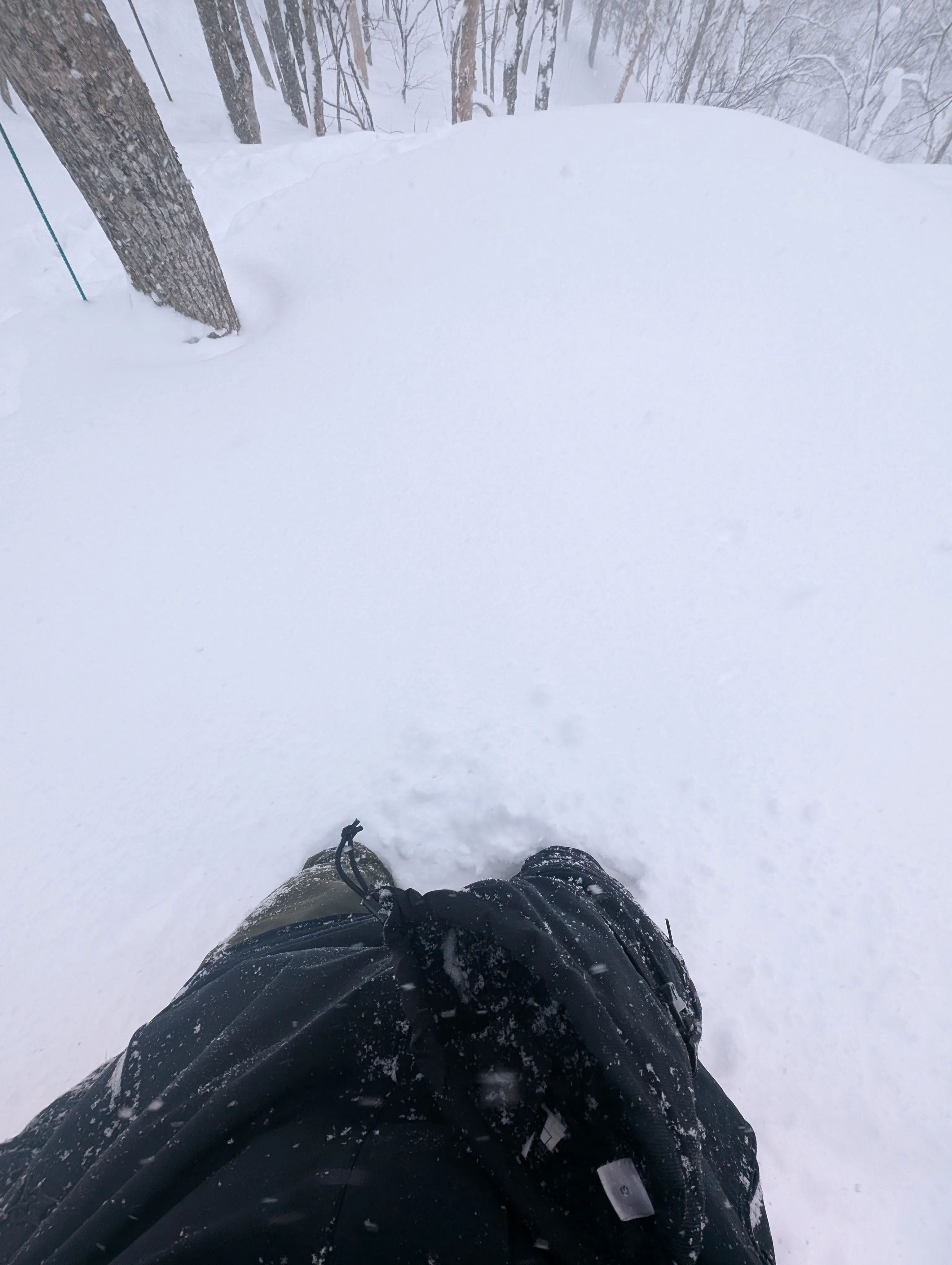 Moments before getting stuck in a tree well
Overall, Furano Ski Resort has something for everyone. It is not a large resort by any means, and sufficiently advanced skiers will be hiring guides anyway, so for average folks like us it was perfect. Riding the Japanese powder was easily the most fun I have ever had on a snowboard, and I am so grateful we were lucky enough to experience it on our first ski trip to Japan.
Beyond the resort
When not skiing or soaking in an onsen (a minimum once-daily ritual), here are some of the things we did in Furano:
Farm Tomita
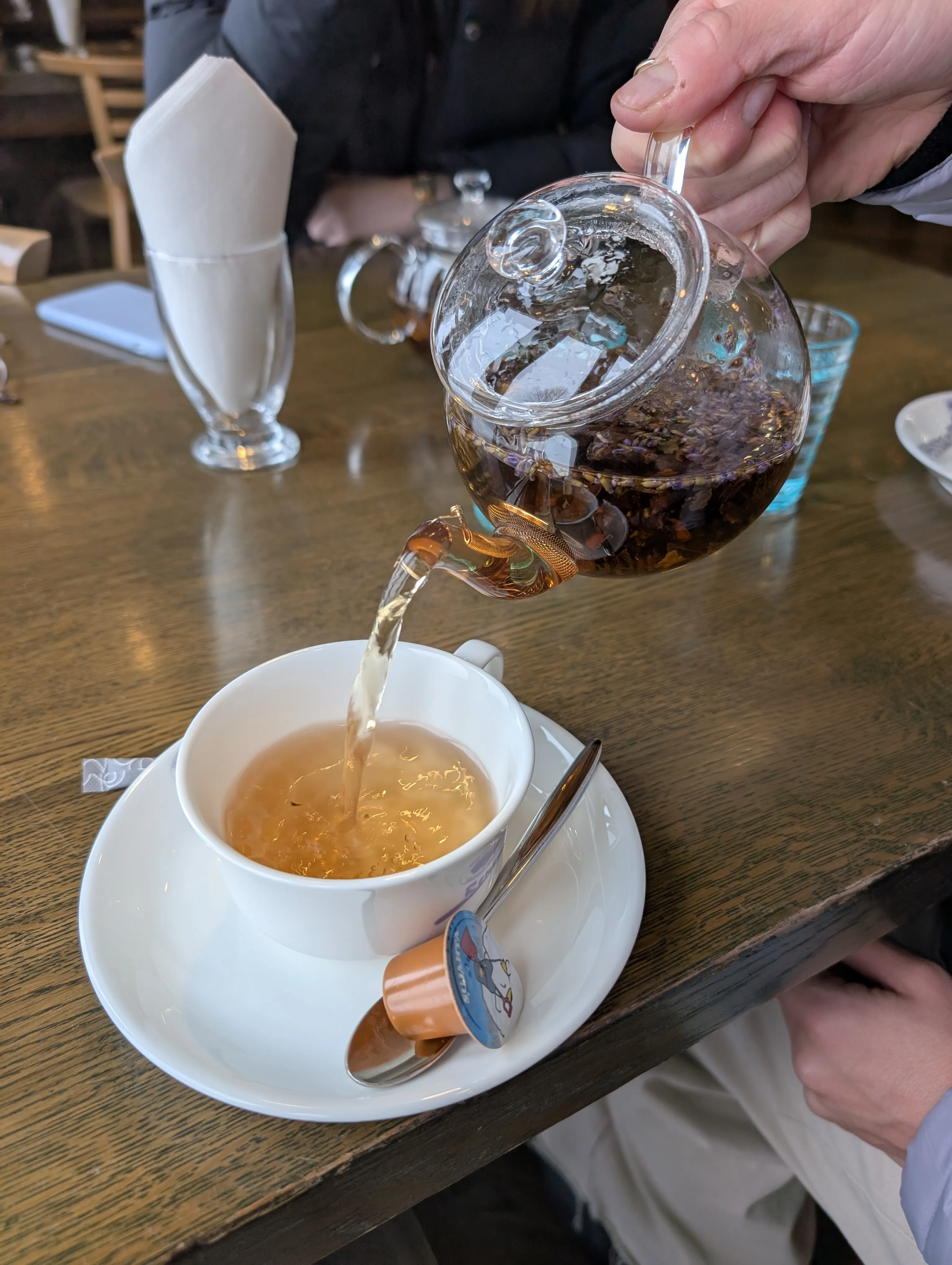 Lavender tea at Farm Tomita
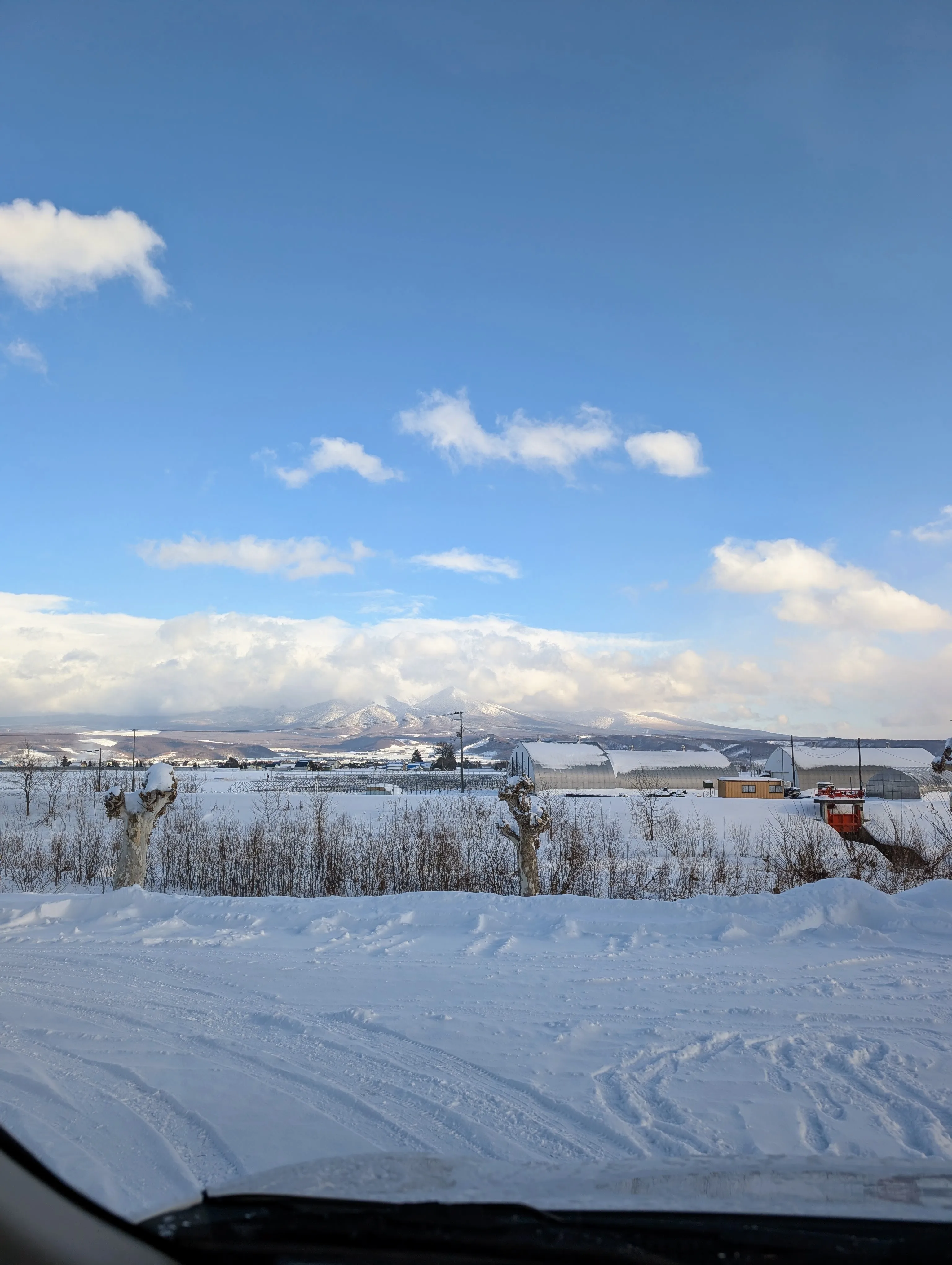 Valley view from Farm Tomita
We visited this charming lavender and flower farm on our off-day. It is a 15 minute taxi from town and offers beautiful views of the valley, delicious lavender tea and soft-serve, and lovely grounds to wander around in the snow.
Ningle Terrace
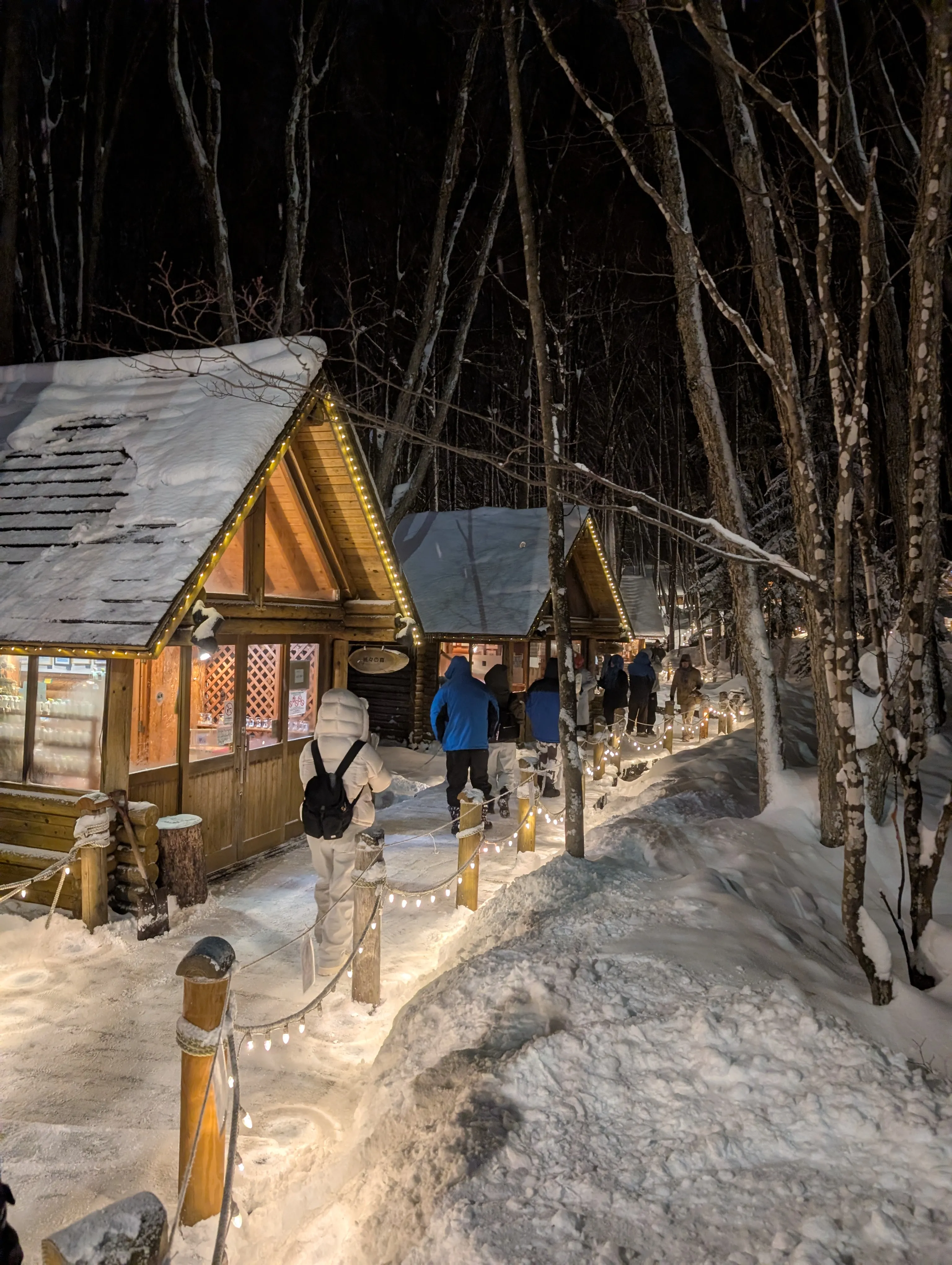 Ningle Terrace
This is a touristy yet fun attraction attached to the Prince Hotel. It is a series of artisans hawking their goods in cute cottages in the woods, connected by quiet pathways and interesting light installations. Great for kids!
Kaiten Sushi
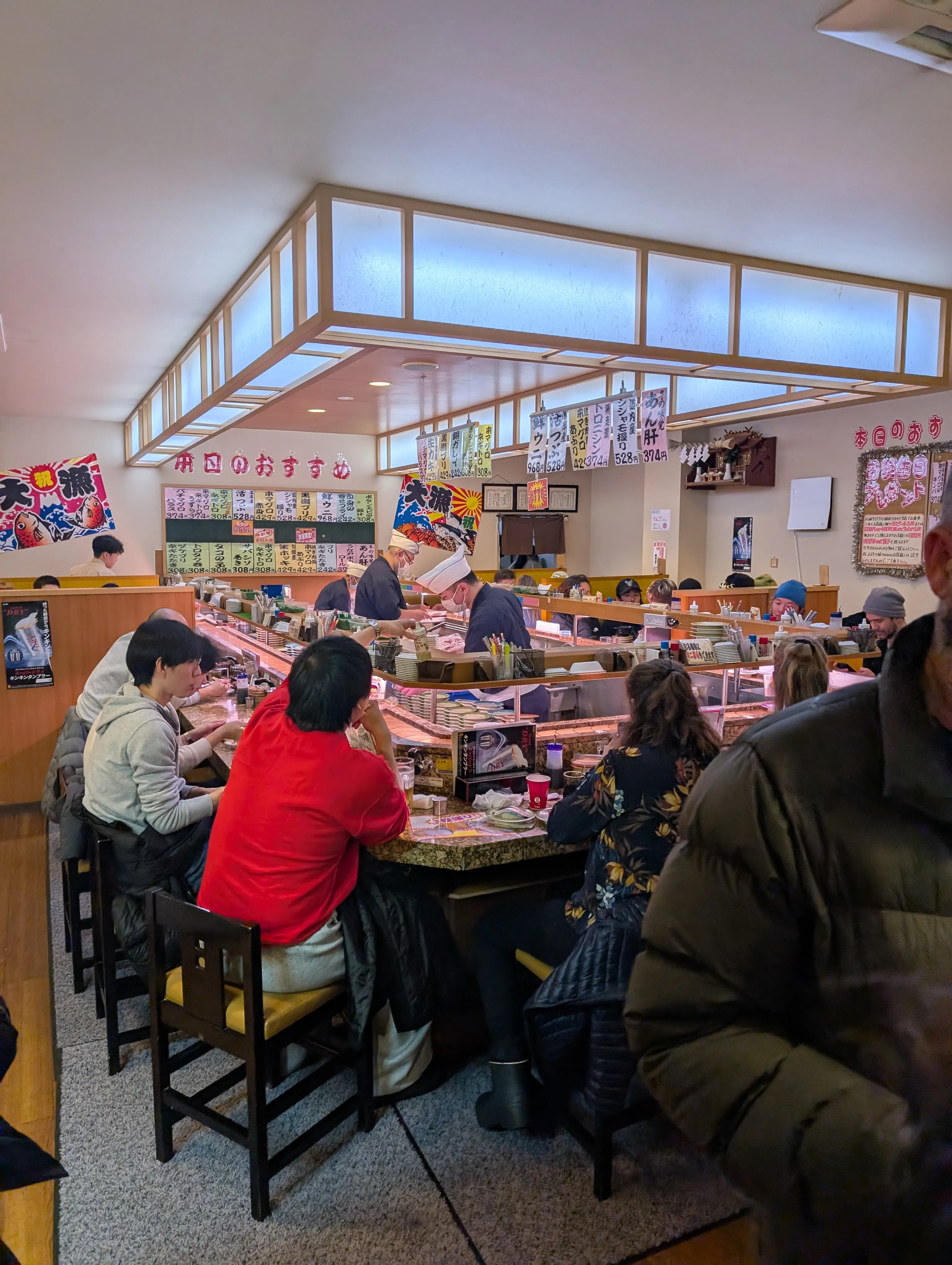 Kaiten Sushi in Furano
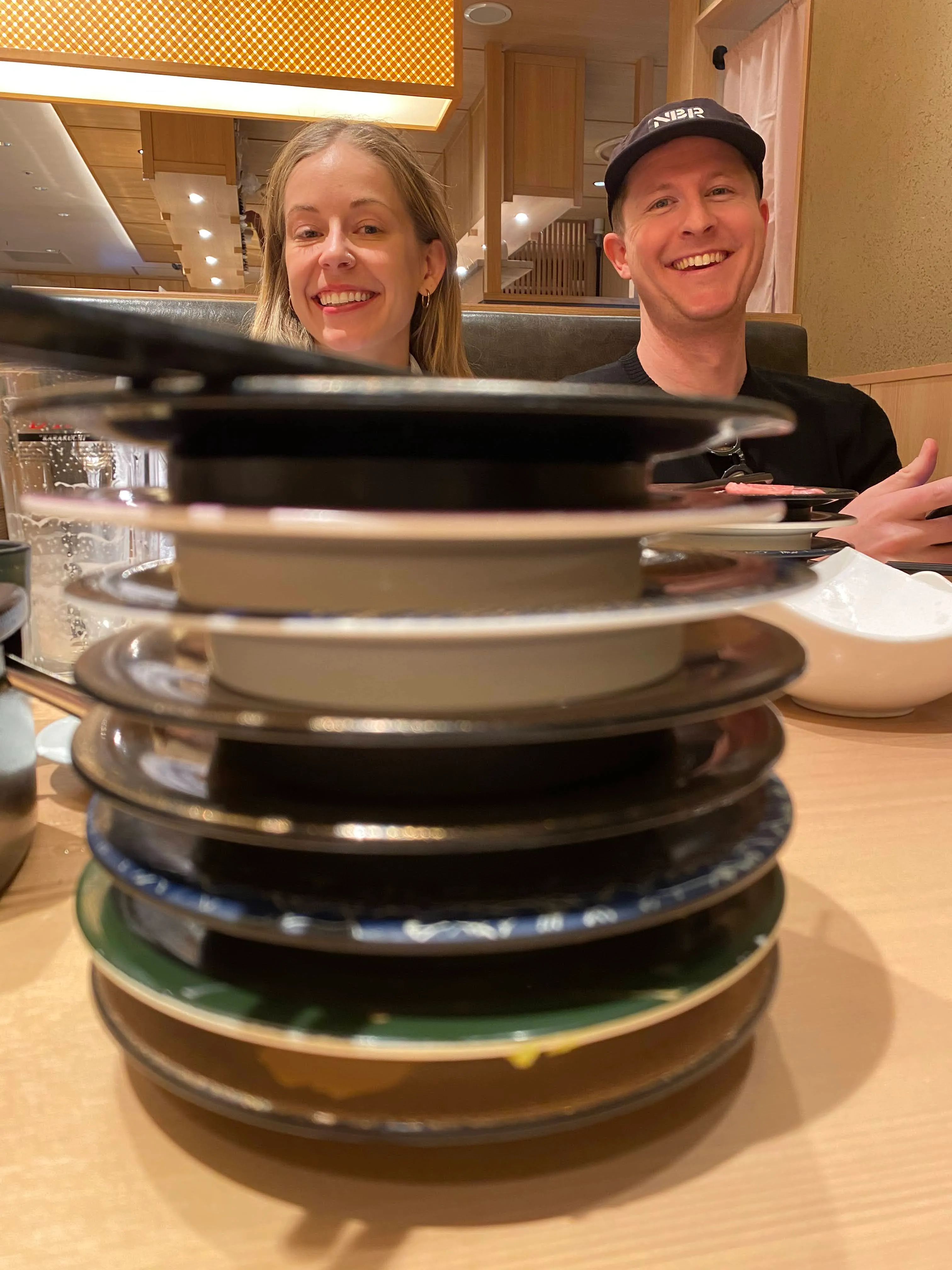 Two satisfied customers
Expect a long wait for this incredible conveyor belt sushi restaurant. When you finally get a table, you will be greeted with delicious nigiri at dirt-cheap prices (at least in this San Francisco turned Brooklynite’s experience). Between the three of us we ordered more than 15 plates of sushi and spent less than $50. Seriously, don’t miss this spot.
Shiga Kogen
After our time in Furano we traveled to Yamanouchi, a cute onsen town in the mountains of the Nagano Prefecture. After flying from Asahikawa to Tokyo, we took the shinkansen to Nagano followed by a local express train to Yudanaka Station. We stayed three nights at the gorgeous Yoroduya ryokan hotel, and on our second full day we took a day trip to Shiga Kogen to ski.
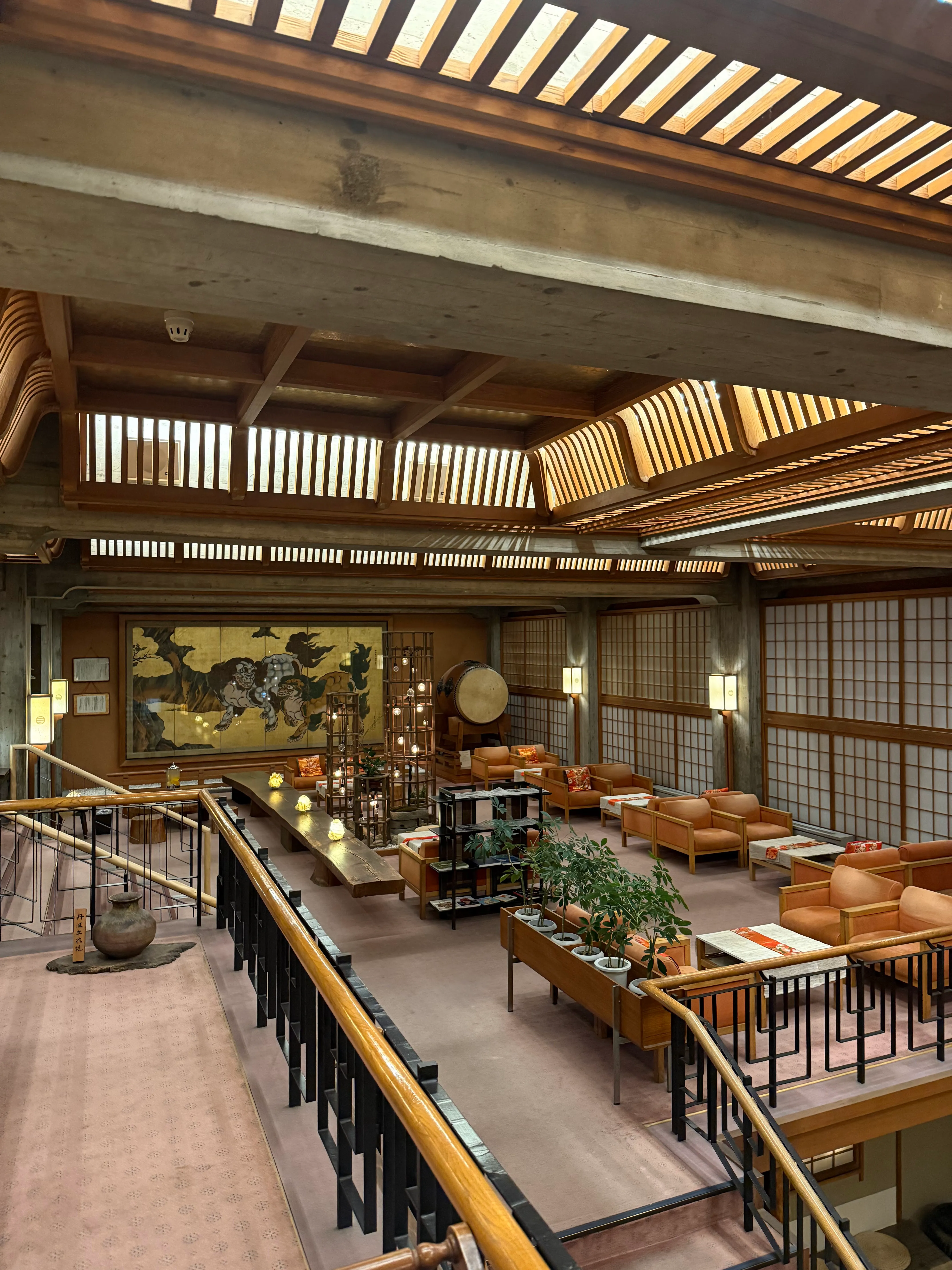 The lobby at the Yoroduya ryokan
Shiga Kogen is actually a collection of 18 different ski areas largely organized into 4 main zones. It is a bit like Disneyland - one resort that contains many interconnected areas within. A single pass (again, $50) gets you access to all areas. We took a bus from Yamanouchi to the base of Shiga Kogen where we rented gear. While skiing we primarily stayed in the northernmost zones: Yakebitaiyama and Okushigakogen. Compared to Furano, Shiga Kogen was much larger but less varied in terrain. We had a beautiful blue bird day and traversed the resorts from north to south. A personal highlight was riding the 1998 Olympic run in the Yakebitaiyama area.
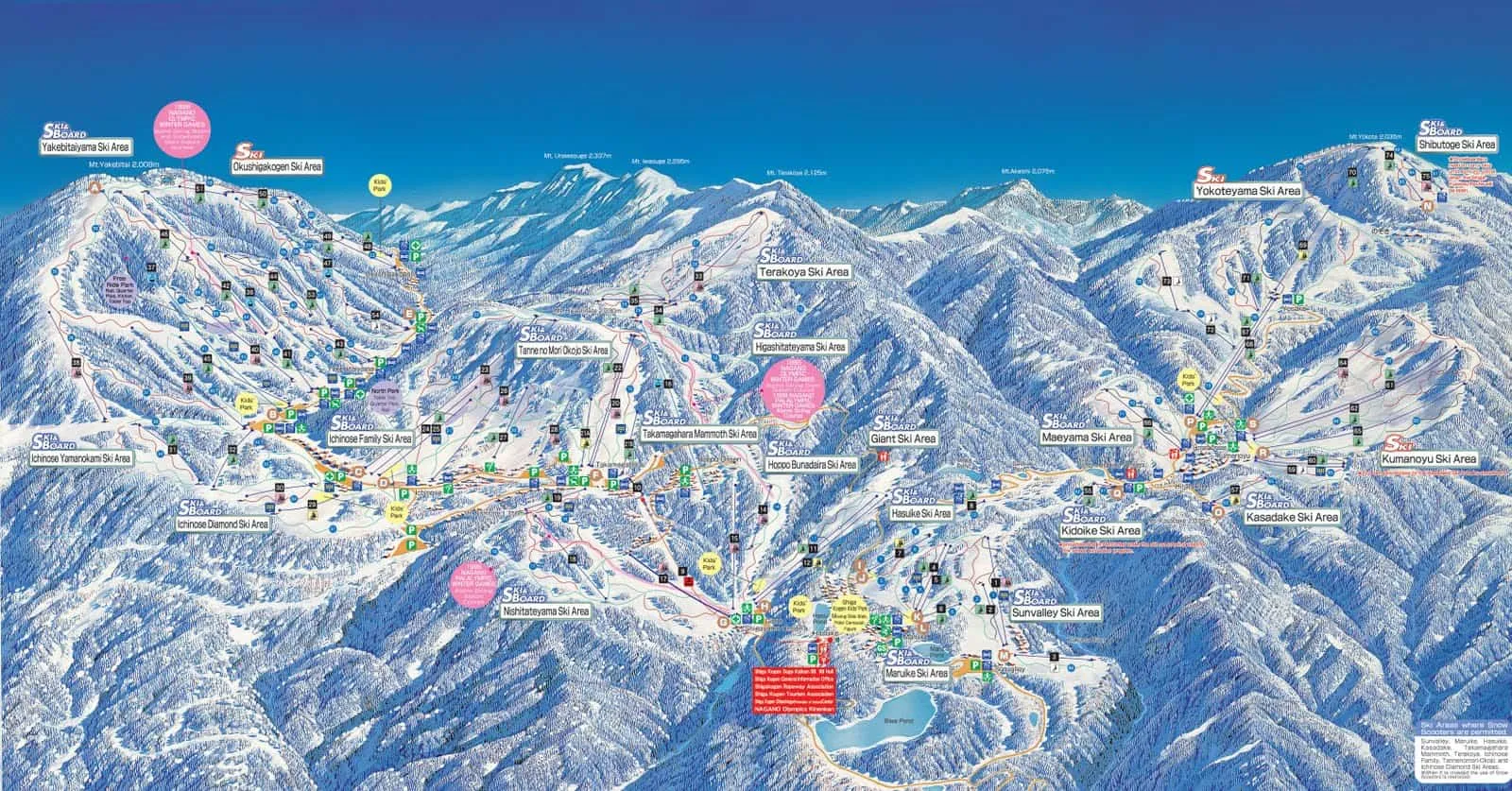 Shiga Kogen trail map
Although Shiga Kogen is a larger resort than Furano, I’m glad we spent the majority of our skiing in Hokkaido. Furano is an actual Japanese town where folks live and work, while Shiga Kogen is simply a resort. It felt removed from “real” Japanese life. That said, it truly is massive and worth a visit!
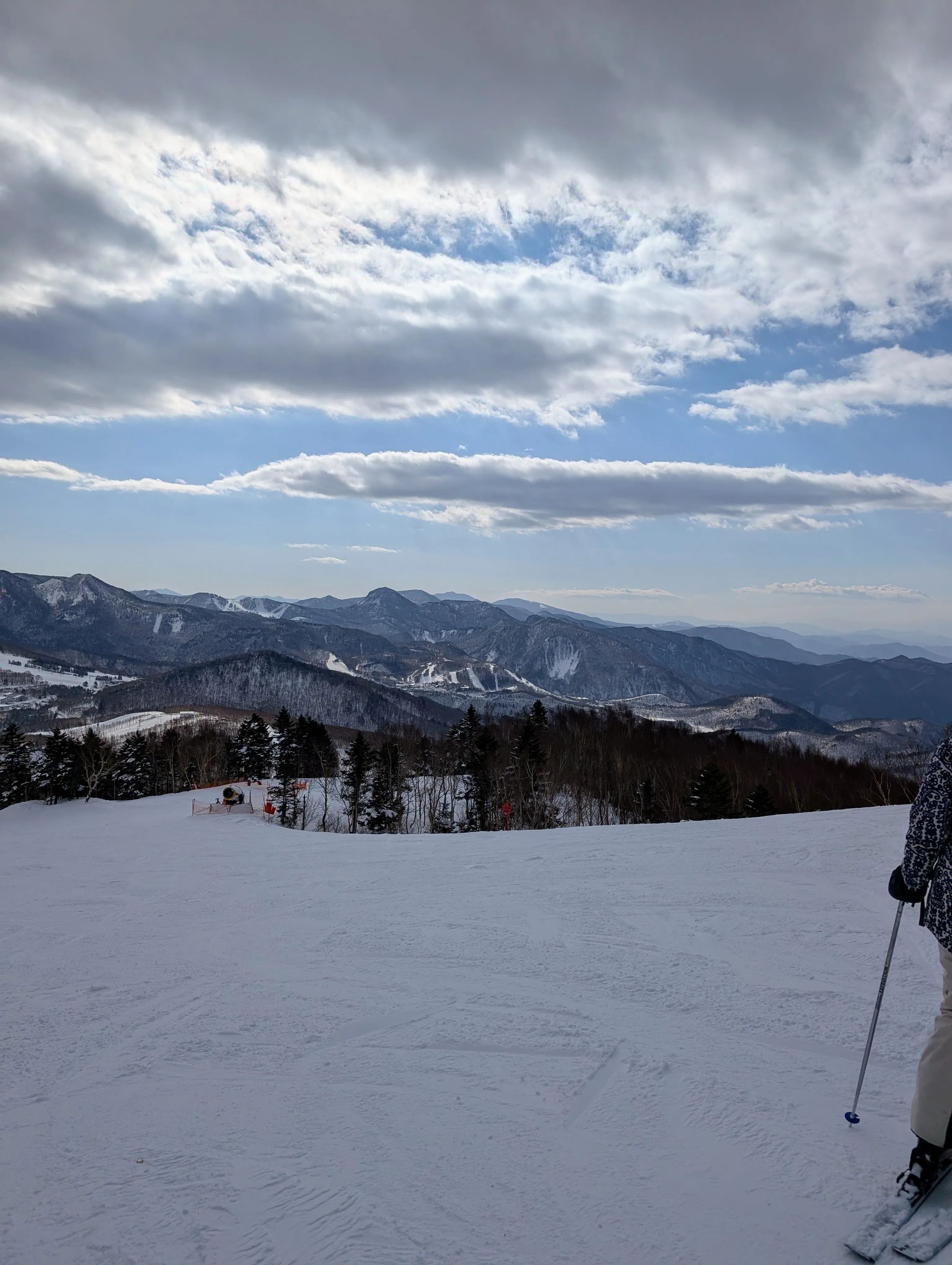 Yakebitaiyama area at Shiga Kogen resort
Skiing and snowboarding in Japan exceeded my expectations. Even if we had not lucked out with the snow conditions, the price, terrain, and experience of being in Japan would have been enough. It is hard to imagine a better combo of waist deep powder, steaming hot ramen for lunch, and a long hot soak in an onsen to finish the day. The next time you are considering an American ski trip, consider pricing out a trip to Japan instead. With the cost of American resorts these days, you might just break even by crossing the Pacific.
Japan, we love you. Mata yoroshiku onegaishimasu! See you next time!