Riding the Rails in India
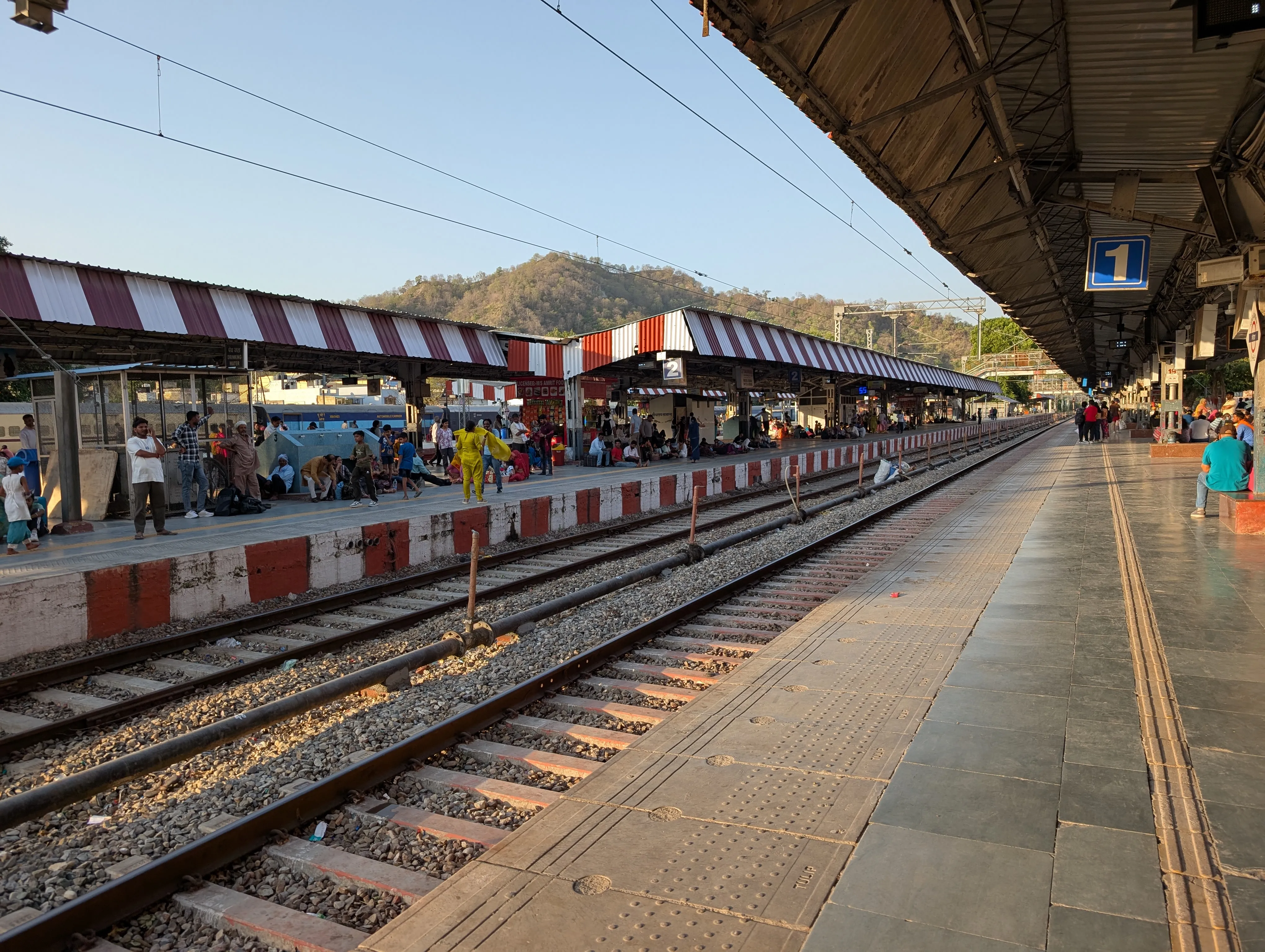
With enough time and planning, you can get almost anywhere in India by train. Around 20 million passengers use the trains every day, and Indian Railways is the ninth-largest employer in the world. Makeda and I loved the experience and utility of the trains, and despite the relative complexity of the system, we recommend that anyone visiting India give it a shot. Ahead you will find a detailed breakdown of everything I learned about riding the trains. For those not interested in trains: you have been warned.
Step-by-step breakdown of the Indian rail system
The rail system is administered by the Indian Railway Catering and Tourism Corporation (IRCTC), and the first step to riding the trains is to set up an IRCTC account online. Until recently, foreigners without an Indian phone number were barred from registering. Now there is simply a one-dollar fee to sign up, and once paid, the account creation is straightforward. From here, you can use the official IRCTC website to buy tickets, which we did in some cases, or use third-party services like MakeMyTrip that have better user interfaces and some quality-of-life features like cancellation insurance. You still need an IRCTC account to use MakeMyTrip, however.
When traveling by rail elsewhere, the process is typically simple: find the right train for the journey and choose between first and second class. The Indian rail system is a bit more complicated. There are many more car classes, more seat configurations, and several types of waitlists — all dominated by a set of acronyms. I’ll start with the car classes. On most trains, from least to most expensive you have:
- General (GS): No reservation needed, no assigned seats, no air conditioning. Extremely crowded and hectic. If you have seen photos or videos of people hanging out of windows or sitting in hammocks across the aisle, it was likely General.
- Sleeper Class (SL): Non-reserved berths/beds, eight people per bay, no air conditioning. Affordable and can lie down overnight, but can be crowded and gets quite hot.
- AC 3-Tier Economy (3E): Newer class on some trains, similar to 3A but more basic.
- Third Class AC (3A): Most affordable option of the air-conditioned classes. Six beds per bay and two on the side. Sheets and pillows provided. Bays are separated from the hallway by a curtain.
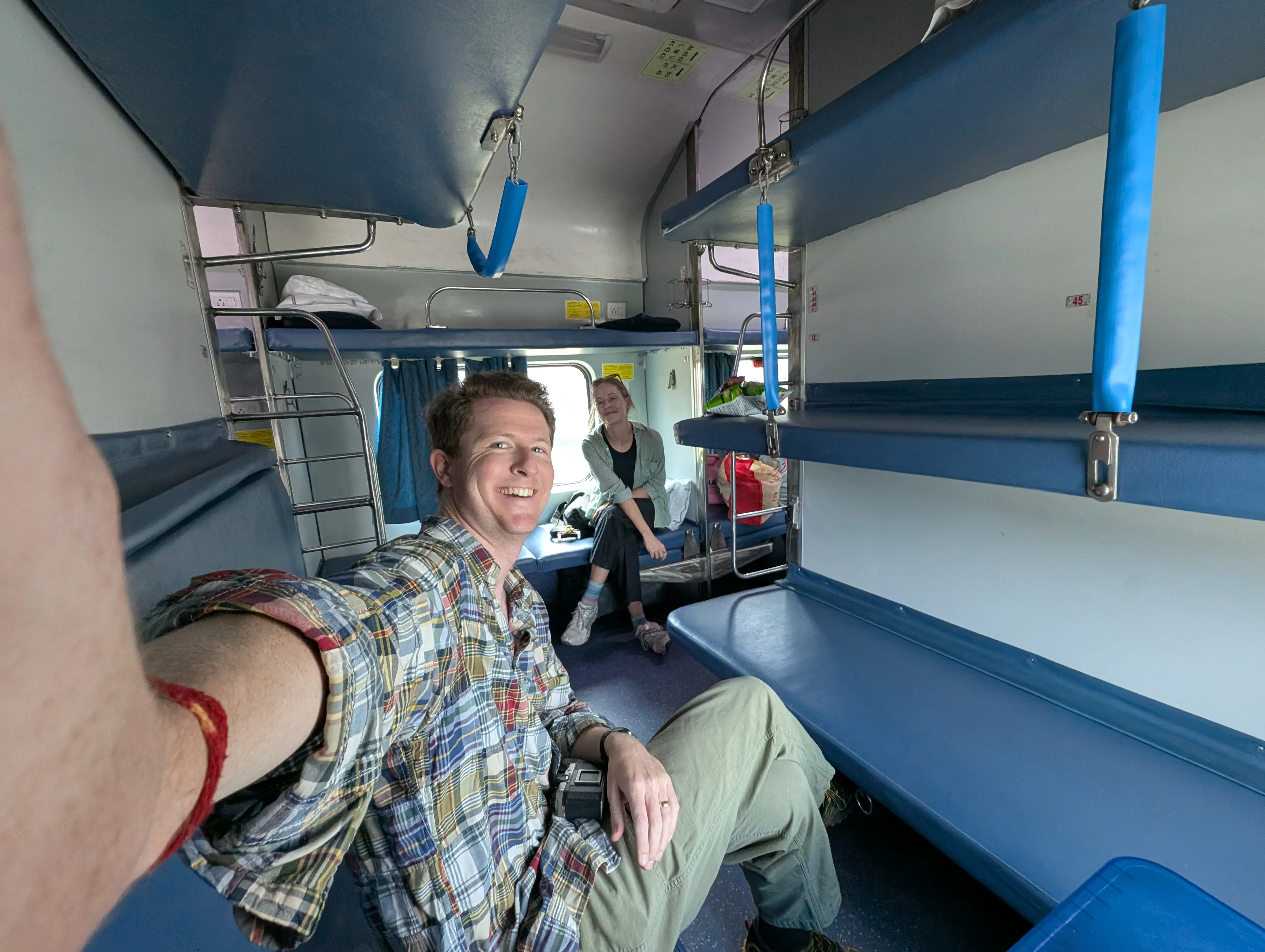 Our seats in 3A from Jaipur to Sawai Madhopur.
- Second Class AC (2A): Same general layout as 3A, except there are only four beds per bay.
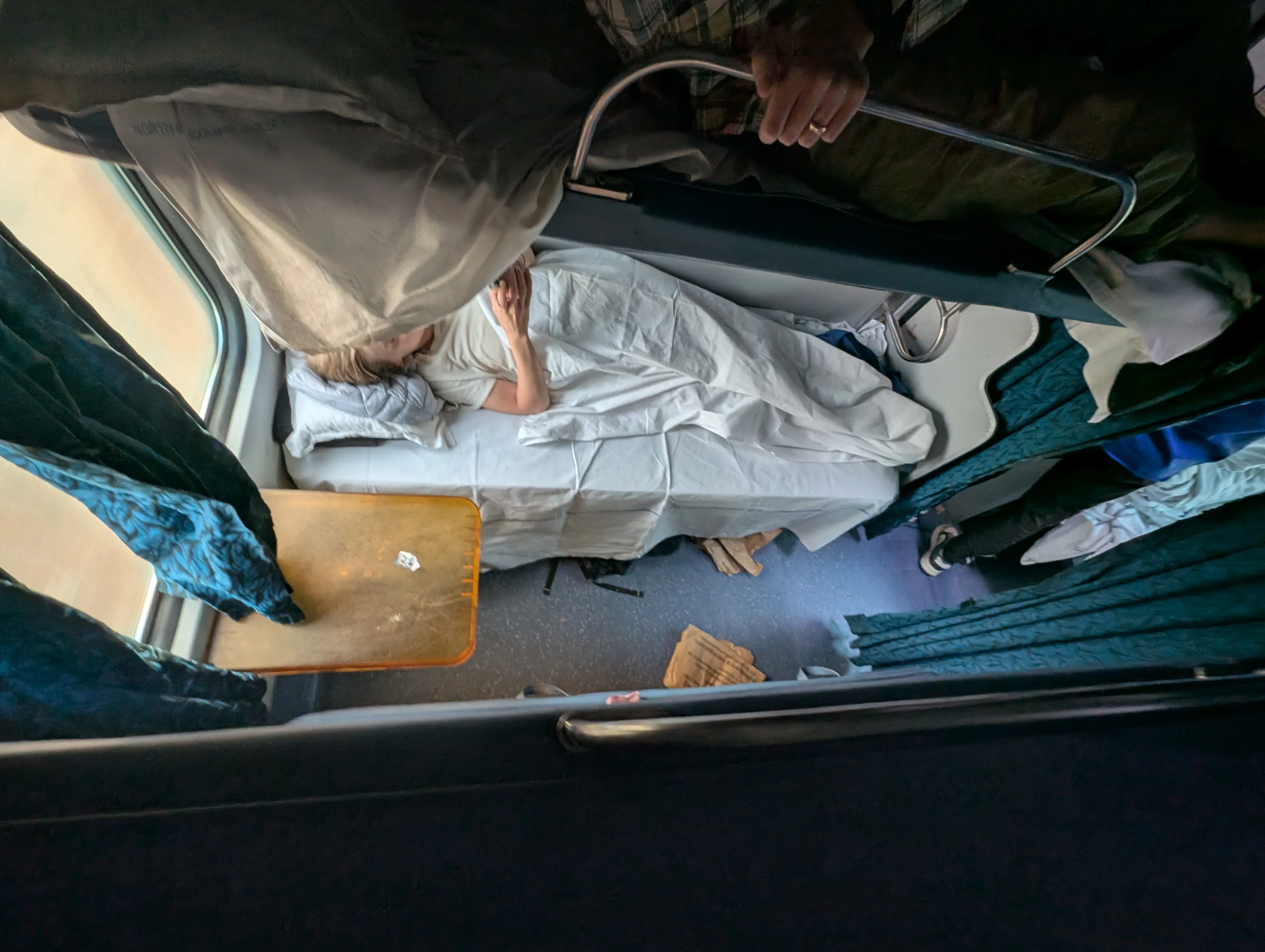 Waking up in 2A from Sawai Madhopur to Udaipur.
- First Class AC (1A): Similar to 2A, except the bay is separated from the hallway by a lockable door and there are no side upper or side lower berths. 1A also features coupes, which are smaller rooms with two beds instead of four.
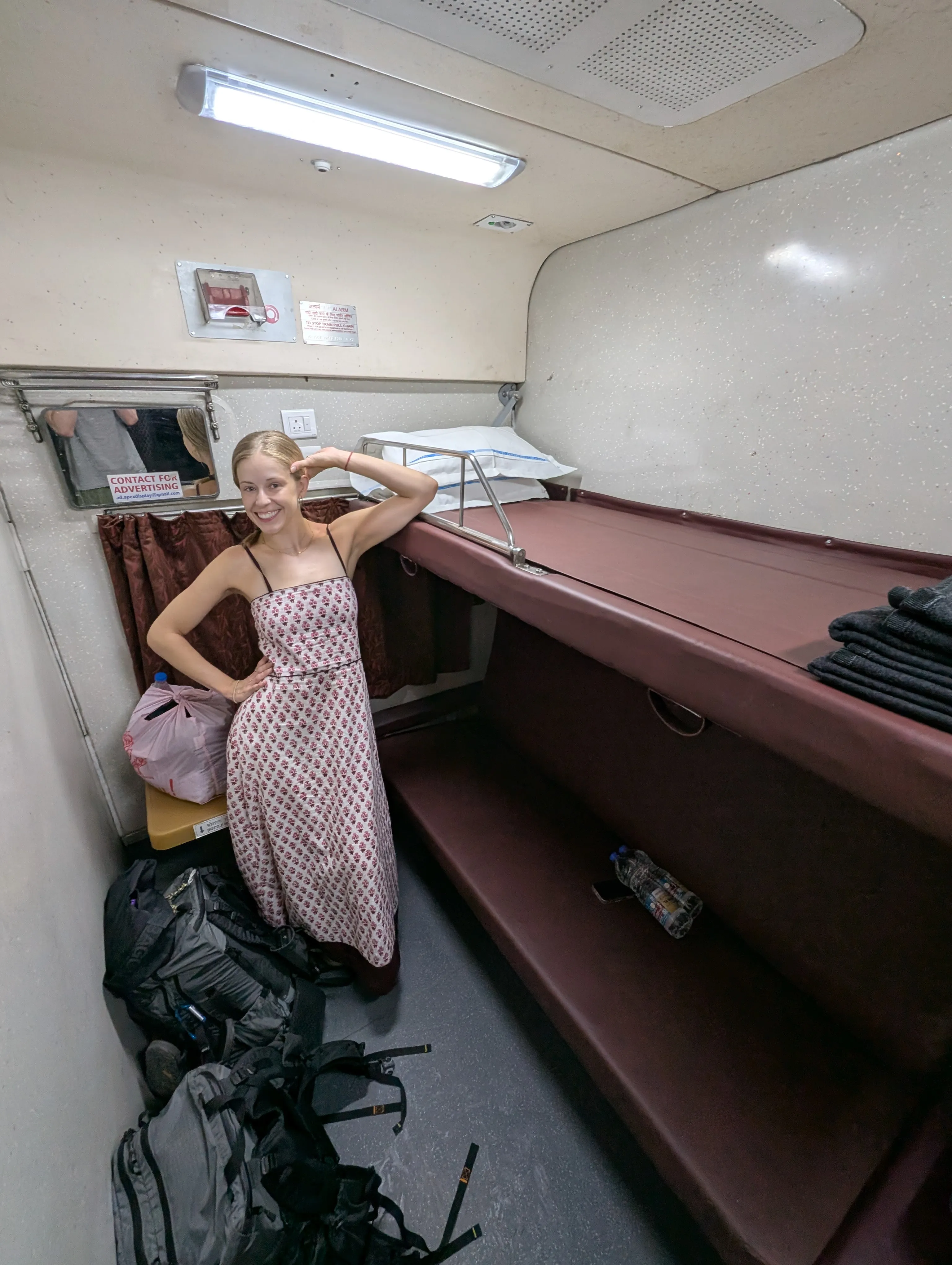 Our luxurious 1A coupe from Udaipur to Agra.
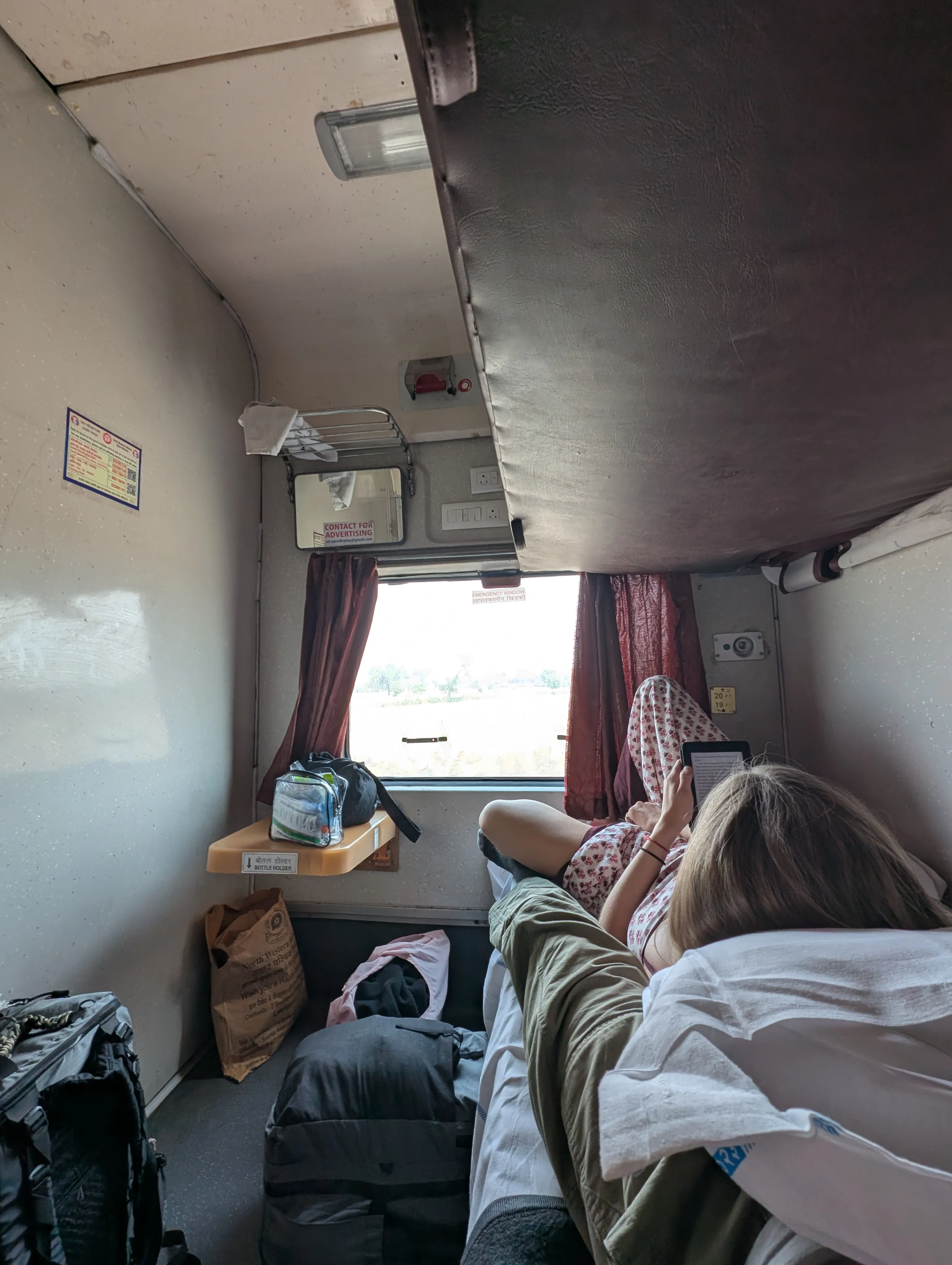 Cozy morning before arrival.
Some daytime trains, including the newest Vande Bharat high-speed line, do not have the bay-and-bed configuration but instead feature rows of standard chairs like an airplane. On these trains there are two classes: AC Chair Car (CC) and Executive Chair Car (EC). EC is the premium version of CC with wider seats and more legroom.
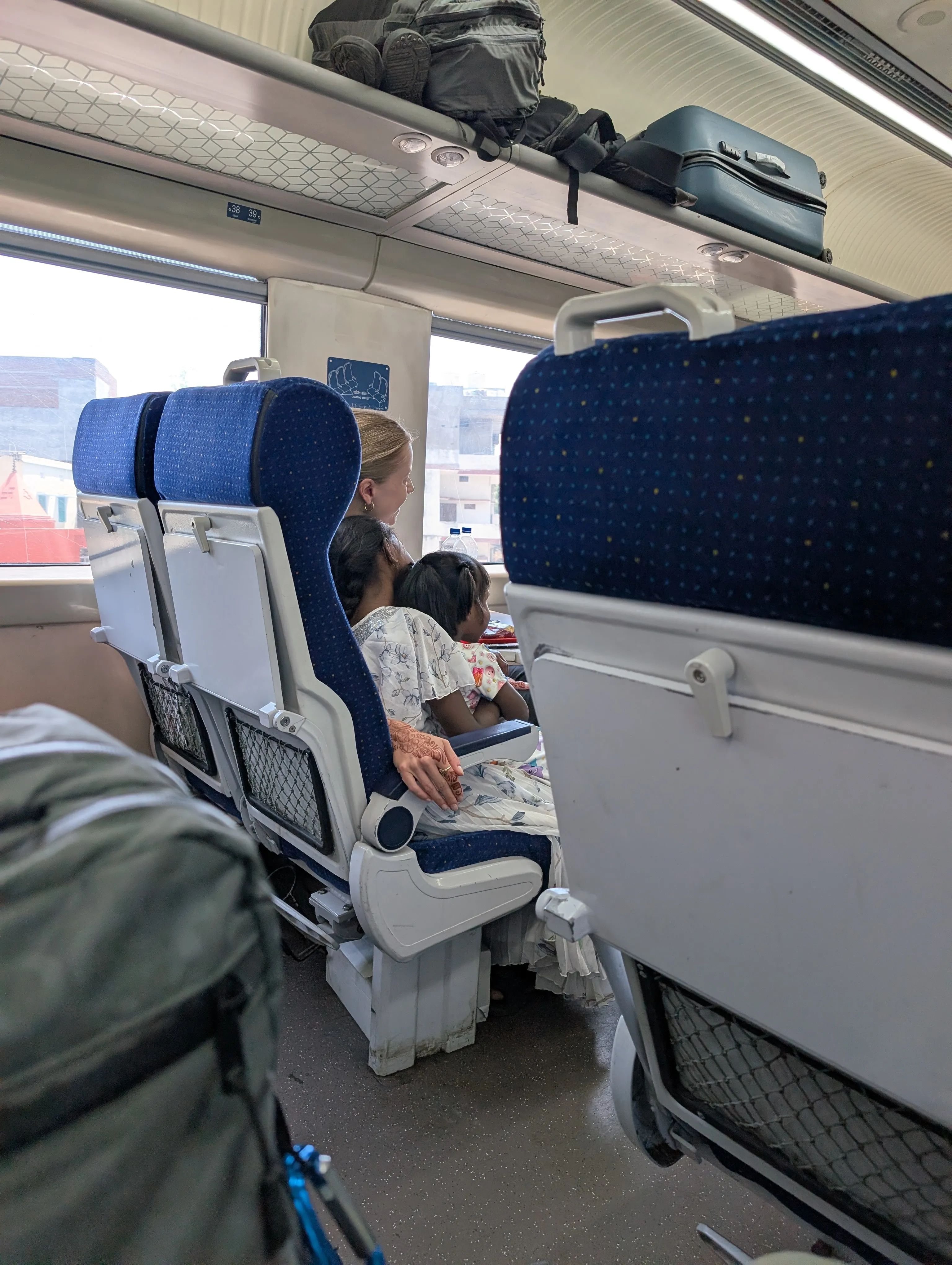 Makeda with new friends in CC on the new high-speed Vande Bharat line from Agra to Varanasi.
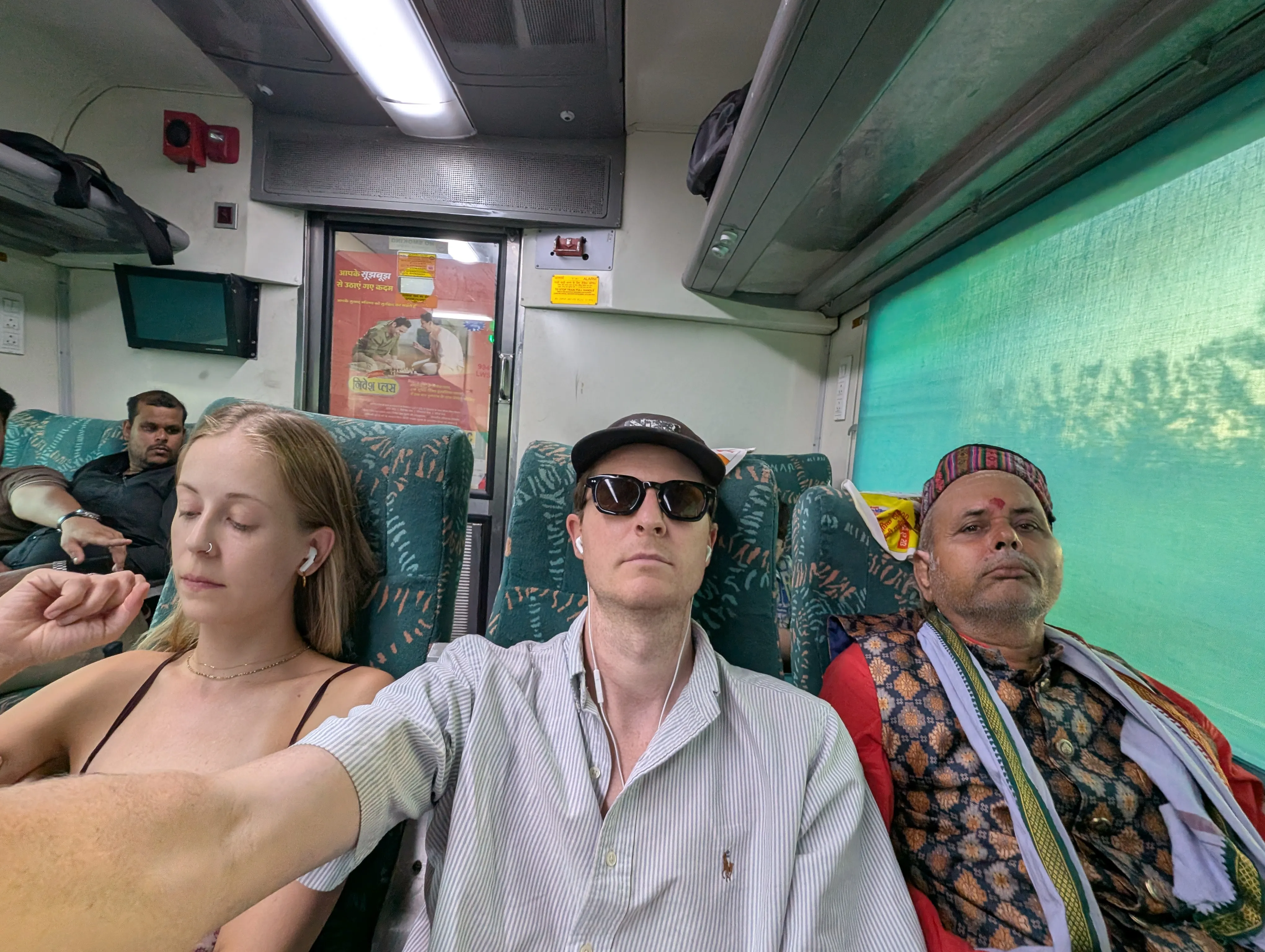 The coolest CC row on the train from Rishikesh to New Delhi.
The next set of acronyms to know are the berth (or bed) positions in 3A, 2A, and 1A. First, I’ll try to better describe the layout of the car. Imagine you board the train from the platform and turn down the hallway that runs the length of the car. On your right is a series of bays. Each bay contains two sets of either two or three bunks protruding from the wall of the bay, perpendicular to the window. In 3A, the middle bunk folds down to become the backrest of the bottom bunk, and all six people sit on the two bottom bunks, facing each other. In 2A there is no middle bunk, so the four passengers have a bit more room on the two bottom bunks during the day. In 3A and 2A, there are two more bunks on the opposite side of the hallway; however, these are arranged parallel to the window and essentially open onto the hallway.
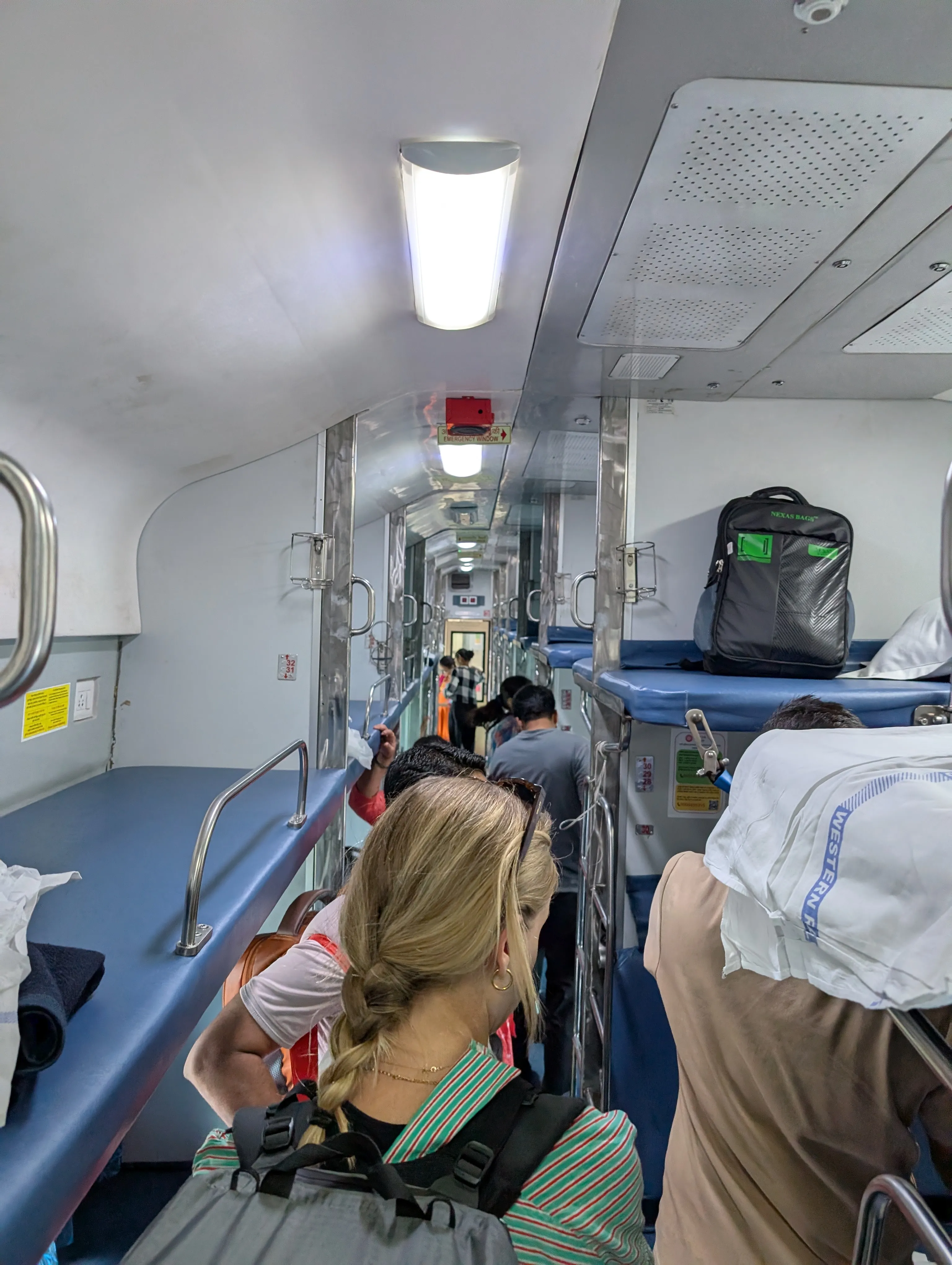 Train hallway with bays on the right.
Now, back to the acronyms:
- Lower berth (LB): Either of the two bottom bunks in the bay.
- Upper berth (UB): Either of the two top bunks in the bay (seen on the right-hand side of the photo above).
- Middle berth (MB): Either of the two middle bunks in the bay (3A only).
- Side lower (SL): The bottom bunk of the two aisle bunks.
- Side upper (SU): The upper bunk of the two aisle bunks (seen on the left-hand side of the photo above).
The berths are well displayed in the photo of our trip in third class AC earlier in this post. When you buy your ticket, you specify what class ticket you are purchasing, and then provide your berth preference. You are not guaranteed to get your berth preference, however.
Still with me? Now comes the truly confusing part of the system: the waitlists. A massive number of people use the trains every day, and demand always exceeds capacity. The IRCTC has devised a system of waitlists to help mitigate this issue. These include:
- General Waitlist (GNWL): Standard waitlist, only available for journeys starting at the train’s origin.
- Pooled Quota Waitlist (PQWL): Waitlist for journeys that do not start at the train’s origin. For example, if a train embarks from New Delhi and terminates in Kolkata, but you want to board in Varanasi, you might end up on the PQWL. Less likely to confirm than GNWL.
- Tatkal Waitlist (CKWL): Waitlist for tatkal tickets. More on that below.
If there is a waitlist for a given train, it will be displayed on the booking page alongside a number indicating the current length of the list. We only confirmed from the waitlist once, and in that case we were first and second on the GNWL for the sleeper train from Udaipur to Agra. On the morning of our departure, my ticket had confirmed but Makeda’s had not, so I was considering buying us backup tickets on a less desirable route in case MJ did not confirm. I stopped in a travel agency for help buying tatkal tickets (more on those below) where I was promptly schooled on the reality of the train system. The agent, Mono, saw that I had confirmed and MJ was next on the list, and with complete confidence advised against the backup ticket purchase (he called it a waste of money) and insisted that we both board the train no matter what. He was certain that Makeda would confirm, and even if she did not, he said that we would simply need to pay the conductor 500 rupees to “find” another berth. Ultimately we never got to test that advice because Makeda did in fact confirm from the waitlist, just as Mono had predicted.
Finally, tatkal and tourist quotas. Tatkal tickets are a small pool of tickets released only 24 hours before departure at a 25 to 30 percent price premium. However, you need an Indian ID number to purchase them, so for tourists, that means getting someone to buy them on your behalf (hence my visit to the travel agency). There is also a tourist quota for the most common tourist train routes. These must be purchased directly through the IRCTC portal and are not available for every train.
Our experience
Understanding and navigating the system was intimidating at first, but everything is much simpler in reality, and folks were always happy to help and explain along the way. Behind the rather byzantine booking system is an extensive, affordable, and useful rail network. In total, we had five different train journeys and tried four distinct classes: 3A, 2A, 1A, and CC. We found our two overnight journeys in 2A and 1A to be quite comfortable and clean, and despite their long durations both felt quick — you just wake up at your destination. This saves a night of lodging, too. We often compared the experience to a long-haul flight: our 14-hour train from Udaipur to Agra in 1A cost about $20 each; we had an air-conditioned, lockable cabin for just the two of us; full-size twin beds with sheets and pillows; and no turbulence! It is not hard to imagine a similar setup on a flight costing $10,000 or more.
And beyond the utility of the trains, riding them was a meaningful way to experience India. Although rail systems in places like Japan, China, or Europe are much more user-friendly, the rail network in India felt far more embedded in the culture of the place, as if over time India had expanded around the trains, intertwining and integrating the two into two parts of one whole. The system forces closeness, be it the train platforms with hundreds of passengers waiting to embark; the shared berths where you can stretch out foot to head, head to foot with your berth companion; the families nursing their children back to sleep late at night in your shared bay, or the chai wala hawking his wares down the aisle as you pull into the station at dawn. The waitlists and the slight looseness of the rules suggest a togetherness and flexibility that rewards familiarity with the system, contrasting with the strictness of other railway networks. To borrow from Tolstoy: all train networks are simple in the same way; Indian Railways is complicated in its own way.
Riding the trains was a genuinely enjoyable aspect of our time in India and enhanced our overall experience. We recommend it to all.